
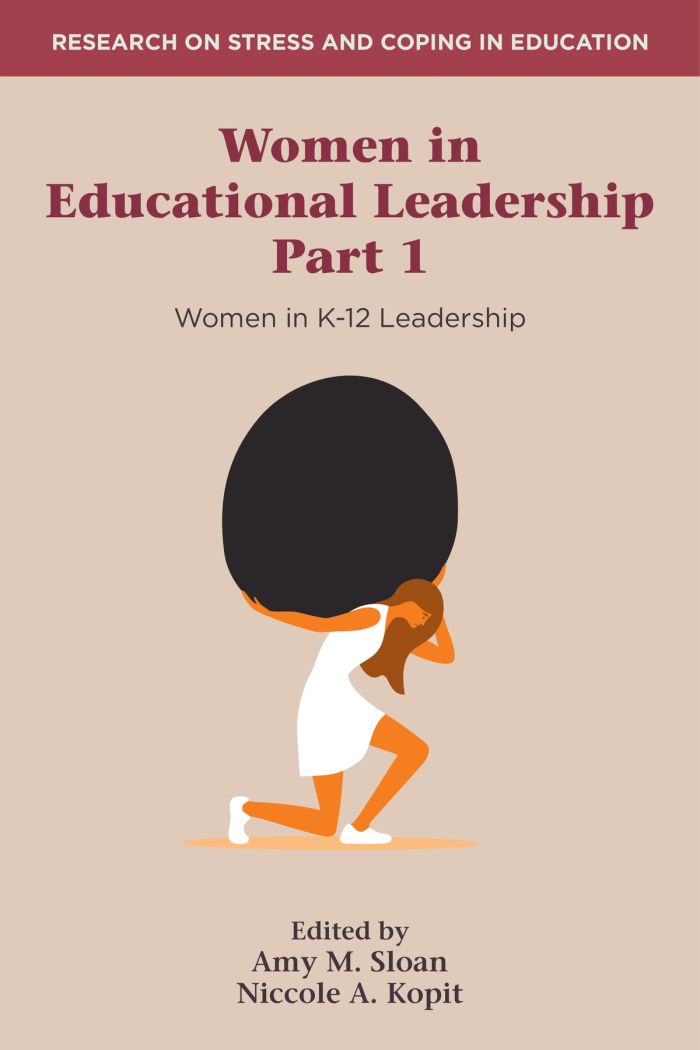
Women in Educational Leadership Part 1
Women in K-12 Leadership

This book can be opened with

Note on our eBooks and Audiobooks: you can read our eBooks (ePUB or PDF) and listen to audiobooks on the free Emerald Books app on iOS, Android, and desktop. Or read and listen on Emerald's online reader (ePUB eBooks and audiobooks only). To purchase a digital book you will need to create an account if you don’t already have one. After purchasing you will receive instructions on how to get started.
- Description
- Contents
- About
Across the educational landscape, women sustain schools through their teaching, leadership, and care—yet they remain underrepresented and undervalued in positions of formal power. Women in Educational Leadership Part 1 brings together nine evidence-based chapters that illuminate how gender, race, culture, and context shape women’s experiences from the classroom to the statehouse. Collectively, the authors argue that understanding—and transforming—the gendered conditions of educational work requires attention to emotional labor, time inequities, intersectional identity, and systemic reform.
The research featured draws from interviews, surveys, reflective journals, and narrative analyses involving hundreds of women educators across the United States. The findings converge on one central claim: women’s leadership effectiveness and retention depend less on individual perseverance than on organizational cultures that honor belonging, mentorship, and well-being. By integrating theories of burnout, positive psychology, crisis management, and Black and Indigenous feminist thought, the book contributes a multi-lens framework for gender-responsive educational leadership.
Intended for scholars, practitioners, and policymakers, Women in Educational Leadership Part 1 offers an empirically grounded and deeply human perspective on how to cultivate sustainable, inclusive systems of leadership. It challenges institutions to replace endurance with equity and to recognize the transformative power of women leading—with purpose, compassion, and strength.
Along with Women in Educational Leadership Part 2 it challenges institutions to replace endurance with equity and to recognize the transformative power of women leading—with purpose, compassion, and strength.
Chapter 1. A Way Forward: Addressing Teacher Burnout and Stress Resistance of Women in Education; Jennifer Elizabeth Fry Foster
- Chapter 2. The PERMA Model: Understanding Christian Women Teacher Well-Being Through a Positive Lens; Margaret Chandler, Brenda K. Jones Davis, and Corina Kaul
- Chapter 3. Full-Time Mother, Full-Time Teacher; Sheri Cain
- Chapter 4. The Time It Takes to Lead: Examining How Professional and Personal Time Demands Influence Women in the Principal Pipeline; Megan L. Hauser and Craig Hochbein
- Chapter 5. Voices of Women in K–12 Principal Roles: Navigating the Demands of Educational Leadership and Life in Rural-Serving Schools; Margaret A. Hudson and Barbara J. Hickman
- Chapter 6. Between the Seams of Her Ribbon Skirt; Sarah A. Ruff
- Chapter 7. Our Community is Just Not Ready for You Yet: A Critical Qualitative Study of Black Women K–12 School Administrators; Veneice Guillory-Lacy and Paula Groves Price
- Chapter 8. When School as We Knew It Suddenly Stopped: Strategic Crisis Leadershifts from Resilient Women Leaders in K–12 Educational Settings; Felicia N. Turner
- Chapter 9. Challenges and Strategies Utilized by Women During Periods of Career Growth in State Education Agency Leadership; Charity Flores
Amy M. Sloan is a faculty member in Baylor University’s EdD program in Learning and Organizational Change.
Niccole Kopit is the Chief Academic Officer at Laurus College.