
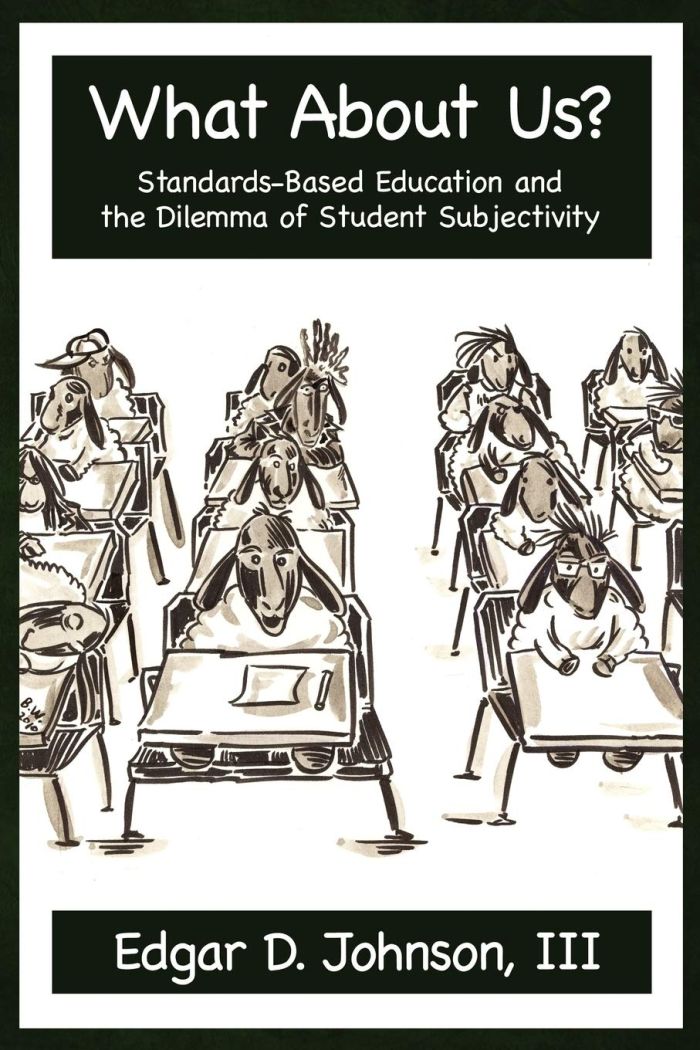
What about Us? Standards-Based Education and the Dilemma of Student Subjectivity

This book can be opened with

Note on our eBooks and Audiobooks: you can read our eBooks (ePUB or PDF) and listen to audiobooks on the free Emerald Books app on iOS, Android, and desktop. Or read and listen on Emerald's online reader (ePUB eBooks and audiobooks only). To purchase a digital book you will need to create an account if you don’t already have one. After purchasing you will receive instructions on how to get started.
- Description
- Contents
Over the past three decades, the standards-based reform movement has transformed K-12 education in the United States, culminating with passage of the No Child Left Behind Act in 2002. Beyond making reasonable accommodations for special needs students, standards-based education pays little attention to other areas of student difference, relying instead on a "rational actor" model of student experience, and ignoring how differences in students' backgrounds and orientations impact their particular experiences of schooling.
This book examines the development of standards-based education, with particular scrutiny of the roles of the National Governors' Association and its National Education Summit events. Examination of important documents emerging from those events provides an illustration of the conceptually impoverished understanding of student subjectivity, motivation, and agency inherent in standards-based education. In order to understand both problems with and alternatives to standards-based education, the author examines the roles of ideology, rhetoric, and audience in school policy.
In three case studies, the author analyzes several non-school models of education, including Marine Corps bootcamp, Ving Tsun kung fu training, and an online, school resistance community. Johnson argues that examination of these learning contexts provides a better understanding of the shortcomings and dangers of the standards-based model of student subjectivity, and suggests a set of fourteen principles to inform the development of more student-centered alternatives.
Introduction.
- Chapter 1. The Rise of Standards-Based Reform in Education.
- Chapter 2. Standards-Based Education and the Problem of Human Subjectivity.
- Chapter 3. A War for the Body and an Army in the Mind.
- Chapter 4. Education Without Accountability.
- Chapter 5. Youth, Difference, and School Survival.
- Conclusion.
- Notes.
- References.