
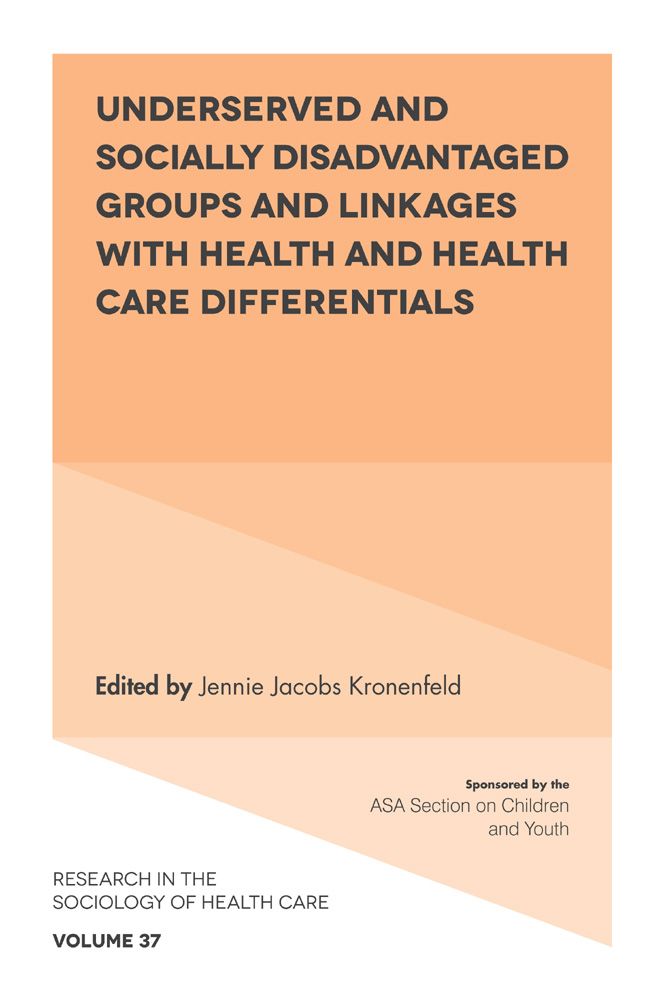

Underserved and Socially Disadvantaged Groups and Linkages with Health and Health Care Differentials

This book can be opened with

Note on our eBooks and Audiobooks: you can read our eBooks (ePUB or PDF) and listen to audiobooks on the free Emerald Books app on iOS, Android, and desktop. Or read and listen on Emerald's online reader (ePUB eBooks and audiobooks only). To purchase a digital book you will need to create an account if you don’t already have one. After purchasing you will receive instructions on how to get started.
- Description
- Contents
- Reviews
- About
Part 1: Introduction to Volume Underserved and Socially Disadvantaged Groups and Differentials in Health Care; Jennie Jacobs Kronenfeld Part 2: Mental Health Related Issues Chapter 1. Disadvantage Begets Disadvantage? Exploring Mental Health Pathways for Girls of Color; Zinobia Bennefield Chapter 2. Familial Support and Mental Health Service Use: Differences Among First- and Second -Generation Asian American and Latinx Older Adults; Jessica Valles Chapter 3. Psychological Distress Differentials as a Function of Subjective Social Status Among Latino Subgroups in the U.S.; Fernando I. Rivera, Kristine M. Molina, and Ethel Nicdao Part 3: Other Health Problems Chapter 4. Race, Environmental Inequality, and Physical Health; Jennifer M. Brailsford, Jessica Eckhardt, Terrence D. Hill, Amy M. Burdette, and Andrew K. Jorgenson Chapter 5. Autism Spectrum Disorders and the Healthcare Experiences of Aging Adults; Karen E. Joseph-Kent Chapter 6. Hepatitis C and Support Groups in Rural Communities; Atusko Kawakami, Juyeon Son and Charley Henderson Chapter 7. "I kinda look unhealthy, but I’m not unhealthy" Exploring Rural Children's Perspectives on Health, Well-being, and Nutrition; Anne Scheer Part 4: Gender Concerns Chapter 8. Public Perception on Gender Issues and Women's Healthcare Concerns Related to Leprosy: Implications for Leprosy Control Programme in Southeast Nigeria; Ignatius Uche Nwankwo Chapter 9. Thalassaemic Women's Biographical Trajectory: Retracing Gender Inequalities in Health Policies; Valentina Raffa Part 5: Health Care Workers Chapter 10. Work-life Balance in Medical Practice: The Reproduction of Patriarchy and the Politics of Gender; Jennifer McDonald and Claudia Chaufan Chapter 11. Vulnerable Caregivers: A Comparison of Direct Care Workers' Health Risks in Skilled Nursing Facilities and Private Homes; Kim Price-Glynn and Carter Rakovski Chapter 12. The Health of Migrant Women Working as Home Care Assistants in Italy: An Analysis of the Most Hazardous Factors of Home Care Work; Francesca Alice Vianello
Sociologists, health specialists, and other specialists mainly from North America present 13 chapters on underserved and socially disadvantaged groups, particularly people of color, rural Americans, and aging populations, in the context of health and healthcare disparities and inequalities. They address mental health related issues in relation to race and ethnicity, including mental health pathways for girls of color, familial support and mental health services use by Asian American and Latinx older adults, and psychological distress differentials as a function of the subjective social status among Latino subgroups in the US; other types of health problems, including environmental inequality and health, autism spectrum disorders and aging adults, hepatitis C and support groups in rural communities, and overall perspectives on health, well-being, and nutrition by children; gender concerns in underserved and socially disadvantaged groups, in terms of leprosy in southeast Nigeria and gender inequalities in health policy for the care and management of thalessemia; and issues linked to healthcare workers, including gender politics, socially disadvantaged groups who are healthcare workers, and migrant women who work as home care assistants.