
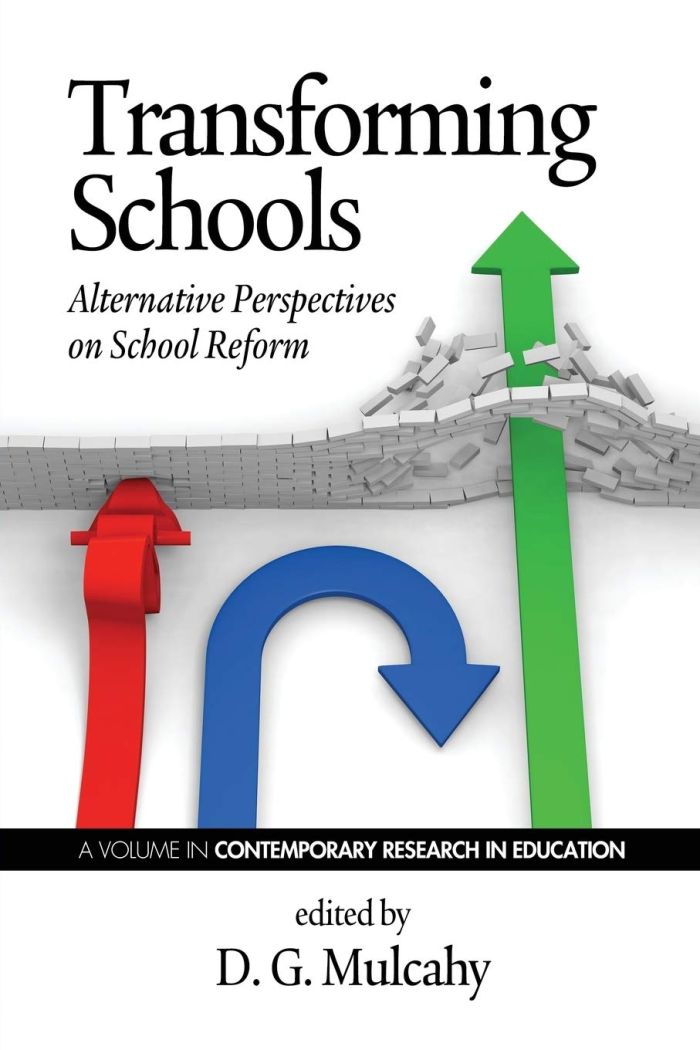
Transforming Schools
Alternative Perspectives on School Reform

This book can be opened with

Note on our eBooks and Audiobooks: you can read our eBooks (ePUB or PDF) and listen to audiobooks on the free Emerald Books app on iOS, Android, and desktop. Or read and listen on Emerald's online reader (ePUB eBooks and audiobooks only). To purchase a digital book you will need to create an account if you don’t already have one. After purchasing you will receive instructions on how to get started.
- Description
- Contents
President Obama has on a number of occasions rejected policies that have been tried and do not work. Legislation such as No Child Left Behind and policies such as Race to the Top are neither effective nor based on sound research. Educational policy-making is now, more than ever, the preserve of politicians, advocacy foundations, and lobbyists parading as corporate leaders. Teachers have little voice; their role is merely to be held responsible for policies foisted upon them.
In Transforming Schools: Alternative Perspectives on School Reform, our aim is to provide alternative perspectives to the dead-end educational policies by which our governments have become consumed. We turn the spotlight on a select range of topics that have become the focus of concern and we consider the implications for school improvement. These topics include school reform in general, the achievement gap, literacy, standardized assessment, social justice and ecojustice, aesthetic and moral education, and general education.
Acknowledgements.
- Preface.
- Chapter 1. Transforming Schools: An Introduction, Ronnie Casella.
- Chapter 2. Making Space for Critical Literacy and Not Just Cultural Literacy, Cara M. Mulcahy.
- Chapter 3. Methods and Mindsets for Creating Eco-Social Community Educators, James Joss French.
- Chapter 4. Addressing the Root Causes of the Achievement Gap, Jacob Werblow and Laura Longo.
- Chapter 5. Breaking the Culture of Silence in Schools: Children's Voices Revealed Through Moral Imagination, Barbara A. Clark.
- Chapter 6. Toward a More Balanced Assessment Framework, Jesse P. Turner, John D. Foshay, and Ernest Pancsofar.
- Chapter 7. Authenticity and Cooperation as Pathways to School Success, Kurt Love.
- Chapter 8. Social Justice and District Leadership in Public Schools: Guidelines for Practice, Ellen Retelle and Mark Cohan.
- Chapter 9. Theory and Praxis in General Education, D. G. Mulcahy.
- About the Contributors.