
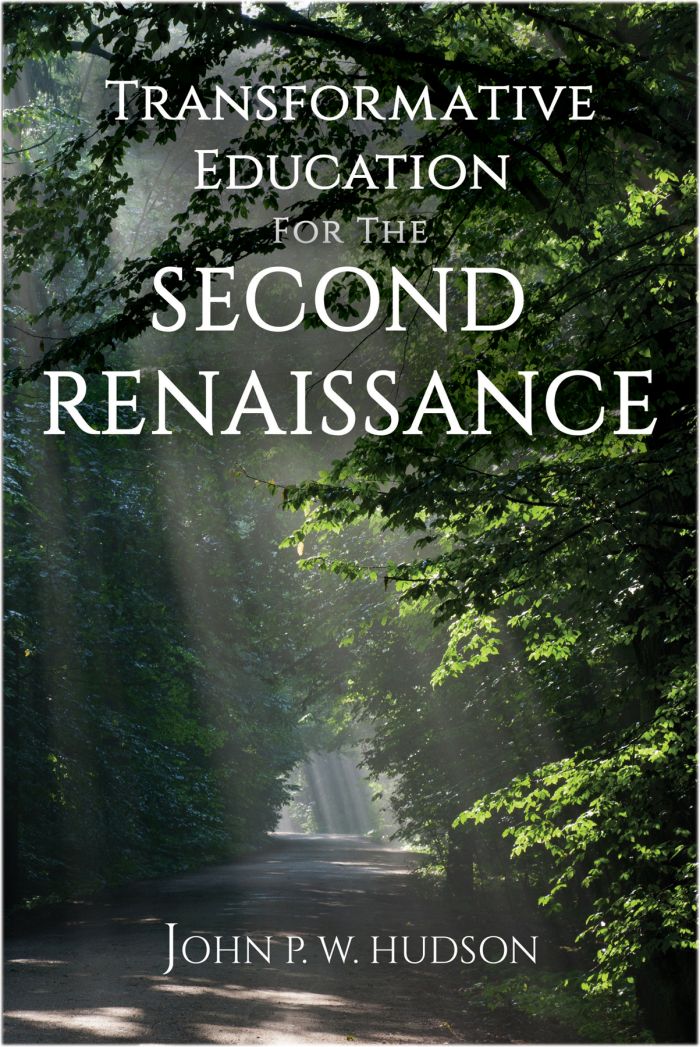
Transformative Education for the Second Renaissance

This book can be opened with

Note on our eBooks and Audiobooks: you can read our eBooks (ePUB or PDF) and listen to audiobooks on the free Emerald Books app on iOS, Android, and desktop. Or read and listen on Emerald's online reader (ePUB eBooks and audiobooks only). To purchase a digital book you will need to create an account if you don’t already have one. After purchasing you will receive instructions on how to get started.
- Description
- Contents
Transformative Education for the Second Renaissance follows educator John PW Hudson through a personal and professional journey that led him to respond to what he sees as underlying fissures in the bedrock of educational practice. At the height of his career, he was seconded by the Richmond (BC Canada) school district to teach a demonstration class in the Nanashan Xian Middle School in Shenzhen, China, at the request of the school, and philanthropists Joe and Margaret Li, initiators of the project and sponsors. His assignment was to demonstrate and explain Western teaching methods to educators and other interested parties including university students and their professors from various parts of China, local and national education officials, teachers at the Nanshan Xian middle school (where he lived and taught for two years), and civic officials as well. Most days a television camera was in the room, and several adults sitting watching.
Throughout his career, Hudson was intensely interested in how children learn, how and why they thrive or fail, educational philosophy, and how educational infrastructures and practices impact learners and professionals alike. After teaching Music, English and business education for twenty years at the junior high school level, Hudson turned his sights to the elementary level and taught intermediate classroom for the last thirteen years before going to China. All of these experiences left him with lingering questions which came into sharp focus in China, where traditional practices are entrenched.
Primarily, Transformative Education for the Second Renaissance explores history, philosophy, research, politics and real human stories to encapsulate the driving forces of education that need adjustment, particularly assessment. Hudson describes the transition from analog to digital as the Second Renaissance, and how findings in brain research characterize how our understanding of learning has changed in modern practice from transmissive to transformative. Not a traditional academic treatise, Hudson’s book reads more like a coffee shop discussion, but the reasoning and conclusions will resonate with experienced educators. Hudson’s goal is to kick-start discussion about the changes he proposes, and frame a narrative to move education into our rapidly changing educational landscape. This is not a book on methods; it is a foundational work that Hudson hopes will lead to lively discussion and critical debate.
Acknowledgments.
- Part I. Our Transmissive Past Introduction: The Hot Roses Of June.
- Jigsaw Island One: History-Traditional Education.
- Jigsaw Island Two: The Narrative-Towards a Pluralistic Society.
- Jigsaw Island Three: Philosophy-Issues with Truth; Belief, and Logic in Education.
- Jigsaw Island Four: Issues in the Present-Is Chasing Higher Scores Worth the Wreckage?
- Part II. Our Transformative Future
- Jigsaw Island Five: Transformative, Infinite Curriculum.
- Jigsaw Island Six: Transformative Learning.
- Jigsaw Island Seven: Transformative Assessment.
- Jigsaw Island Eight: Transformative Influences.
- Jigsaw Island Nine: Transformative Pedagogies.
- Jigsaw Island Ten: Transformational Lexicon.
- Jigsaw Island Eleven: Prior Art—Influential Works.
- Conclusion.
- Epilogue.
- References.
- About the Author.