
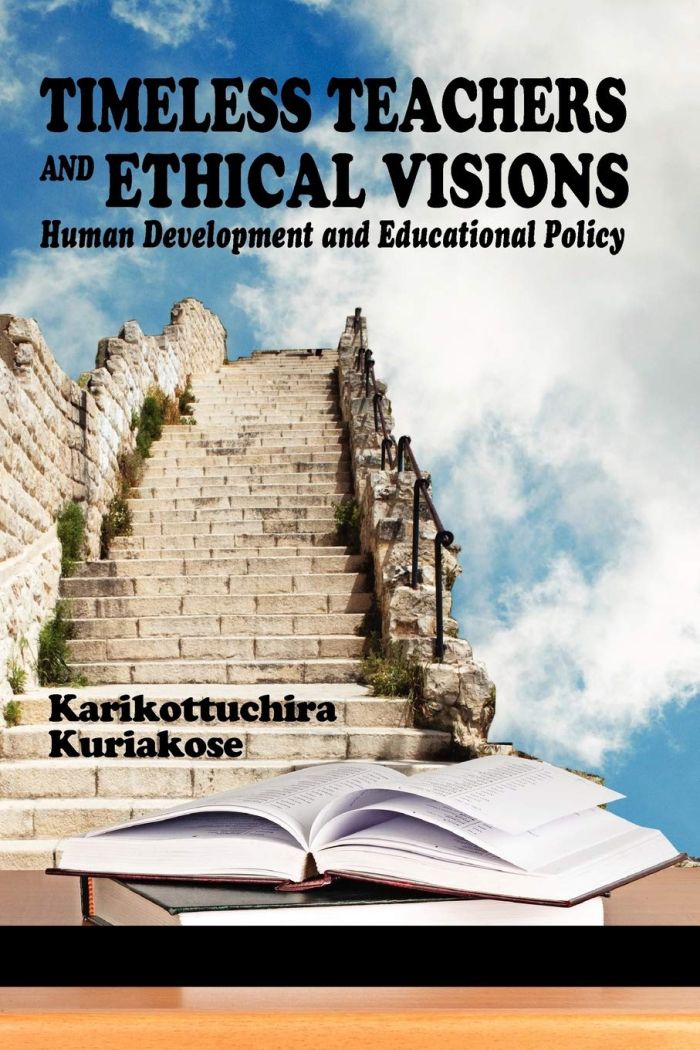
Timeless Teachers and Ethical Visions
Human Development and Educational Policy

This book can be opened with

Note on our eBooks and Audiobooks: you can read our eBooks (ePUB or PDF) and listen to audiobooks on the free Emerald Books app on iOS, Android, and desktop. Or read and listen on Emerald's online reader (ePUB eBooks and audiobooks only). To purchase a digital book you will need to create an account if you don’t already have one. After purchasing you will receive instructions on how to get started.
- Description
- Contents
The industrial monoculture spreading across the globe is highly competitive, greedy and egotistical; in the shaping of educational policy, global communities have accepted a model based on science and technology, which lacks aspects that should be addressed in the goal of education. The book Timeless Teachers and Ethical Visions is a historical inquiry of educational concerns that have developed through the centuries. It is a systematic discussion of prominent educators, including their theories and experiments: St. Thomas Aquinas, Al-Ghazali, Ibn Khaldun, Leo Tolstoy, Mahatma Gandhi, John Dewey and Paulo Freire.
In addition, the inquiry investigates the strengths and weaknesses of the neoliberal educational policy, the suggestions to construct an educational policy considering the common good, criticize uncontrolled individualism while emphasizing the goal of education that enhances community consciousness to the learner. Finally, the aim of this book is to propose an alternative educational policy that is beneficial to the global community.
Foreword.
- Introduction.
- Chapter 1. St. Thomas Aquinas (1224/25–1274).
- Chapter 3. Islamic Educators, Al-Ghazali and Ibn Khaldun.
- Chapter 4. Leo Tolstoy (1828–1910).
- Chapter 5. Mahatma Gandhi (1869–1948).
- Chapter 6. John Dewey (1859–1952).
- Chapter 7. Paulo Freire (1921–1997).
- Chapter 8. Human Development, Ethical Visions, and Educational Policy.
- Bibliography.