
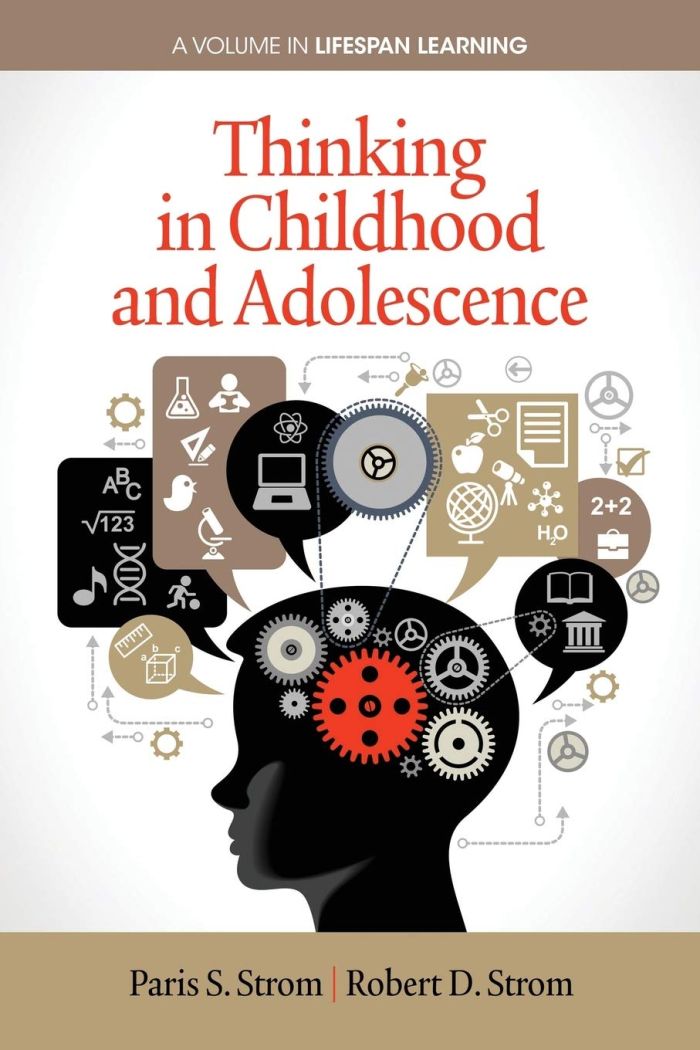
Thinking in Childhood and Adolescence

This book can be opened with

Note on our eBooks and Audiobooks: you can read our eBooks (ePUB or PDF) and listen to audiobooks on the free Emerald Books app on iOS, Android, and desktop. Or read and listen on Emerald's online reader (ePUB eBooks and audiobooks only). To purchase a digital book you will need to create an account if you don’t already have one. After purchasing you will receive instructions on how to get started.
- Description
- Contents
Until recently educators were expected to provide all the knowledge students would need to ensure their future. However, the Internet has altered conditions of learning in ways that motivate students to be more self-directed and less dependent on direct instruction. Neuroscience discoveries about brain functioning also urge schools to adopt thinking as an aspect of core curriculum. Students who acquire thinking skills needed to locate information, process and organize data, generate creative and practical ideas, communicate with all age groups, and collaborate can adapt to technology change and social evolution.
Encouraging adolescents to choose some goals they pursue respects their need for autonomy. Recognizing the need to amend certain goals is important so a person knows when change in personal direction is warranted. Exploring careers in a low risk setting motivates realistic aspirations and helps students to shape their future. Employer expectations for teamwork require attention. Performing well in groups including peer and self-evaluation yields productive thinking and is conducive to mental health.
The intended audience for this book is college students preparing to become teachers in preschool, elementary or secondary education. The book describes ways schools and families can support higher order thinking during childhood and adolescence. Learning that occurs outside school is ignored by tests that reflect only classroom lessons. New instruments that measure thinking are needed to enable transformation of school goals and evaluation of student progress. Shifting to a dual emphasis on thinking and learning is a challenge for teachers of all grade levels.
Part I. Adjustment To Change.
- Chapter 1. Thinking and Attention.
- Chapter 2. Thinking and Internet.
- Chapter 3. Thinking and Fears.
- Chapter 4. Thinking and Stress.
- Chapter 5. Thinking and Cultures.
- Part II. Scope Of Achievement
- Chapter 6. Thinking and Curiosity.
- Chapter 7. Thinking and Discipline.
- Chapter 8. Thinking and Creativity.
- Chapter 9. Thinking and Integrity.
- Chapter 10. Thinking and Theories.
- Part III. Planning And Direction
- Chapter 11. Thinking and Goals.
- Chapter 12. Thinking and Reflection.
- Chapter 13. Thinking and Decisions.
- Chapter 14. Thinking and Perspectives.
- Chapter 15. Thinking and Risks.