
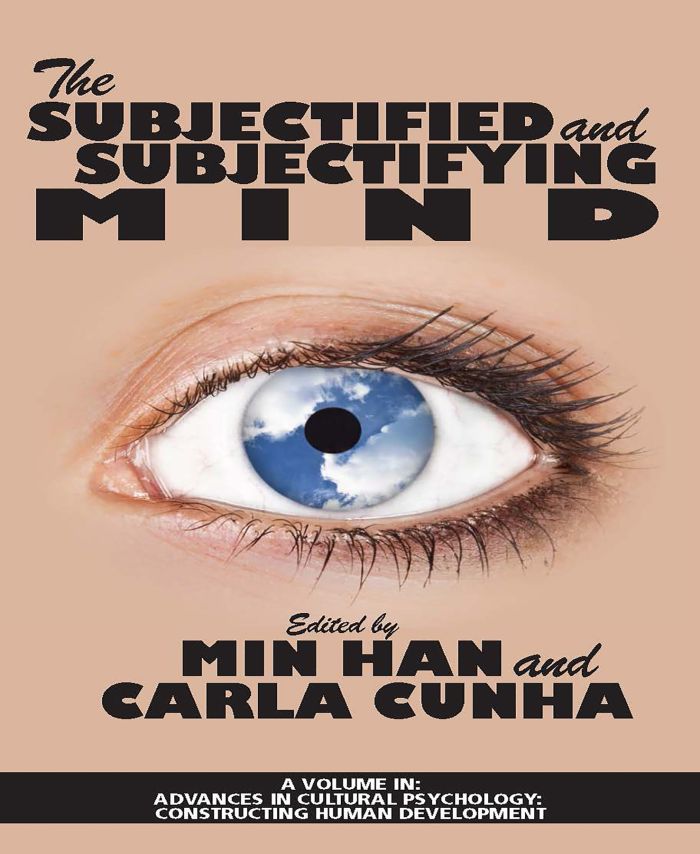
The Subjectified and Subjectifying Mind

This book can be opened with

Note on our eBooks and Audiobooks: you can read our eBooks (ePUB or PDF) and listen to audiobooks on the free Emerald Books app on iOS, Android, and desktop. Or read and listen on Emerald's online reader (ePUB eBooks and audiobooks only). To purchase a digital book you will need to create an account if you don’t already have one. After purchasing you will receive instructions on how to get started.
- Description
- Contents
Putting subjectivity back in psychology and in social sciences is the aim of this volume. Subjectivity is a core psychological dimension but frequently forgotten. Without a full understanding of the uniqueness of each human life our understanding of psychological life fails to reach its aim. This book explores precisely the field of subjectivity, offering the reader different and innovative views on this challenging theme. This book is an asset for all those interested in understanding how the mind operates as a subjectifying process and how this subjectifying mind is simultaneously the product and the content of feeling an unique and unrepeatable subjective life.
By bringing together renowned and emergent experts in the field, it provides a fresh new look on the human mind. The reader will find thought-provoking and challenging contributions of 26 different scholars, from 10 countries. It covers a wide range of perspectives and approaches, such as dialogical perspectives, cultural psychology approaches, developmental psychology, feminist perspectives, semiotics, and anthropology.
This volume will be very much recommended for all sorts of scholars and students in social and human sciences interested in the human mind and in subjectivity. It will be adequate for different levels of teaching, from undergraduate to master courses. It also meant to be understood for all readers interested in the topic.
Series Editor's Preface: Key Focus for Psychology: Culturally Patterned Subjectivities.
- Introduction: Back to Subjectivity; Min Han and Carla Cunha.
- Part I. Cultural Examples.
- Chapter 1. Mythological Constraints to the Construction of Subjectified Bodies; Danilo Silva Guimarães and Lívia Mathias Simão.
- Chapter 2. Intersectional Subjectivities: Narratives of Brazilian Immigrant Women in Portugal; Sofia Neves.
- Chapter 3. Psychologizing Subjectivities in the Chinese Media; Josh Krieger.
- Chapter 4. Commentary to Part I. Commentary on the Cultural Variations of Subjectification; Asger Nymann Løebekken.
- Part II. Subjectification and the Self.
- Chapter 5. Social Frames and the Dialogical Self: A Dynamic Account of Subjectivity Within a Subjectified World; Carla Cunha and João Salgado.
- Chapter 6. Imagining Self in a Changing World: An Exploration of Studies of Marriage; Tania Zittoun.
- Chapter 7. The Dynamics of Self-Transformation in Youth Transitions: The Role of Promoting and Inhibiting Processes; Elsa de Mattos.
- Chapter 8. Commentary to Part II. Psychological Generalization as a Mediating Process between Context-Specific and Ontogenetic Changes; Márcio Santana da Silva.
- Part III. Developmental Bases of Subjectification.
- Chapter 9. Socialisation for Subjectification: Growing Up With Others in an Indian Family; Nandita Chaudhary and Punya Pillai.
- Chapter 10. Do You Know Who I Am, Through My Eyes? Subjectivity in the Construction of the Self—A Lifelong Process; Meike Watzlawik and Maike Hauschildt.
- Chapter 11. The Process of Subjectification: Transformation Through Ambivalence; Emily Abbey and Caitlyn Burns.
- Chapter 12. Commentary to Part III. From Battlefield to Playground: A Productive Position for the Future of Psychology; Jakob Waag Villadsen and Pernille Hviid.
- Part IV. Methodological Horizons.
- Chapter 13. Pbichim, a Culturally Patterned Form of Subjectified Communication: Using Grounded Theory; Min Han and Koyungjae Song.
- Chapter 14. How to Model Sense Making: A Contribution for the Development of a Methodological Framework for the Analysis of Meaning; Sergio Salvatore, Marco Tonti, and Alessandro Gennaro.
- Chapter 15. Dynamic Self Conceptions: New Perspectives to Study Children’s Dialogical Self Development; Angela Uchoa Branco and Sandra Ferraz Freire.
- Chapter 16. Commentary to Part IV. Dialogism and Catalytic Regulation in the Self System; Tiago Bento, Maria Amendoeira, and Sofia Teixeira.
- Conclusion: Upon Framing Subjectification: Some Possible Conclusions; Carla Cunha and Min Han.