
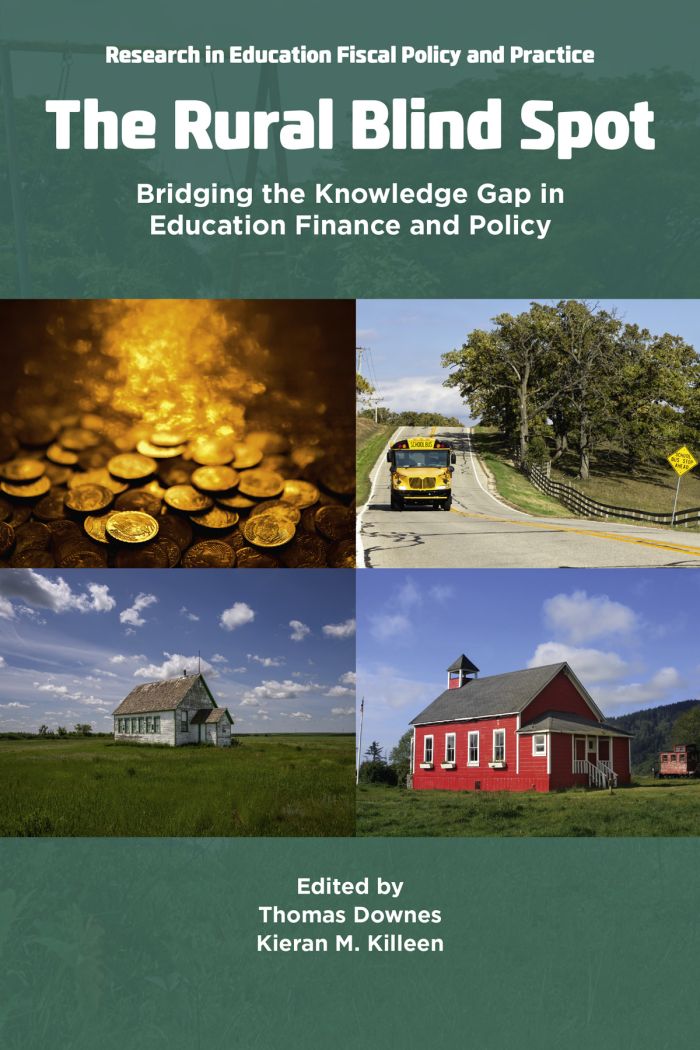
The Rural Blind Spot
Bridging the Knowledge Gap in Education Finance and Policy

This book can be opened with

Note on our eBooks and Audiobooks: you can read our eBooks (ePUB or PDF) and listen to audiobooks on the free Emerald Books app on iOS, Android, and desktop. Or read and listen on Emerald's online reader (ePUB eBooks and audiobooks only). To purchase a digital book you will need to create an account if you don’t already have one. After purchasing you will receive instructions on how to get started.
- Description
- Contents
- About
Despite comprising nearly one-fifth of the U.S. student population, rural schoolchildren remain underrepresented in education policy discourse. The Rural Blind Spot: Bridging the Knowledge Gap in Education Finance and Policy confronts the persistent marginalization of rural education in state and local policy debates, where the dominant urban-suburban lens often obscures the distinct needs and challenges of rural schools.
Among the important questions addressed by the chapters in this book are
- What are the effects of enrollment declines on school financing?
- Do existing school finance formulas adequately compensate rural districts for the unique transportation issues they face?
- Should state school finance systems include adjustments for rural district size, geographic location or their unique experiences with multi-language learners or children with exceptional needs?
- To what extent does educational aid improve academic outcomes in low-income rural schools?
- What are the implications of expanded school choice for rural school districts?
- Should states mandate consolidation of small school districts or should states incentivize consolidation and resource sharing? If yes to incentives, how should those incentives be designed?
Rejecting the notion that rural schools can be understood through an urban lens, this book offers a rigorous, context-sensitive approach to rural education finance. It is essential reading for scholars, researchers, and graduate students committed to equity, policy reform, and the nuanced study of rural schooling in the United States.
Chapter 1. Rural, Small, and Sparse School Districts: Definitions for K-12 Funding; Emily Gutierrez and Fanny Terrones
- Chapter 2. Spending in Rural and Non-Rural School Districts; Emily Rauscher and Alexandra Cooperstock
- Chapter 3. A Demographic and Fiscal Profile of Rural Education, 2007–2023; Phuong Nguyen-Hoang and Joydeep Roy
- Chapter 4. The Cost Impact of Small Enrollments and Large Geographies: A Rural Texas Two Step; Timothy Gronberg, Dennis W. Jansen, and Lori L. Taylor
- Chapter 5. Are the Costs of Serving Immigrant and Migrant Students Different in Rural Districts? If So, How and Why?;Thomas Downes and Kieran M. Killeen
- Chapter 6. Falling Short: The Effect of Rural and Low-Income School Grant on Student Achievement and Achievement Gaps; Se Woong and Lee Bradley Curs
- Chapter 7. Investigating the Fiscal Implications of School Choice; Kristie LeBeau
- Chapter 8. Use of Redistricting Techniques to Assess the Financial Status of Rural Pennsylvania School Districts; Joshua S. Almes
Thomas Downes is an Associate Professor of Economics at Tufts University, USA.
Kieran M. Killeen is an Associate Professor of Educational Leadership and Policy Studies at the University of Vermont, USA and Associate Dean for Graduate, Non-Degree, and Research Programming in the College of Education and Social Services.