
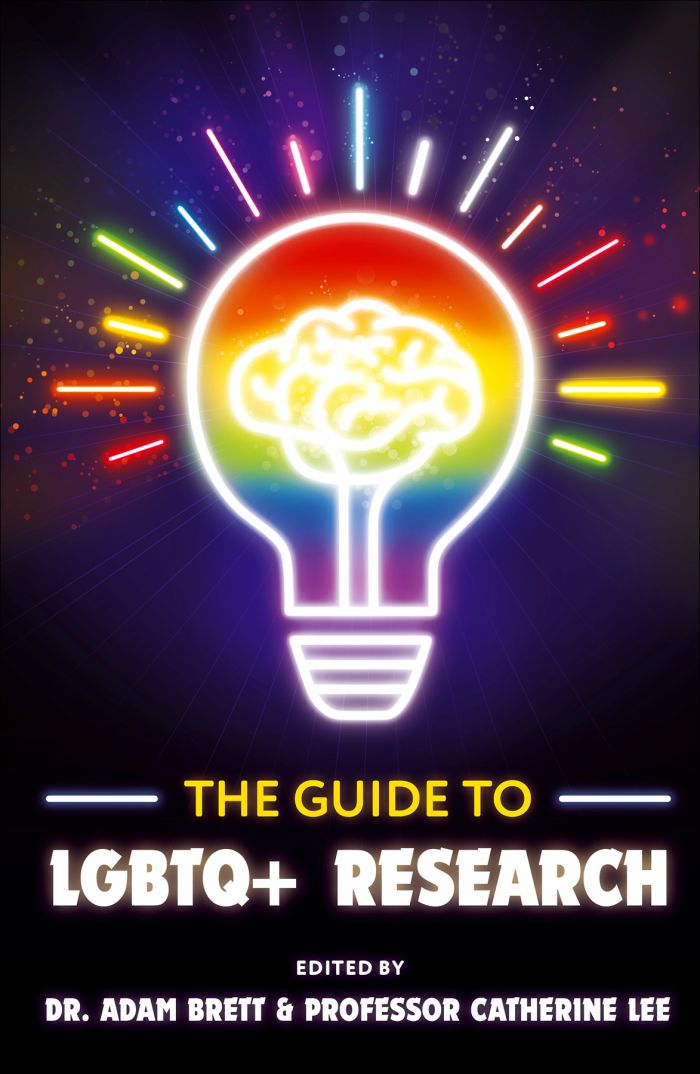

The Guide to LGBTQ+ Research

This book can be opened with

Note on our eBooks and Audiobooks: you can read our eBooks (ePUB or PDF) and listen to audiobooks on the free Emerald Books app on iOS, Android, and desktop. Or read and listen on Emerald's online reader (ePUB eBooks and audiobooks only). To purchase a digital book you will need to create an account if you don’t already have one. After purchasing you will receive instructions on how to get started.
- Description
- Contents
- Reviews
- About
A practical and accessible guide that researchers will draw on time and time again, The Guide to LGBTQ+ Research has at its heart, a commitment to inclusivity. Following the conventions of a doctoral thesis and drawing on the expertise of almost 40 contributors from the field of LGBTQ+ research, this guide offers invaluable support to anyone undertaking research with LGBTQ+ participants.
Sharing examples of good practice from those with experience of researching the LGBTQ+ community, each section comprises of vignettes, advice, and case studies from those working in this field. Contributors include a range of experienced academics, early career researchers, research supervisors and doctoral students working in the UK and internationally. Together their vast and diverse voices combine to create a network of support for anyone undertaking LGBTQ+ research.
The Guide to LGBTQ+ Research is an essential resource for anyone embarking on master’s or doctoral level study. Each chapter aims to build your confidence as a researcher as those with experience and expertise guide you through each stage of your studies. From drawing up your research proposal, right through to publishing from your studies and finding your first academic role, this book will be a vital source of support throughout your research with the LGBTQ+ community.
Introduction
- Part 1: Getting Started
- Chapter 1. Overcoming Imposter Syndrome; Adam Brett
- Chapter 2. Prospecting for gold: Finding your guide; Lyndsay Muir
- Chapter 3. Writing That LGBTQ+ Research Proposal; Kate Russell and Daniel Rogerson
- Chapter 4. The importance of language; Rebecca House
- Chapter 5. Writing about your own LGBTQ+ identity; Catherine Lee
- Chapter 6. Social Media and Networks of Support: Unlocking the Ivory Tower and Navigating its Halls; Charlotte Feather
- Part 2: Reviewing the Literature
- Chapter 7. The Purpose of a Literature Review; Alex Baird
- Chapter 8. Citing them Write: Crafting Inclusive Literature Reviews in LGBTQIA+ Research; Kayden Schumacher
- Chapter 9. Getting to grips with the main queer theorists; Liam Cini O’Dwyer
- Chapter 10. The Joy of Foucault: How his theoretical concepts can awaken the researcher-activist within; Ben Johnson
- Chapter 11. Getting to grips with Judith Butler: Exploring Gender Performativity; Catherine Lee
- Part 3: Positionality: Navigating subjective identities and perspectives
- Chapter 12. When research becomes personal: Infusing intersectional identities into your research; Bharat Bharat
- Chapter 13. Insider, Outsider: Participating Observer on a LGBTQ+ Leadership Development Programme; Alex Baird
- Chapter 14. Am I an Activist?; Frankie Frangeskou
- Chapter 15. Outsider positionality: Blurring the boundaries; Julie Wharton and Rhiannon Love
- Chapter 16. Navigating Insider/Outsider Dynamics: Reflections from Online Fieldwork with Chinese Queer Young Adults and Their Parents; Fengqiang Wang
- Part 4: Ethical Research with the LGBTQ+ Community
- Chapter 17. Rethinking and Reconceptualising Ethics in LGBT+ Research; Charlotte Feather
- Chapter 18. Navigating the Ethics Application Process; Helen Bushell-Thornalley
- Chapter 19. The ethical challenges of compulsory guardian consent for research with LGBTQ+ youth; Lois Ferguson and Kate Russell
- Chapter 20. Ethical considerations when working with LGBTQ+ children and young people; Lucy Jones
- Part 5: Methodology: Planning and collecting your research
- Chapter 21. Navigating participant recruitment when working with, for and as part of the LGBTQ+ community; Grace Cappy and Alex Powell
- Chapter 22. Getting your foot in the door when it seems to be closed: gaining access to participants in secondary schools; Mark Williams
- Chapter 23. Valuing quality over quantity: Recruiting participants within research of a sensitive nature; Beth Burgess
- Chapter 24. Conducting Focus Groups with LGBT+ Participants; David Murphy
- Chapter 25. Participatory Action Research with LGBT+ Co-researchers; Cait Jobson
- Chapter 26. The Power of Discussion: interviewing more than once; EJ-Francis Caris-Hamer
- Chapter 27. Que(e)rying traditional approaches: Using creative methods in LGBT+ research; Lis Bundock
- Part 6: Data, analysis, and discussion
- Chapter 28. LGBTQ+ Participant Representation: Getting it right; Katie Reynolds
- Chapter 29. Honouring your participants as people: representing the richness of neurodivergent and LGBT+ intersectional identities in data analysis; Helen Dring-Turner
- Chapter 30. Conducting thematic analysis with LGBTQ+ data; Jennifer Zwarthoed
- Chapter 31. Analysing narrative and discourse data; Stephen DiDomenico
- Chapter 32. Quantitative queer data and statistical assumptions; Daniel Rogerson
- Part 7: Conclusion: Making claims to knowledge and preparing for the viva
- Chapter 33. Fun with Failure: when your research does not go to plan; Pippa Sterk
- Chapter 34. Have I found ANYTHING? Making claims to knowledge and originality; R Harris
- Chapter 35. Preparing for the viva; Kate Russell and Liz Wands-Murray
- Part 8: Life after the doctorate: Getting your academic career started
- Chapter 36. Publishing from your research; Adam Brett
- Chapter 37. Sharing Queer knowledge in a heteronormative world: Navigating peer review in the publication process; Jessica Gagnon and Marco Reggiani
- Chapter 38. Starting your career queer: Navigating your first post as an LGBT individual; Alun DeWinter
- Conclusion
A timely and lucid research companion that will no doubt serve to reduce the challenges and loneliness felt by many who conduct LGBTQ+ research. Attesting to the power of stories and bonding, each chapter gifts a ‘tale from the field’ that helps demystify the journey of conducting LGBTQ+ research from inception to publication. I would have welcomed this book whilst doing my PhD and the caring embrace its contributors provide. That said, its arrival is still timely and will provide a useful guide and compass to my own and students research endeavours. Sadly, we inhabit a time where social justice is under threat and this can be clearly seen in education. A recent social media thread witnessed a raft of educators bemoaning the rise of EDI based research at the expense of that focusing on behaviour. For educational establishments to be the safe and welcoming environments they are oft-times purported to be, the voices of those historically silenced and marginalised needs to be amplified. The profession needs to care and share tales from LGBTQ+ researchers and allies and this book is a wonderful place to start. As the editors note, it is a privilege to conduct LGBTQ+ research and this book will help others navigate this path.
Queer theory and its development explained in an engaging, yet nuanced way. A great read for anyone, from a novice queer theory enthusiast to an expert.
This is not just an urgent and illuminating contribution to LGBTQ+ research. It also affords - through its nuanced and incisive accounts of producing research in this space - a vital intellectual and institutional network for LGBTQ+ scholars at an absolutely crucial time for this community
The Guide to LGBTQ+ Research has been a godsend, especially the introductions to queer theory, Foucault and Butler. As an early career researcher hoping to use queer theory as a lens, these chapters have been invaluable, offering a great overview of what is a complex and sometimes confusing field. The Guide is practical, engaging and generous with explanations and recommendations.
Liam Cini O’Dwyer offers an accessible and comprehensive introduction to queer theory: its origins, its complexities and its key thinkers and concepts. The work is an excellent starting point for anyone interested in dipping a toe into sexuality and gender research.
The Guide to LGBTQ+ Research is an essential resource presenting advanced scholarship in an accessible way. It offers PhD and MA students the specialised guidance necessary to navigate methodological challenges and confidently conduct rigorous, ethical research in the field of sexualities and gender.
The Guide to LGBTQ+ Research is an invaluable resource for those interested in engaging in LGBTQ+ inclusive and ethical research. It brings together diverse voices to offer practical insights and critical reflections that challenge and extend traditional approaches to research. This book is an empowering and supportive research community that you can carry with you in your bag.
This book is my 'go-to guide' help with my LGBT research; chapters combine, humour, practical advice with relatable experience which serve to not only allay any doubts in my own ability but deepen my own thoughts and writing.
The Guide to LGBTQ+ Research offers insightful and thought-provoking perspectives that broaden understanding and spark reflection. I especially appreciated the chapter on activism, which challenges readers to rethink what activism can mean in today’s world and how each of us can contribute to meaningful change.
The Guide to LGBTQ+ Research has been my definitive guide for my LGBTQ+ studies. It goes beyond the traditional methodology and provides insight into the unique ethical, historical, and methodological complexities inherent in the queer research. The real world examples, drawn together from such a diverse voice has been critical in my navigation of sensitive ethical protocols and has become an indispensable resource for my research.
Adam Brett is a researcher and lecturer in education at the University of Derby. With 15 years of experience as a secondary teacher and leader, Adam now works in the field of teacher education, and has research interests including LGBTQ+, diversity and inclusion, and professional identity. Adam is the founder of the LGBTQ+ Research Network and the co-founder of Pride & Progress, an initiative that supports LGBTQ+ inclusion in schools and universities. For more information, visit www.prideprogress.co.uk.
Catherine Lee is Professor of Inclusive Education and Leadership and Pro Vice-Chancellor and Dean in the Faculty of Arts, Humanities, Education and Social Sciences at Anglia Ruskin University in Cambridge. Catherine was awarded an MBE in 2023 for Services to Equality in Education and she has written extensively on LGBTQ+ inclusion in schools and universities. Catherine’s autoethnographic research on her experiences as a lesbian teacher under the homophobic Section 28 legislation was the subject of a BAFTA nominated feature film in 2022, entitled, Blue Jean.