
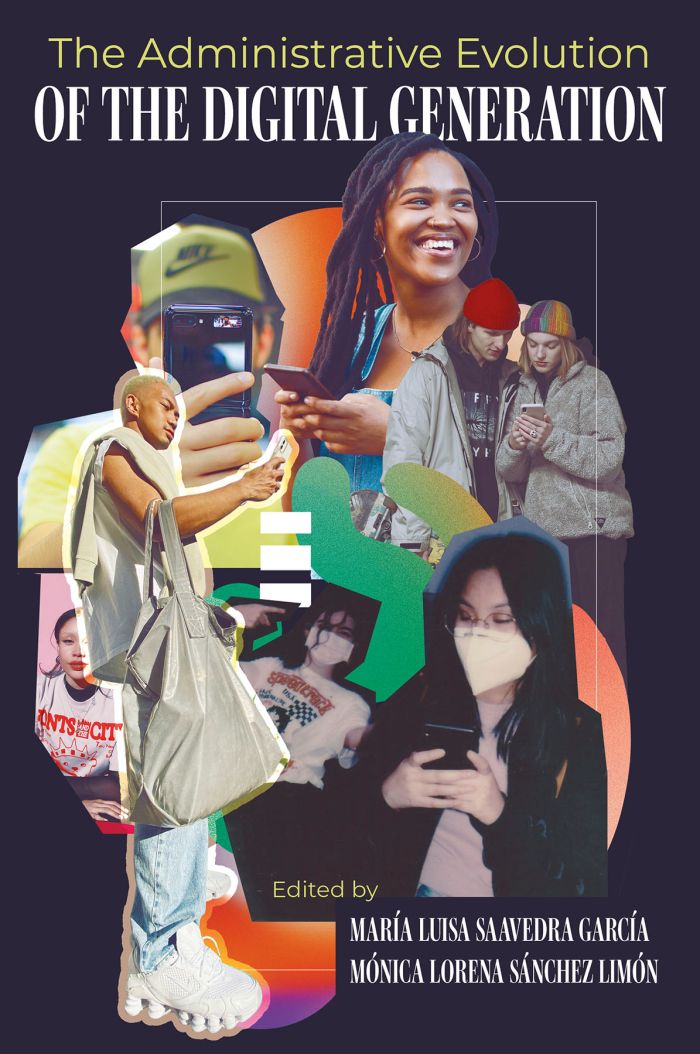
The Administrative Evolution of the Digital Generation

This book can be opened with

Note on our eBooks and Audiobooks: you can read our eBooks (ePUB or PDF) and listen to audiobooks on the free Emerald Books app on iOS, Android, and desktop. Or read and listen on Emerald's online reader (ePUB eBooks and audiobooks only). To purchase a digital book you will need to create an account if you don’t already have one. After purchasing you will receive instructions on how to get started.
- Description
- Contents
- About
The digital generation is working its way through the education system and into the workforce, the question for businesses, organizations and managers is how to successfully integrate this generation into the multigenerational workforce?
The main topic of this work has been developed following the concerns of organizations, who are facing the emergence of those born in an entirely digital world, these new individuals have a different paradigm, a unique culture, and their own perspectives about how to live their life and what to prioritize. Taking that into account the role of the new generations in organizations the following question arises: what does an organization have to do to make the most of the capabilities of this generation? The group of experts that participate in this book propose many actions that could lead to better organizational performance, along with the use of technological and digital tools to optimize processes, promote autonomy and empowerment to improve teamwork, and ways to reduce the issues of the generational gap.
Drawing on industry and academic research the thirteen chapters presented here allow for readers to discover methods and tools to better improve intergenerational ways of working.
This book has undergone external single anonymous peer reviewed before being accepted for publication.
Introduction; María Luisa Saavedra García and Mónica Lorena Sánchez Limón
- Part I. Gender equality in the new Gen Z era
- Chapter 1. Women’s economic empowerment, unpaid work, and care economy in Mexico; María Luisa Saavedra García, Pablo Daniel Palacios Duarte, and Katina Vanessa Bermeo Pazmiño
- Chapter 2. Effects of gender violence types on the intent to rotate among Tamaulipas women in the Gen Z era; Mónica Lorena Sánchez Limón, César Iván Mellado Ibarra, and Isela Yaneth Nava Martínez
- Part II. Universities’ challenges in the new Gen Z era
- Chapter 3. Academic support to promote an entrepreneurial mind-set among Gen Z students; Juan Bernardo Amezcua, Ana Lucía Ruiz Vigil, and Adriana Méndez Wong
- Chapter 4. Digital entrepreneurial skills in the Gen Z era: Identifying opportunities and planning actions; Julio César Castañón Rodríguez and David Josué Ortiz González
- Chapter 5. Conversational agents’ integration in distance education at a higher education institution; Diego Alan Ramírez Yañez and María Guadalupe Calderón Martínez
- Part III. Challenges in human talent management in the new Gen Z era
- Chapter 6. Employer brand appeal: Gen Z graduates’ expectations when selecting an employer in Mexico; Carlos Gabriel Colín Flores, Sergio Manuel Madero Gómez, and Santiago Colín Núñez
- Chapter 7. Social security overview for young people in Mexico and their employment benefits tax implications; Analaura Medina Conde, Uziel Flores Ilhuicatzi, and Héctor Alonso Olivares Aguayo
- Part IV. Sustainability in the new Gen Z era
- Chapter 8. SDGs in indigenous tourism destinations: A systematic literature review; Juan Carlos Balseca Ruiz and Arcelia Toledo López
- Chapter 9. Relationship between digitalisation and corporate sustainability: A literature review; Karina Guadalupe Cortina Calderón, Yesenia Sánchez Tovar, and Nallely Guadalupe Hernández Hernández
- Chapter 10. Circular economy practices in Mexico: A view from the new Gen Z era; Adalberto G. Del Ángel Lara, Arturo Briseño García, and Osvaldo García Mata
- Chapter 11. Governmental social responsibility: A Gen Z perspective; Martha Ríos-Manríquez and Lizbeth Pérez Rendón
- Part V. Consumers’ behaviour in the new Gen Z era
- Chapter 12. An analysis on health and environmental awareness, and the impact of COVID-19 on consumers’ lives and their intention to purchase organic foods; Judith Cavazos-Arroyo, Héctor Hugo Pérez-Villarreal, and Claudia García Tapia
- Chapter 13. Traditional commerce vs. Modern commerce in the Gen Z era; Julián Ferrer Guerra and Alejandro Guerrero Barrón
María Luisa Saavedra García is a permanent full-time “C” professor with 34 years of teaching experience, position that she has carried out without interruption at the Accounting and Administration Faculty (FCA) at the UNAM, Mexico, where she did her specialty studies in finance, master's and doctorate in administration.
Mónica Lorena Sánchez Limón is a Full Time Professor with 25 years of teaching experience, position that she has carried out without interruption at the Faculty of Accounting and Administration at the Autonomous University of Tamaulipas, Mexico where she did her specialty studies in innovation and entrepreneurship, master's and doctorate in administration.