
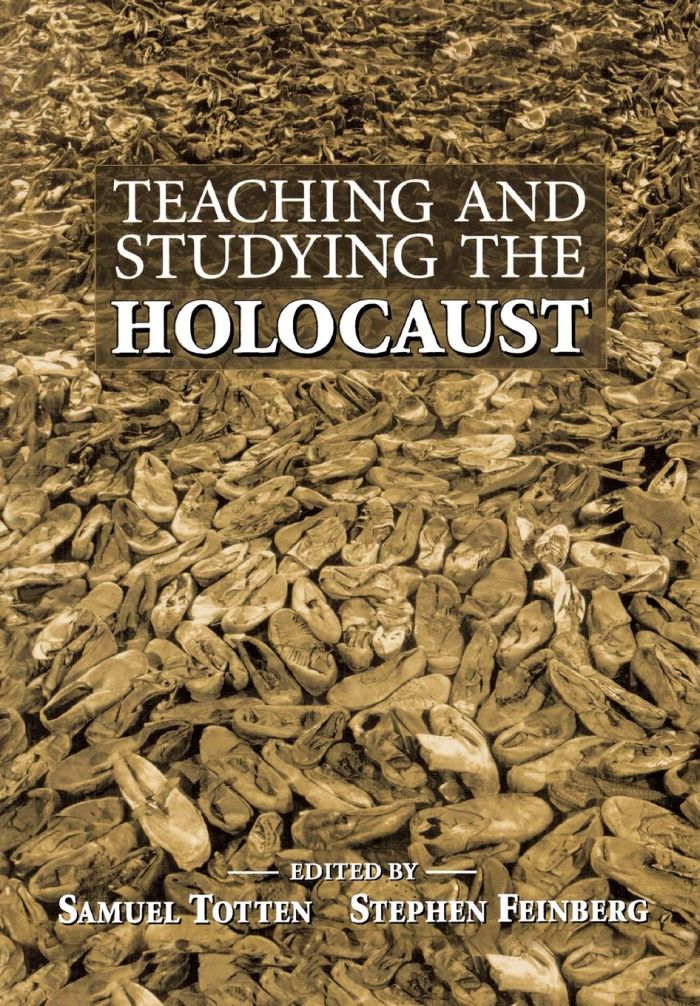
Teaching and Studying the Holocaust

This book can be opened with

Note on our eBooks and Audiobooks: you can read our eBooks (ePUB or PDF) and listen to audiobooks on the free Emerald Books app on iOS, Android, and desktop. Or read and listen on Emerald's online reader (ePUB eBooks and audiobooks only). To purchase a digital book you will need to create an account if you don’t already have one. After purchasing you will receive instructions on how to get started.
- Description
- Contents
(Originally Published in 2000 by Allyn & Bacon)
Teaching and Studying the Holocaust is comprised of thirteen chapters by some of the most noted Holocaust educators in the United States. In addition to chapters on establishing clear rationales for teaching this history and Holocaust historiography, the book includes individual chapters on incorporating primary documents, first person accounts, film, literature, art, drama, music, and technology into a study of the Holocaust. It concludes with an extensive and valuable annotated bibliography especially designed for educators. Chapter Ten instructs how to make effective use of technology in teaching and learning about the Holocaust. The final section of the book includes a bibliography especially developed for teachers that lists invaluable resources.
Foreword; Dr. John K. Roth
- Preface; Stephen Feinberg and Samuel Totten
- Acknowledgments
- About the Contributors
- Chapter 1. The Significance of Rationale Statements in Developing a Sound Holocaust Education Program; Samuel Totten, Stephen Feinberg, and William Fernekes
- Chapter 2. The Holocaust, Historiography, and History; David M. Crowe
- Chapter 3. Instructional Issues/Strategies in Teaching the Holocaust; Paul Wieser
- Chapter 4. Using Primary Documents in a Study of the Holocaust; Samuel Totten and Robert Hines
- Chapter 5. Incorporating First-Person Accounts into a Study of the Holocaust; Samuel Totten
- Chapter 6. Choosing Holocaust Literature for Early Adolescents; Karen Shawn
- Chapter 7. Incorporating Fiction and Poetry into a Study of the Holocaust at the Secondary Level; Samuel Totten
- Chapter 8. For Better or Worse: Using Film in a Study of the Holocaust; Judith Doneson
- Chapter 9. Expressing the Inexpressible through Film; John Michalczyk and Steve Cohen
- Chapter 10. The Internet and the Study of the Holocaust; Derek S. Symer
- Chapter 11. The Inclusion of the Art in a Study of the Holocaust; Shari Rosenstein Werb
- Chapter 12. Drama Activities and the Study of the Holocaust; Belarie Zatzman
- Chapter 13. Including Music in a Study of the Holocaust; Roselle K. Chartock