
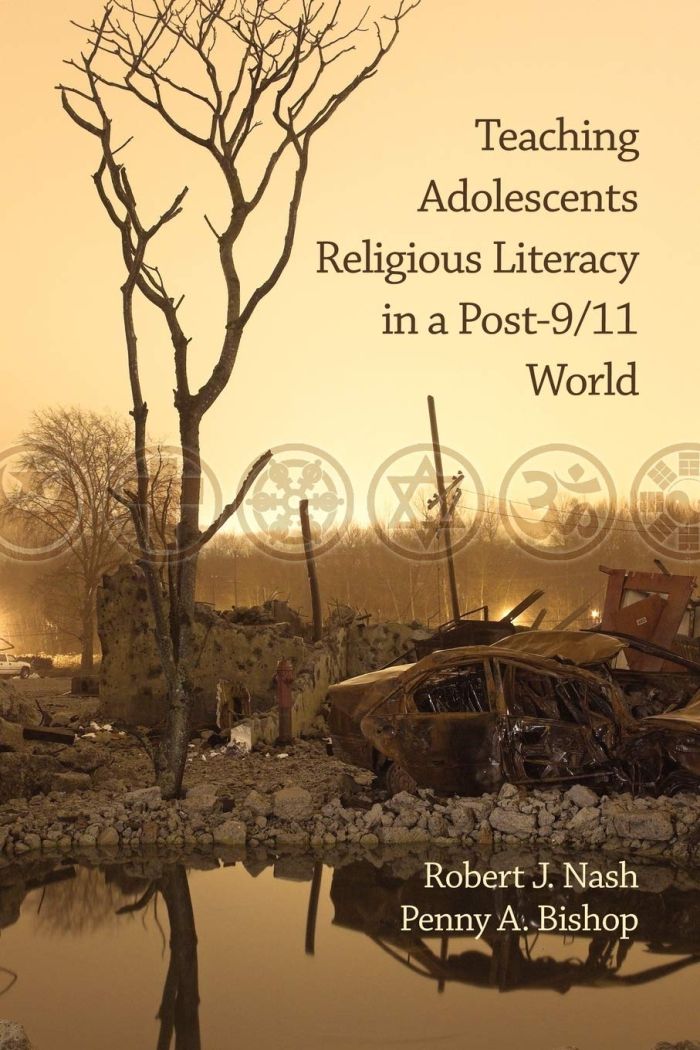
Teaching Adolescents Religious Literacy in a Post-9/11 World

This book can be opened with

Note on our eBooks and Audiobooks: you can read our eBooks (ePUB or PDF) and listen to audiobooks on the free Emerald Books app on iOS, Android, and desktop. Or read and listen on Emerald's online reader (ePUB eBooks and audiobooks only). To purchase a digital book you will need to create an account if you don’t already have one. After purchasing you will receive instructions on how to get started.
- Description
- Contents
For thousands of years, religion has been a key element of human societies. Whenever we, as educators, exclude or minimize religion’s vast role in society, we leave out a large part of our world’s shared history. This is a serious act of educational omission, even neglect, on the part of our nation’s public middle and secondary schools, particularly when adolescents are so ready to engage in meaningful conversation about the world that surrounds them. Our book’s central purpose is to provide middle-level and high school teachers with the necessary background knowledge and pedagogical skills necessary to help adolescents become religiously literate learners and citizens. Currently, there is no text like ours on the market that both covers a number of world religions, and presents concrete recommendations for teaching and learning this material. Our book is meant to educate the following audiences: teacher educators, middle-level and high school teachers in all content areas, administrators, school boards, and parents.
For us, educating for religious literacy is all about bringing adolescents into the 21st century of teeming religious and spiritual diversity—a long-neglected component of the multicultural curriculum in public schools. In a post-9/11 world, religious literacy requires that students understand the whats and whys of differing religious beliefs, both in their own country and elsewhere. It means looking for commonalities, as well as differences, between and among the great wisdom traditions—both nationally and internationally. It is about understanding how all of us might live peacefully in a religiously diverse world. Our book accomplishes these goals by being informative, practical, experiential, case-based, and, above all, accessible to beginners.
Preface.
- Chapter 1. Making the Case.
- Chapter 2. The Narrative of Judaism.
- Chapter 3. The Narrative of Christianity.
- Chapter 4. The Narrative of Islam.
- Chapter 5. The Narrative of Hinduism.
- Chapter 6. The Narrative of Buddhism.
- Chapter 7. Religious Controversies and Misconceptions.
- Chapter 8. The Religious Literacy Toolbox.
- Chapter 9. Some Lesser Known Religious Narratives.
- Appendix
- References