
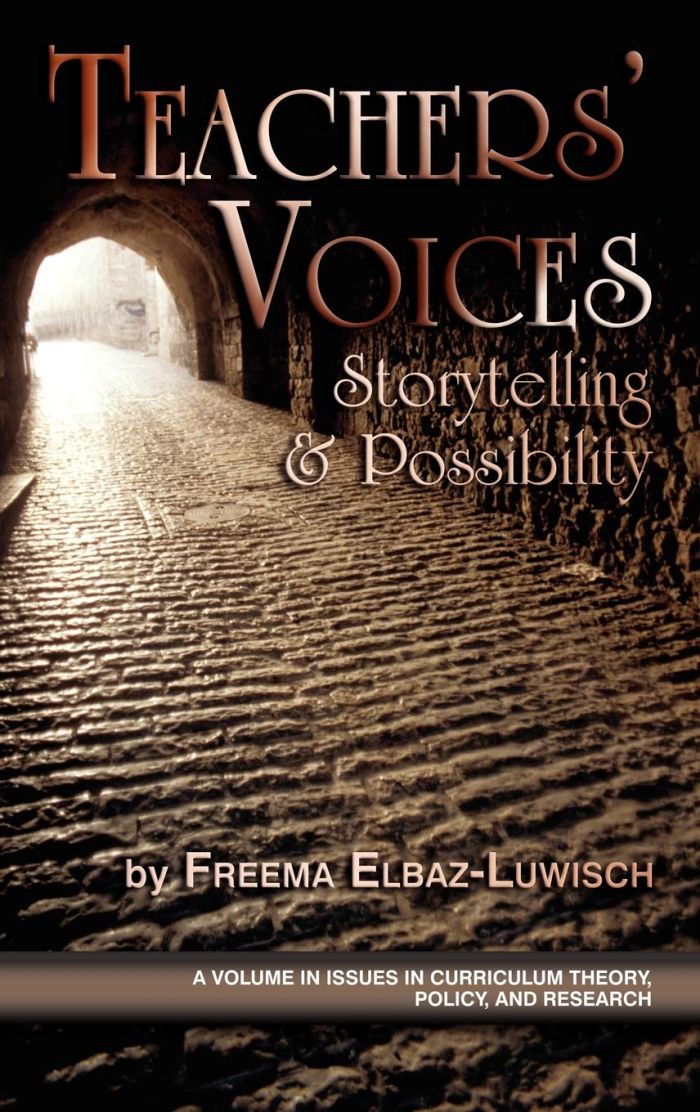
Teachers' Voices
Storytelling and Possbility

This book can be opened with

Note on our eBooks and Audiobooks: you can read our eBooks (ePUB or PDF) and listen to audiobooks on the free Emerald Books app on iOS, Android, and desktop. Or read and listen on Emerald's online reader (ePUB eBooks and audiobooks only). To purchase a digital book you will need to create an account if you don’t already have one. After purchasing you will receive instructions on how to get started.
- Description
- Contents
This book draws on ideas about the nature of teaching and teacher knowledge, teacher development and school reform, and narrative as methodology for understanding the lives and work of teachers. These ideas have been elaborated over the past 20 years or so by many researchers who see storytelling as the interactive process, which constitutes the site of the production of teachers’ knowledge. Narrative research makes it possible to pay attention to the wider concerns that shape the work of teaching, looking at the whole lives of teachers and other educational practitioners, and exploring those lives as embedded in multiple contexts. Listening to teachers speak about whatever most concerns them in their work, it is not surprising that we hear a wide range of different voices not only from different teachers but within the speech of any one teacher. The purpose of this book is to reflect back to the field a multidimensional, multivoiced portrayal of teaching as it is, bringing our attention to both the complexity and the possibility inherent in the work of teachers. Approaching teaching in this way, as multivoiced, allows us to hear possibilities for change and development in the stories of teachers and classrooms.
Acknowledgments
- Introduction
- Chapter 1. Teaching Story as Dialogue
- Chapter 2. Narrative Identity and Narrative Method: Arts and Practices of Attentiveness
- Interlude I: Body Voices
- Chapter 3. Stories of Teacher Development: Holding Complexity
- Interlude II: The Presence
- Chapter 4. Arts and Practices of Writing and Restorying
- Interlude III: Listening to Oneself
- Chapter 5. Arts and Practices of Valuing: Moral Voices in Teaching
- Interlude IV: Love and Care
- Chapter 6. Arts and Practices of Innovation: Imagining and Revisioning
- Interlude V: The Position of Control
- Chapter 7. Arts and Practices of Making Place
- Chapter 8. Storytelling and Border-Crossing: Shaping Dialogic Identities as Teachers
- Chapter 9. Voices and Possibilities: Teaching/Research Story as Arabesque
- References
- Index