
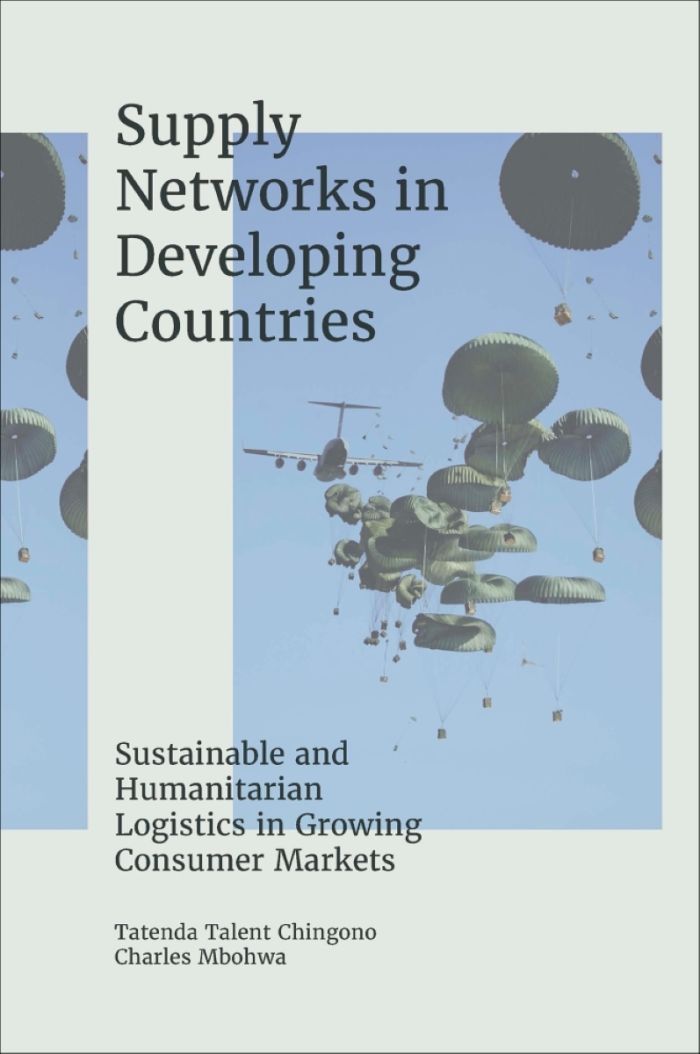

Supply Networks in Developing Countries
Sustainable and Humanitarian Logistics in Growing Consumer Markets

This book can be opened with

Note on our eBooks and Audiobooks: you can read our eBooks (ePUB or PDF) and listen to audiobooks on the free Emerald Books app on iOS, Android, and desktop. Or read and listen on Emerald's online reader (ePUB eBooks and audiobooks only). To purchase a digital book you will need to create an account if you don’t already have one. After purchasing you will receive instructions on how to get started.
- Description
- Contents
- About
Contributing to research, knowledge, and discourse on humanitarian logistics and supply chains in Africa, Supply Networks in Developing Countries introduces a unique perspective on the developing world, and how their supply networks can be enhanced and optimized.
The authors highlight the 4th Industrial Revolution, information technology, reverse logistics, supply chain modelling and block-chains, and how these can be the key to strengthening humanitarian logistics in developing countries. It discusses humanitarian supply chain management issues in relation to the increasing numbers of disasters and the complexity and magnitude of global emergency relief operations.
By exploring the roles and responsibilities of major stakeholders including donors, relief agencies, NGOs, governments, academia and cooperate business, this book provides the skills and knowledge needed to manage supply chains in both unpredictable and dire environments.
Chapter 1. Humanitarian Logistics, Identifying and Reacting to Disasters
- Chapter 2. Frameworks Supporting Humanitarian Logistics
- Chapter 3. Disasters in Selected Emerging Economies
- Chapter 4. Supply Chain Channels and Network Design
- Chapter 5. Supply Chain Systems and Disaster Management
- Chapter 6. Modelling Humanitarian Supply Chains
- Chapter 7. Strategies and Opportunities for Reverse Logistics
- Chapter 8. Information Technology in Humanitarian Logistics
- Chapter 9. Humanitarian Logistics in the 4th Industrial Revolution
- Chapter 10. Humanitarian Logistics: The Way Forward
Tatenda Talent Chingono is a recent PhD graduate from the University of Johannesburg in South Africa. From 2017 till the end of 2019, he gave lectures on modules in operations management, management of training, and logistics at the University of Johannesburg. At Johannesburg's Regent Business School, he has also given lectures on supply chain management. He has published more than 20 papers, including three book chapters.
Charles Mbohwa is a Visiting Professor at the University of Johannesburg. He was a Fulbright Scholar 2006/2007 at the Supply Chain and Logistics Institute at the School of Industrial and Systems Engineering, Georgia Institute of Technology and has won many fellowships and awards. He has had research exchange activities with researchers from more than 30 countries.