
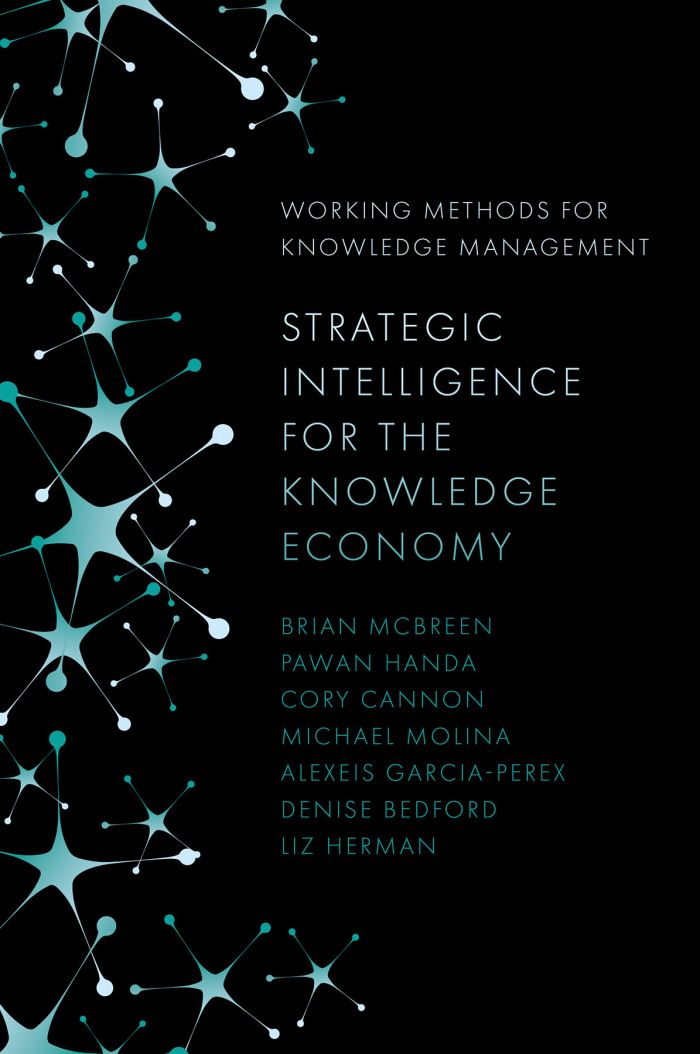
Strategic Intelligence for the Knowledge Economy

This book can be opened with

Note on our eBooks and Audiobooks: you can read our eBooks (ePUB or PDF) and listen to audiobooks on the free Emerald Books app on iOS, Android, and desktop. Or read and listen on Emerald's online reader (ePUB eBooks and audiobooks only). To purchase a digital book you will need to create an account if you don’t already have one. After purchasing you will receive instructions on how to get started.
- Description
- Contents
- About
In 2025 the shift from an industrial to a knowledge economy is underway. The shift has introduced changes in our essential economic assumptions and models in how markets behave and the nature and sources of capital. The shift is affecting the way we do business and the ways we manage our organizations and operations. Over the past two hundred years, we have developed and perfected methods and tactics to help us analyze and cope with the economic environment. These established methods and tactics are no longer sufficient. The knowledge economy requires a new foundation of knowledge capital. To be strategic and intelligent the old analytical methods just adapt, and new methods are needed.
The latest volume of Working Methods for Knowledge Management speaks to doing intelligence in the dynamic, chaotic and continuously changing environment of the 21st century. It is predicated on the understanding that every intelligence situation or dilemma is unique. It is predicated on the rapidly evolving shift in management and the changing nature and structures of organizations. The authors consider the changing nature of markets, economic transactions, and competition in the knowledge economy. What can we learn from exploring the new economic environment to design a new approach to strategic intelligence?
The authors make a case for strategic intelligence grounded in knowledge capital assets and present a conceptual model and framework for managers and practitioners to consider in designing a new approach. The conceptual model considers eight critical factors when designing a new approach with the text providing in-depth explanation of these factors. By adapting the existing tools and developing new tools to transform this critical practice for the knowledge economy, strategic intelligence offers an indispensable guide for anyone working in the knowledge and business management spaces.
Section 1. Making the Case for the New Strategic Intelligence
- Chapter 1. Strategic Intelligence in Transition
- Chapter 2. The New Strategic Intelligence
- Chapter 3. Getting to There from Here
- Section 2. Knowledge and the New Strategic Intelligence Process
- Chapter 4. Intelligence Situations and Dilemmas
- Chapter 5. Building Scenarios to Understand the Future
- Chapter 6. The Environment: Scanning, Surveilling and Sensing
- Chapter 7. Situational Awareness: Knowing What to Look for
- Chapter 8. Actors and Roles in an Intelligence Situation
- Chapter 9. Actionable Knowledge for a Situation
- Chapter 10. Assessing the Consequences and Effects of Intelligence Decisions
- Chapter 11. Strategically Intelligent Decision and Choices
- Section 3. Building Strategic Intelligence Capacity for a Knowledge Economy
- Chapter 12. Building Strategic Intelligence Capacity, Capabilities and Competencies
- Chapter 13. Strategic Intelligence and Knowledge Ethics
- Chapter 14. The Shifting Landscape of Actors
- Chapter 15. Strategic Intelligence Diagnostics and Preparedness
Brian McBreen, Independent Scholar, USA.
Pawan Handa, Goodyear Tire & Rubber Company (retired), USA.
Cory Cannon, University of Maryland Global Campus, USA.
Michael Molina, Oklahoma Transportation Library, USA.
Alexeis Garcia-Perez, Aston University, UK.
Denise Bedford, Georgetown University, USA.
Liz Herman, Independent Scholar, USA.