
Silent Partners in Multicultural Education

This book can be opened with

Note on our eBooks and Audiobooks: you can read our eBooks (ePUB or PDF) and listen to audiobooks on the free Emerald Books app on iOS, Android, and desktop. Or read and listen on Emerald's online reader (ePUB eBooks and audiobooks only). To purchase a digital book you will need to create an account if you don’t already have one. After purchasing you will receive instructions on how to get started.
- Description
- Contents
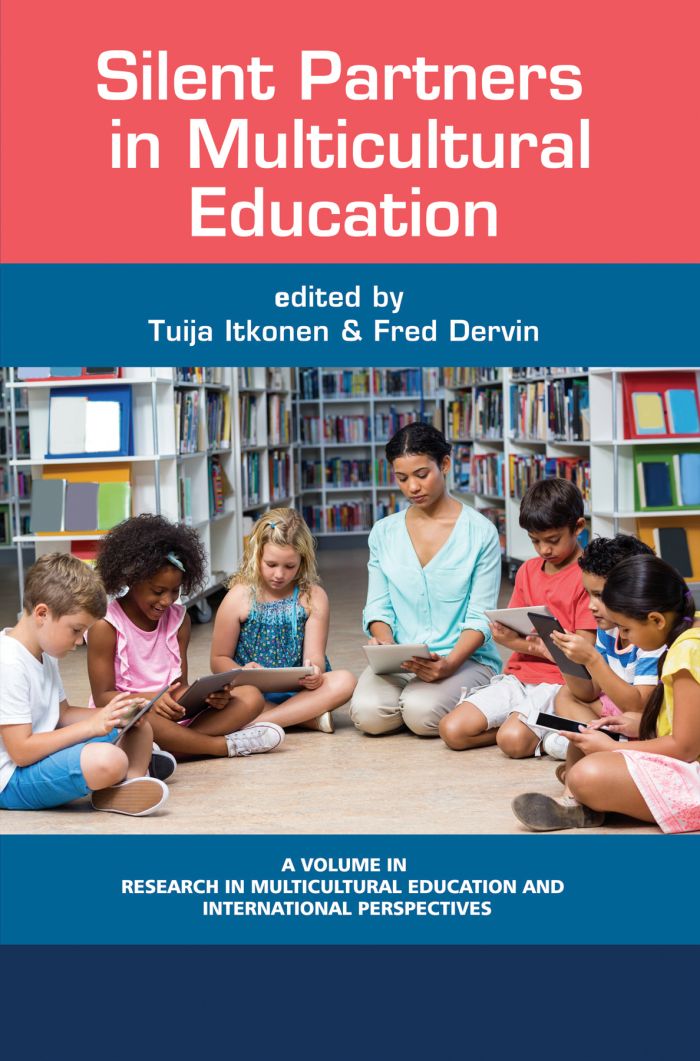
This volume aims to stimulate interest in the under-researched role of silent partners (SPs) in multicultural education. Silent partners include formal and informal places-spaces in schools (e.g. architecture, classroom facilities, libraries, corridors, playgrounds, canteens), objects (e.g. teaching aids, furniture, wall decorations and overall interior design), interactive technologies (use of devices and applications) but also often taken-for-granted and not immediately visible patterns of thought, ideologies and assumptions.
People involved in education all engage and work with a number of SPs that contribute to the delivery of curricula, but also to social life and well-being in and out of schools. The way places-spaces, objects and technologies influence the school community’s experiences of learning, well-being and social justice is rarely observed and problematised in education – hence the adjective ‘silent’ in the term ‘silent partners’.
Foreword; Silvia Sasot.
- Introduction; Fred Dervin and Tuija Itkonen.
- Section I. Theoretical and Methodological Underpinnings.
- Chapter 1. Reading the World as Texts: Intertextuality in Theory and Practice for (Art) Education; Martina Paatela-Nieminen and Tuija Itkonen.
- Chapter 2. Analyzing Curricula Documents: A Model for Understanding and Cultivating School Subjects, and One's Subjectivity; Liisa Hakala and Tiina Kujala.
- Section II. Uncovering the Roles of Silent Partners.
- Chapter 3. Constructing Norms and Silences on Power Issues Related to Diversities Displayed in School Spaces: Analysis of Schools in Finland and the United States; Anna-Leena Riitaoja, Etta Kralovec, Heidi Layne, Haiqin Liu, Rick Orozco, and Heini Paavola.
- Chapter 4. Poblano High School: Signifying the Possibilities of Silent Partners; Richard A. Orozco.
- Chapter 5. That Makes Us Very Unique: A Closer Look to the Institutional Habitus of Two International Schools in Finland and France; Saija Benjamin and Amin Alemanji.
- Chapter 6. The Quest for the International Campus: Where the Silent Reality Meets the Loud Fantasy? Anu Härkönen, Mika Launikari, and Fred Dervin.
- Section III. Pushing the Possibilities Offered by Silent Partners.
- Chapter 7. GET OUT! Developing Pedagogical Practice for Extended Learning Spaces in Intercultural Education; Hanna Posti-Ahokas, Hille Janhonen-Abruquah, and Rita Johnson Longfor.
- Chapter 8. Beyond a Starless Midnight of Racism? Aminkeng A. Alemanji and Fred Dervin.
- About the Authors.