
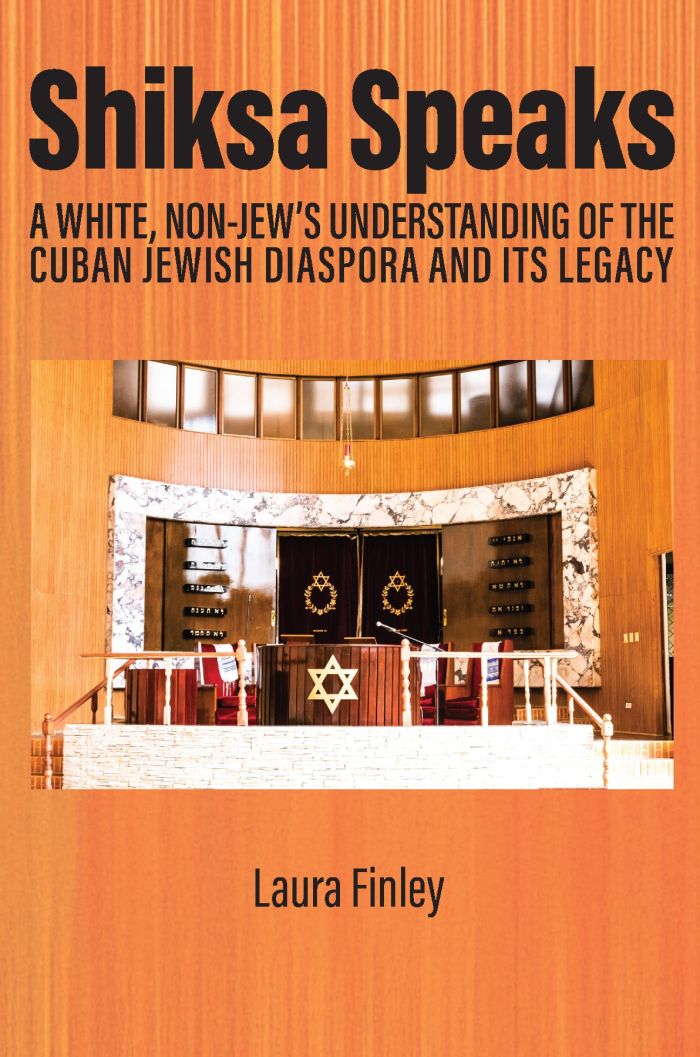

Shiksa Speaks
A White, Non-Jew’s Understanding of the Cuban Jewish Diaspora and Its Legacy

This book can be opened with

Note on our eBooks and Audiobooks: you can read our eBooks (ePUB or PDF) and listen to audiobooks on the free Emerald Books app on iOS, Android, and desktop. Or read and listen on Emerald's online reader (ePUB eBooks and audiobooks only). To purchase a digital book you will need to create an account if you don’t already have one. After purchasing you will receive instructions on how to get started.
- Description
- Contents
- About
Shiksa Speaks: A White, Non-Jew’s Understanding of the Cuban Jewish Diaspora and Its Legacy focuses on Cuban Jews, or Jewbans, whose family emigrated from Eastern Europe to the island in the 1920s then again to the US after the 1959 revolution in which Fidel Castro took power. It highlights the historical, social, cultural, and political experience of Jewbans as well as the narratives they have passed along to subsequent generations residing largely in South Florida. This “double diaspora,” as it has been called, is of personal and scholarly interest. This book is mix of history with personal narratives shared in interviews with Jewbans across three generations.
After an introduction and brief history of the Jewban diaspora, the book is organized into two parts. Part One is organized around themes that emerged from personal interviews as well as from prior research. Part One includes five chapters: identity, community, family, work ethic, risk-taking and resilience, and idealized Cuba. In Part Two, themes that have been identified in other research but that were minimally noted by interviewees form the basis of the chapters. These are privilege and politics today. The book concludes with personal commentary from the perspective of the daughter of an immigrant with a significantly different trajectory and offers thoughts on what the Jewban story offers to the areas of immigration studies and diasporas as well as the ways the narratives told by the Jewban double diaspora do and do not help promote a more peaceful and just world.
Chapter 1. The First Jews in Cuba Until Revolutionary Cuba
- Chapter 2. Jewban Exiles from the Revolution
- Chapter 3. Identity, Family and Community Amongst the Jewbans
- Chapter 4. Risk-Taking, Work Ethic, and Resilience
- Chapter 5. Idealized Pre-Revolutionary Cuba
- Chapter 6. Privilege
- Chapter 7. Cuba Post-Exile, Meh
Laura Finley, Ph.D., is Professor of Sociology & Criminology at Barry University in Miami Shores, Florida.