
Sensuous Unity of Art and Science
The Times of Rudolf II

This book can be opened with

Note on our eBooks and Audiobooks: you can read our eBooks (ePUB or PDF) and listen to audiobooks on the free Emerald Books app on iOS, Android, and desktop. Or read and listen on Emerald's online reader (ePUB eBooks and audiobooks only). To purchase a digital book you will need to create an account if you don’t already have one. After purchasing you will receive instructions on how to get started.
- Description
- Contents
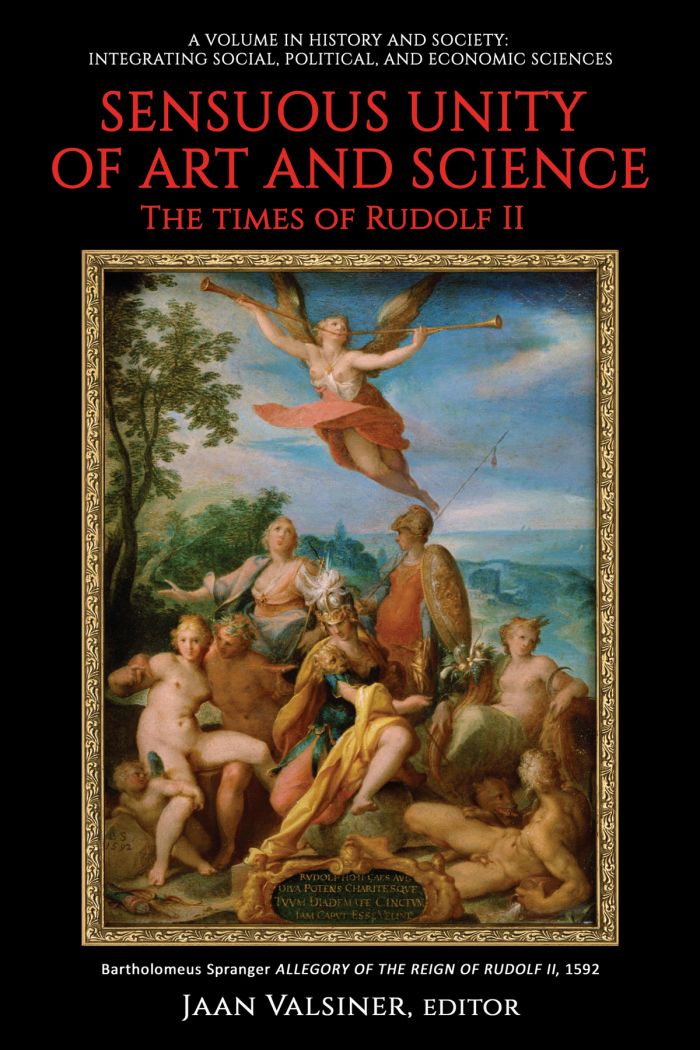
The goal of this book is to locate the birth pangs of psychology—the study of the psyche—in in the Renaissance unity of art and science. The historical period 1583-1611 in Prague was a particularly productive for all Europe in its intellectual advancements in art and science. It was facilitated by the special personality of the Holy Roman Emperor Rudolf II who during his reign made Prague the capital of the Empire where the major artists, scientists, architects and alchemists came together in the service of the Emperor and formed a unique context of interdisciplinary synthesis of ideas that enhanced European philosophies, sciences, and arts in the following centuries. While the history of art in and astronomy in the Rudolfine era has been amply covered, the impacts of the intellectual atmosphere of the era on psychology, philosophy, social ideologies, and aesthetics has remained scarcely investigated. The volume includes analyses of history of ideas in psychology, sociology and other social sciences that received the impetus of the political situation of Rudolfine Prague with religious tolerance and decline of the political power of the Holy Roman Empire.
Series Editors Preface; Mario Carretero.
- Introduction: Sensuality of Generalized Knowledge; Jaan Valsiner.
- Part I: The Historical Background: Rudolfine Prague As An Oasis Of Art And Science.
- Chapter 1. The Political Cradle for Rudolf II: Tensions in the Holy Roman Empire; Jaan Valsiner.
- Chapter 2. The Union of the Opposites: Rabbi Loew, The Maharal of Prague; Tania Zittoun.
- Part II: The Liminal Zone: Art, Alchemy, And Science Intertwined.
- Chapter 3. Art and Political Power in Dialogue: The Emperor's Choice; Jaan Valsiner.
- Chapter 4. Harmony of the World and the Ambivalence of the Other; Jaan Valsiner.
- Chapter 5. The Development of Psychological Polyphony in the Liminal Area of the Rudolfine Court: The Case of Kepler's Music of the Spheres and Maier's Atalanta Fugiens; Raffaele De Luca Picione.
- Chapter 6. Creating Glory Out of Miseries: Anatomy of the Making of Visual Allegories; Jaan Valsiner.
- Part III: Growth Of Ideas.
- Chapter 7. The Emerging Science: Art and Astronomy in the Making of a Gendered Knowledge Society; Jaan Valsiner.
- Chapter 8. Let a Hundred Flowers Blossom: The Intellectual Atmosphere Around the Rise of Psychology in the 16th Century; Sven Hroar Klempe.
- Chapter 9. Between Art and Infinity: Principles of Geometric Generalization; Jaan Valsiner.
- Chapter 10. General Conclusion: The Decline of the Empire and Freedom Through Art; Mario Carretero.
- About the Authors.