
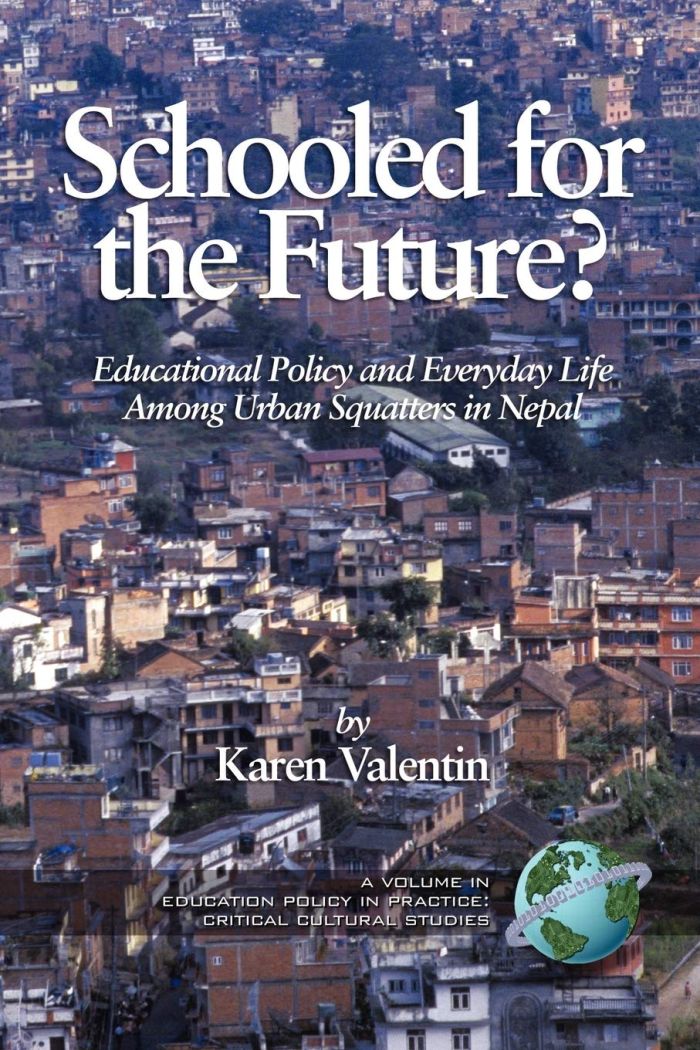
Schooled for the Future? Educational Policy and Everyday Life Among Urban Squatters in Nepal

This book can be opened with

Note on our eBooks and Audiobooks: you can read our eBooks (ePUB or PDF) and listen to audiobooks on the free Emerald Books app on iOS, Android, and desktop. Or read and listen on Emerald's online reader (ePUB eBooks and audiobooks only). To purchase a digital book you will need to create an account if you don’t already have one. After purchasing you will receive instructions on how to get started.
- Description
- Contents
“Schooled for the future?” offers an ethnographically rich account about squatter families in Kathmandu and their struggles to improve their living conditions and create a better future through education. Examining how people – children and adults - experience and respond to policy initiatives aimed at improving their life the book discusses the paradoxes inherent in modern schooling. Firstly, schooling promises social justice and equal opportunities, yet it also contributes to the reproduction of social inequalities by strengthening existing class divisions and by producing a new category of unschooled people. Secondly, within the context of the family, schooling is attributed an economic and symbolic value, but it is also considered a potential threat to family values based on generational hierarchy and caste identity. Through detailed ethnographic accounts the author demonstrates how urban poor families experience the schooling process ambivalently, both as a source of alienation and inferiority as well as a source of self-esteem and sense of progress. Acknowledging the interconnect-edness between global, national and local forces framing and informing processes of education the book, thus, sheds light on the complex relationship between educational policy and everyday life experiences of the urban poor in Kathmandu, a hitherto understudied segment of the Nepalese society.
Preface.
- Introduction: A Policy Perspective on the Paradox of Schooling.
- Chapter 1. Exploring Ramaghat: Social Differentiation in the Context of Ruban Squatting.
- Chapter 2. Education and Nation Building in Nepal: An Historical Perspective.
- Chapter 3. Dealing with Diversity and Hierarchy: Schooling and Social Exclusion.
- Chapter 4. Dreams and Realities: The Struggle for a Better Life.
- Chapter 5. "We Want Education": Children's Rights and the Appropriation of Egalitarian Ideas.
- Chapter 6. The "Schooled Person": Negotiating Caste and Generation.
- Conclusion: Education Policy and the Paradoxes of Schooled Social Exclusion.
- Bibliography.