
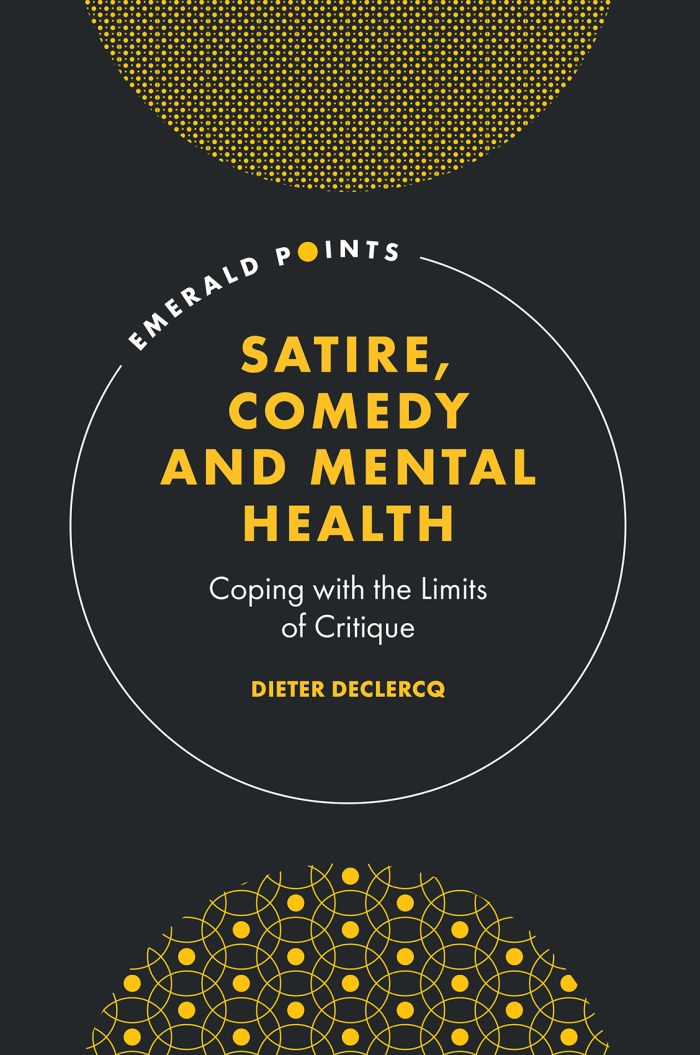

Satire, Comedy and Mental Health
Coping with the Limits of Critique

This book can be opened with

Note on our eBooks and Audiobooks: you can read our eBooks (ePUB or PDF) and listen to audiobooks on the free Emerald Books app on iOS, Android, and desktop. Or read and listen on Emerald's online reader (ePUB eBooks and audiobooks only). To purchase a digital book you will need to create an account if you don’t already have one. After purchasing you will receive instructions on how to get started.
- Description
- Contents
- Reviews
- About
Chapter 1. What is satire?; Chapter 2. Satire as therapy: curing a sick world?; Chapter 3. Satire as therapy revisited: coping with a sick world; Chapter 4. The solace of entertainment; Chapter 5. Comic irony and narrative coping;
'Dieter Declercq's main argument is that one of the important aspects of satire is its ability to help us cope with a frustrating reality. Satire helps us accept the facts that are troublesome and at the same time without our reach, that is, things we cannot change. At the same time, it helps us keep our opposition to this state of the world and not just give in and give up. The book is thus both a realistic critique of those who have hailed satire as a cornerstone of democracy and a way to overthrow despots, and a defense of satire as a means for both the artist and the public to maintain a state of mental health. In other words, satire is not saving the world, but it might save us. The book is truly interdisciplinary, with examples picked from recent popular culture, rather than Classic literature. The book is accessible and a brilliant introduction to the question of why satire has kept its popularity for more than 2000 years.'
‘In his book, Satire, Comedy, and Mental Health-Coping with Limits of Critique, Dr. Dieter Declercq offers us a welcomed tonic for our heightened existential angst born of pandemic, economic crisis, and social injustice. His is a carefully reasoned, critical approach. He provides a convincing theoretical argument for satire as narrative tool in the service of authenticity. His scholarly exposition of the interface of satire with its interdisciplinary foundations is refreshingly clear and concise. It is a must read for humanities scholars and health practitioners alike.’