
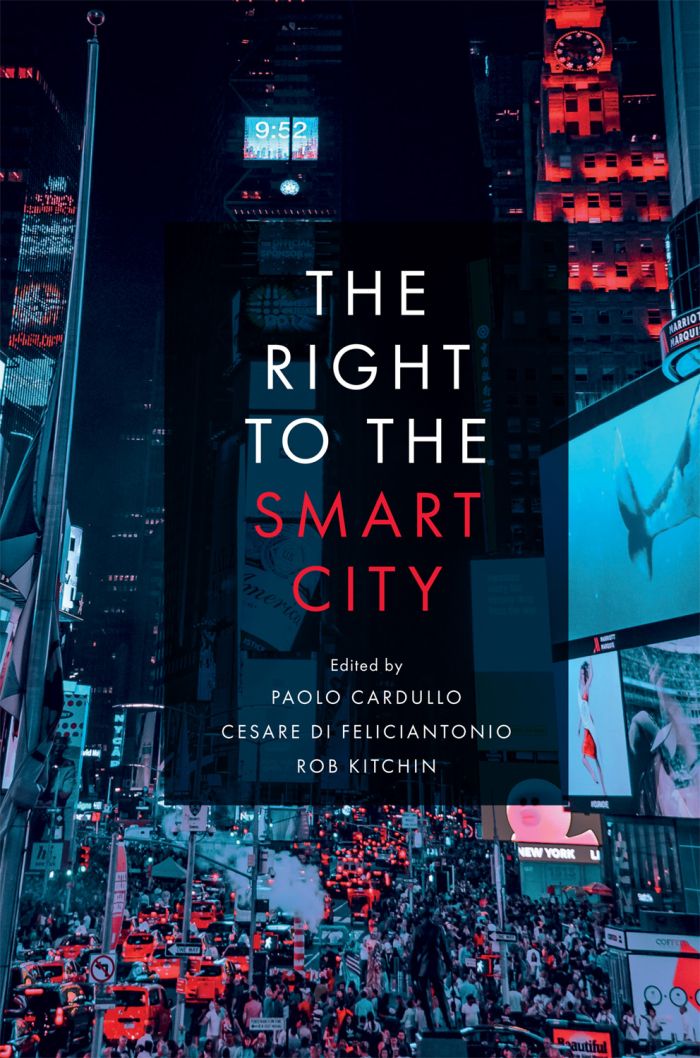
The Right to the Smart City

Paolo Cardullo|Cesare Di Feliciantonio|Rob Kitchin
Emerald
Emerald

This book can be opened with

Glassboxx eBooks and audiobooks can be opened on phones, tablets, iOS and Android devices

Paperback / softback
9781787691421
05 September 2022
£20.99
Hardback
9781787691407
07 June 2019
£67.99
eBook (PDF)
9781787691391
07 June 2019
£20.99
eBook (ePub)
9781787691414
07 June 2019
£20.99

Note on our eBooks and Audiobooks: you can read our eBooks (ePUB or PDF) and listen to audiobooks on the free Emerald Books app on iOS, Android, and desktop. Or read and listen on Emerald's online reader (ePUB eBooks and audiobooks only). To purchase a digital book you will need to create an account if you don’t already have one. After purchasing you will receive instructions on how to get started.

  • Description
  • Contents
  • About
Cities around the world are pursuing a smart cities agenda. In general, these initiatives are promoted and rolled-out by governments and corporations which enact various forms of top-down, technocratic governance and reproduce neoliberal governmentality. Despite calls for the smart city agenda to be more citizen-centric and bottom-up in nature, how this translates into policy and initiatives is still weakly articulated and practiced. Indeed, there is little meaningful engagement by key stakeholders with respect to rights, citizenship, social justice, commoning, civic participation, co-creation, and how the smart city might be productively reimagined and remade. 

This book fills this lacuna by providing critical reflection on whether another smart city is possible and what such a city might look like, exploring themes such as how citizens are framed within it, the ethical implications of smart city systems, and whether injustices are embedded in city systems, infrastructures, services and their calculative practices. Contributors question whether the need for order, and the priorities of capital and property rights, trump individual and collective liberty. Ultimately considering what kind of smart city do individuals want to create, and how we create the most sustainable smart urban landscape.

1. Citizenship, Justice and the Right to the Smart City; Rob Kitchin, Paolo Cardullo, and Cesare Di Feliciantonio  Part 1: Citizenship and the Commons   2. Whose Right to the Smart City?; Katharine Willis  3. Reading The Neoliberal Smart City Narrative: The Political Potential of Everyday Meaning Making; Jiska Engelbert  4. Playable Urban Citizenship: Social Justice and The Gamification of Civic Life; Alberto Vanolo   5. The Right to the Datafied City: Interfacing the Urban Data Commons; Michiel De Lange 6. Smart Commons or a 'Smart Approach' to the Commons?; Paolo Cardullo  7. Against the Romance of the Smart Community: The Case of Milano 4 You; Cesare Di Feliciantonio   Part 2: Civic Engagement, Participation and The Right to The Smart City  8. Sensors and Civics: Towards a Community-Centred Smart City; Catherine D'Ignazio, Eric Gordon and Elizabeth Christoferetti 9. What is Civic Tech? Defining a Practice of Technical Pluralism; Andrew Schrock  10. Hackathons and the Practices and Possibilities of Participation; Sung-Yueh Perng  11. Smart Cities by Design? Interrogating Design Thinking for Citizen Participation; Gabriele Schliwa  12. Appropriating 'Big Data': Exploring the Emancipatory Potential of the Data Strategies of Civil Society Organisations in Cape Town, South Africa; Nancy Odendaal  13. Moving from Smart Citizens to Technological Sovereignty?; Ramon Ribera-Fumaz  14. Towards a Genuinely Humanizing Smart Urbanism; Rob Kitchin

    Dr. Paolo Cardullo is a Postdoctoral Researcher at The Programmable City at NIRSA, Maynooth University of Ireland. 
    Dr. Cesare Di Feliciantonio is Marie Curie Research Fellow in the School of Geography, Geology and the Environment, University of Leicester, UK. 
    Professor Rob Kitchin is a Professor in the Maynooth University Social Sciences Institute, Ireland and Principal Investigator of The Programmable City and Building City Dashboards projects.