
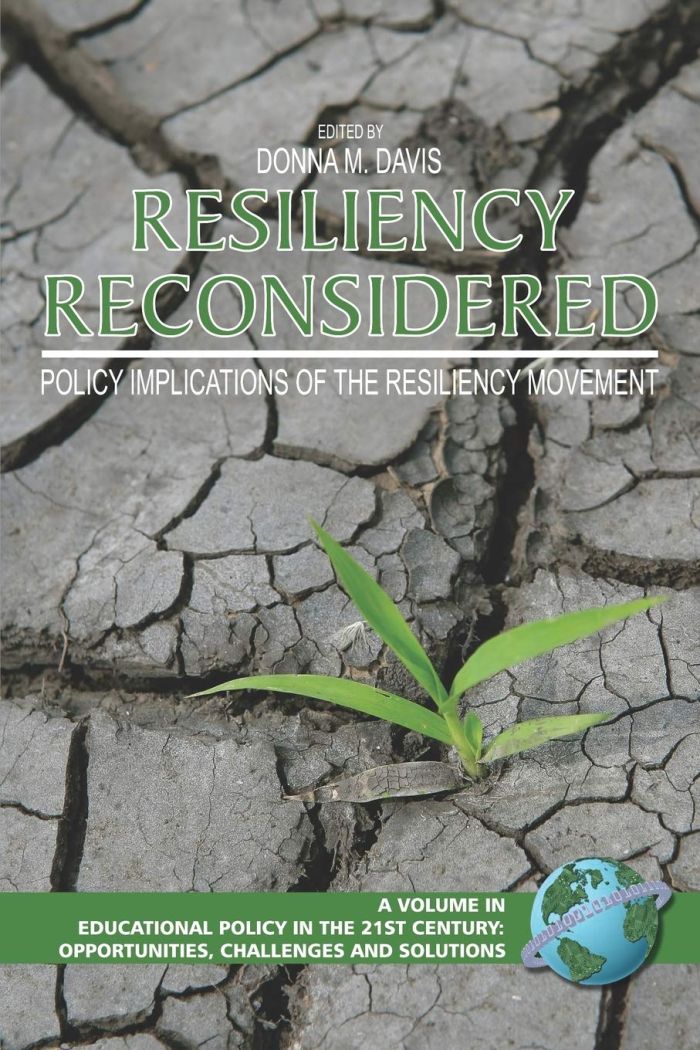
Resiliency Reconsidered
Policy Implications of the Resiliency Movement

This book can be opened with

Note on our eBooks and Audiobooks: you can read our eBooks (ePUB or PDF) and listen to audiobooks on the free Emerald Books app on iOS, Android, and desktop. Or read and listen on Emerald's online reader (ePUB eBooks and audiobooks only). To purchase a digital book you will need to create an account if you don’t already have one. After purchasing you will receive instructions on how to get started.
- Description
- Contents
The goal of this book is to generate discussion not only about how we can create meaningful educational experiences for all learners, but to challenge systems that necessitate a resilient nature. Ultimately, the authors promote the need for a foundation of socially just policies and practices in all educational settings and respond to the question: How does a paradigm of resiliency translate into institutional change that benefits everyone?
Foreword; Bruce Anthony Jones.
- Introduction; Donna M. Davis.
- Part I. Understanding Resiliency.
- Chapter 1. A History of Resilience in African American Children and Schools: Formal and Informal Policies That Shaped the Educational Experiences of Ex-Slaves; Donna M. Davis.
- Chapter 2. The Social Contextual Nature of Resiliency in Schools: Organizational Structures That Facilitate a Positive School Culture; Tierra Freeman.
- Part II. School Practices.
- Chapter 3. Educational Resilience in Young Adolescents; Jennifer Friend.
- Chapter 4. Promoting Resiliency Through High Expectations: Policy Implications for the Integration of Cognitive and Affective Reform in Schools; Loyce Caruthers.
- Chapter 5. Student Resiliency, Institutional Structures and Arts Education: Manchester Craftsmen's Guild as a Model; Bruce Anthony Jones and Nathan D. Jackson.
- Chapter 6. Fostering Resiliency in Students With Disabilities in an Era of Standards-Based Education: Paradoxes in Policy and Expectations; Jeannie Kleinhammer-Tramill.
- Part III. Broadening the Subject.
- Chapter 7. Expanding Our Thinking of Resiliency From K–12 to Higher Education: Resolute Experiences of Academic Latinas; Juan Carlos Gonzalez.
- Chapter 8. The Time Is Now: The Role of Professional Learning Communities Strengthening the Resiliency of Teachers in Urban Schools; Jennifer Waddell.
- About the Authors.