
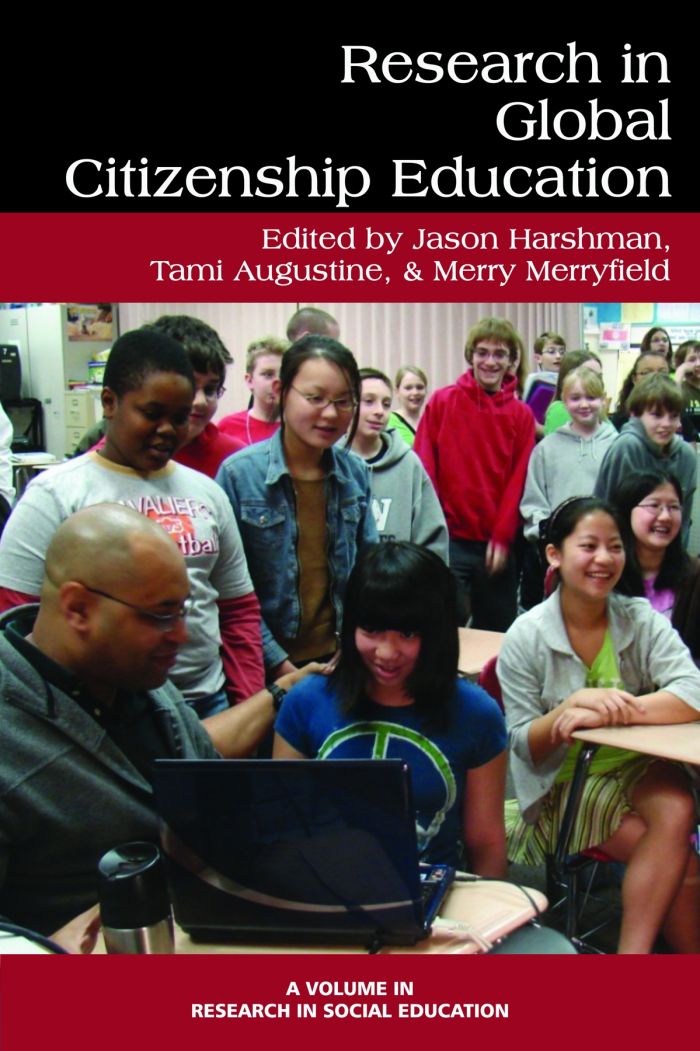
Research in Global Citizenship Education

This book can be opened with

Note on our eBooks and Audiobooks: you can read our eBooks (ePUB or PDF) and listen to audiobooks on the free Emerald Books app on iOS, Android, and desktop. Or read and listen on Emerald's online reader (ePUB eBooks and audiobooks only). To purchase a digital book you will need to create an account if you don’t already have one. After purchasing you will receive instructions on how to get started.
- Description
- Contents
Globalization is changing what citizens need to know and be able to do by interrupting the assumption that the actions of citizens only take place within national borders. If our neighborhoods and nations are affecting and being affected by the world, then our political consciousness must be worldminded. The outcomes of globalization have led educators to rethink what students need to learn and be able to do as citizens in a globally connected world.
This volume focuses on research that examines how K-12 teachers and students are currently addressing the challenge of becoming citizens in a globally interconnected world. Although there is an extensive body of literature on citizenship education within national contexts and a growing literature on global education, this volume offers research on the work educators are doing across multiple countries to bring the two fields together to develop global citizens.
Preface, Merry Merryfield.
- Introduction to Research in Global Citizenship Education, Jason Harshman.
- Chapter 1. Critical Global Citizenship in Theory and Practice: Rationales and Approaches for an Emerging Agenda, Karen Pashby and Vanessa de Oliveira Andreotti.
- Chapter 2. What is the Active in 21st Century Calls to Develop Active Global Citizens? Justice-Oriented Desires, Active Learning, Neoliberal Times, Paul Tarc.
- Chapter 3. A Real World Approach to Project Based Learning in Global Citizenship Education, Tami Augustine, Jason Harshman, and Merry Merryfield.
- Chapter 4. A Question of How: A Report on Teachers' Instructional Practices when Educating for Global Citizenship in Canada, Angela MacDonald, Mark Evans, Leigh-Anne Ingram, and Nadya Weber.
- Chapter 5. Global Citizenship Education: Classroom Teachers' Perspectives and Approaches, Anatoli Rapoport.
- Chapter 6. Global Citizenship Education in the Primary Social Education Curricula in Hong Kong and Shanghai: An Intra-cultural Comparative Study, Joe Tin-Yau Lo and Eric Kingman-Chong.
- Chapter 7. From National to Global Citizenship: Turkish Perspectives on the Concept of Global Citizenship, Emin Kilinc and Ümmügülsüm Korkmaz.
- Chapter 8. Changing Attitudes, Motivating Action: Global Citizenship Identity Among Privileged Adolescents, Sherri Sklarwitz, Susan Fields, Scott Seider, and Brian Didier.
- Epilogue: The Future of Teaching and Research in Global Citizenship Education, Jason Harshman.
- About the Authors.
- Index.