
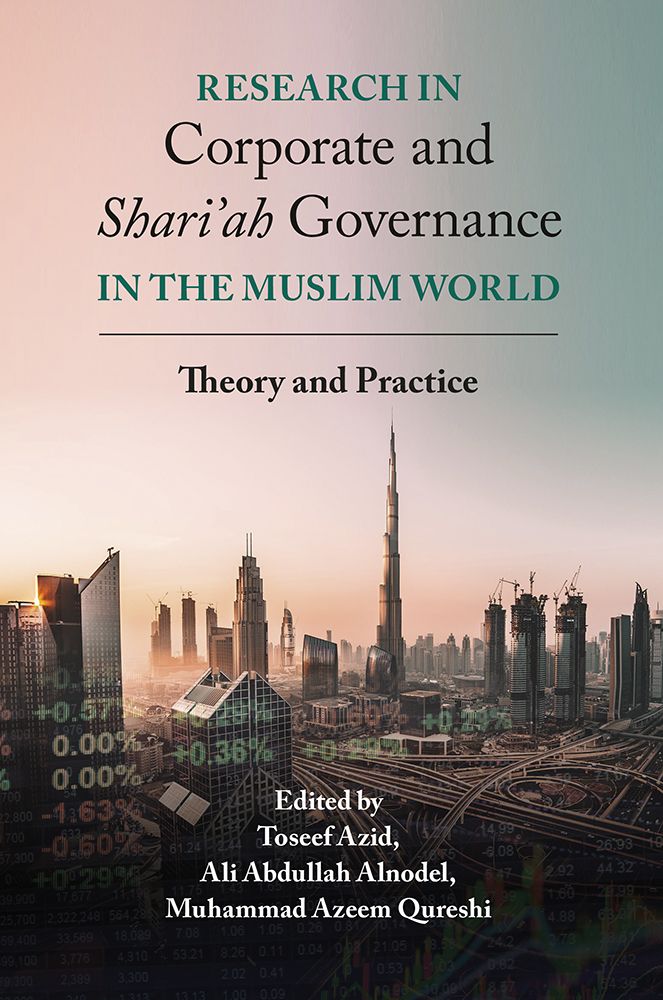


Research in Corporate and Shari'ah Governance in the Muslim World
Theory and Practice

This book can be opened with

Note on our eBooks and Audiobooks: you can read our eBooks (ePUB or PDF) and listen to audiobooks on the free Emerald Books app on iOS, Android, and desktop. Or read and listen on Emerald's online reader (ePUB eBooks and audiobooks only). To purchase a digital book you will need to create an account if you don’t already have one. After purchasing you will receive instructions on how to get started.
- Description
- Contents
- About
- Corporate governance in Islamic financial institutions
- The efficiency of the Islamic Jurisprudence system
- The common conceptual grounds of corporate structure in the Muslim World
- The composition of business leaders in the Muslim World
Chapter 1. Islamic shari'ah and the principles of corporate governance: An introduction; ABDURRAHMAN BIN ABDULAZIZ ALAQIL Part A. Corporate Governance and Shari'ah Governance: Islamic Perspective Chapter 2. Islamic perspective of corporate governance: An introductory note; IRUM SABA Chapter 3. Corporate governance in Islamic perspective; MASUDUL ALAM CHOUDHURY AND MOHAMMAD NURUL ALAM Chapter 4. Corporate governance in comparative Islamic perspective; MASUDUL ALAM CHOUDHURY AND M. Z. HOQUE Chapter 5. Decreasing corporate governance in a general ethico-economic model of unity of knowledge; MASUDUL ALAM CHOUDHURY AND SOFYAN HARAHAP Chapter 6. Corporate governance, infusing muamalah contracts in shareholders' relationship; MOHD HAIRUL AZRIN HAJI BESAR Chapter 7. Risk Management and Corporate governance: an Islamic perspective; SHAFIU I. ABDULLAH Chapter 8. Inter-firm governance mechanisms and corporate governance: a conceptual view; UMAR BURKI Part B. Corporate Governance and Role of Islamic Audit and Accounting Chapter 9. The role of good corporate governance and accounting in Islamic financial institutions; MURNIATI MUKHLISIN AND LENY NOFIANTI Chapter 10. The role of corporate governance regulations in constraining earnings Management practice in Saudi Arabia; MURYA HABBASH Chapter 11. Voluntary disclosure of shari'ah governance of Islamic financial institutions in Saudi Arabia; ALI A ALNODEL AND TOSEEF AZID Chapter 12. Shari'ah audit process in takaful industry; NOOR AIMI MOHD PUAD AND ZURINA SHAFII Chapter 13. Corporate governance and multi-corporate disclosures: evidence from Islamic banks; REHAB GRASSA, SHERIF EL-HALABY AND KHALED HUSSAINEY Part C. Corporate Governance and Islamic Financial Institutions: Theoretical Perspective Chapter 14. Revisiting the fundamentals of shari'ah governance framework for Islamic financial institutions (IFIs); MOHAMMAD ABDULLAH AND MOHAMMAD SAIF SARWAR Chapter 15. Shari’ah governance framework in different jurisdictions; IRUM SABA Chapter 16. Shari’ah compliance governance for Islamic investments and their effects on performance; SALMAN AHMED SHAIKH, ABDUL GHAFAR ISMAIL AND MOHD ADIB ISMAIL Chapter 17. Islamic financial services Act 2013 and shari’ah governance: a review; MOHD ZAKHIRI MD NOR Chapter 18. Malaysia's Islamic financial services Act 2013 and shari'ah governance: an analytical approach; NOOR SUHAIDA KASRI Chapter 19. Shari'ah governance framework in Islamic Banking and financial institutions in Indonesia: a proposed structure; MUHAMMAD IMAN SASTRA MIHAJAT Chapter 20. Shari’ah governance framework in IFIs in Oman: issues and challenges; MUHAMMAD IMAN SASTRA MIHAJAT Chapter 21. Strengths, gaps and issues in Shari'ah Governance Framework 2015 for IFIs in Pakistan; MUHAMMAD AYUB Part D. Cooperative Governance: Country Studies and Muslim World Chapter 22. Shari'ah governance in shari’ah based cooperatives in Malaysia and Indonesia; ZURINA SHAFII, ROSE RUZIANA SAMAD AND ROCHANIA AYU YUNANDA Chapter 23. A perspective of the shari'ah compliant corporate governance of financial institutions in Saudi Arabia and agency structures; YASER AHMED FALLATAH, ABUL HASSAN FAROOQI AND SALAH AL SHALHOOB Chapter 24. Corporate social responsibility in Islamic banks' practice: evidence from Bangladesh; ABU UMAR FARUQ AHMAD AND SHAFIQUR RAHMAN Chapter 25. The interaction between sukuk issuance and corporate governance: case Study of Iranian sukuk issuer companies; H. KIAEE AND M. SOLEIMANI Chapter 26. Closing the expected and perceived service gap in the Jordanian hotel industry: a gap-driven analysis; HAITHAM NAKHLEH Chapter 27. Corporate governance and capital structure: evidence from Pakistan; NADEEM AHMED SHEIKH Chapter 28. Governance-development nexus in the OIC countries; SALMAN AHMED SHAIKH, ABDUL GHAFAR ISMAIL, MOHD ADIB ISMAIL, SHAHIDA SHAHIMI AND MUHAMMAD HAKIMI MOHD SHAFIAI Chapter 29. The state of Islamic governance in Islamic financial institutions: Islamic governance index; ZULKIFLI HASAN AND MEHMET ASUTAY Chapter 30. Corporate governance, competition and corporate performance: a comparative analysis of the Muslim world with rest of the world; MUHAMMAD AZEEM QURESHI AND TANVEER AHSAN Chapter 31. Conclusion; TOSEEF AZID, ALI A ALNODEL AND MUHAMMAD AZEEM QURESHI