
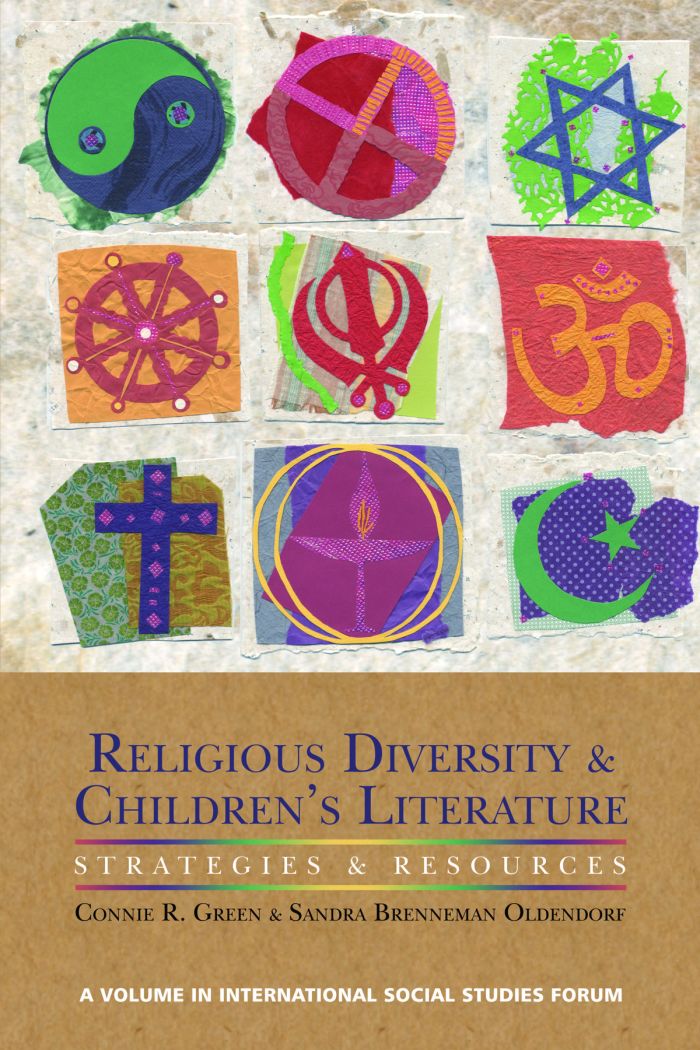
Religious Diversity and Children's Literature
Strategies and Resources

This book can be opened with

Note on our eBooks and Audiobooks: you can read our eBooks (ePUB or PDF) and listen to audiobooks on the free Emerald Books app on iOS, Android, and desktop. Or read and listen on Emerald's online reader (ePUB eBooks and audiobooks only). To purchase a digital book you will need to create an account if you don’t already have one. After purchasing you will receive instructions on how to get started.
- Description
- Contents
This book is an invaluable resource for enabling teachers, religious educators, and families to learn about religious diversity themselves and to teach children about both their own religion as well as the beliefs of others. The traditions featured include indigenous beliefs throughout the world, Native American spirituality, Hinduism, Buddhism, Judaism, Christianity (Orthodoxy, Catholicism and Protestantism), Islam, Sikhism, and other beliefs such as Bahá'í, Unitarian Universalism, Humanism, and Atheism. Each chapter highlights a specific religion or spiritual tradition with a brief discussion about major beliefs, misconceptions, sacred texts, and holy days or celebrations. This summary of each tradition is followed by extensive annotated recommendations for children’s and adolescent literature as well as suggested teaching strategies. The recommended literature includes informational books, traditional religious stories, and fiction with religious themes. Teachers, religious educators, and family members will find the literature from these genres to be invaluable tools for bridging the religious experience of the child with that of the global society in which they live.
Chapter 1. Why Learn About Religious and Spiritual Traditions?
- Chapter 2. Connecting World Religions and Children's Literature.
- Chapter 3. Indigenous Belief Systems.
- Chapter 4. Native American Spirituality.
- Chapter 5. Hinduism.
- Chapter 6. Judaism.
- Chapter 7. Buddhism.
- Chapter 8. Christianity: Orthodoxy and Catholicism.
- Chapter 9. Christianity: Protestantism.
- Chapter 10. Islam.
- Chapter 11. Sikhism.
- Chapter 12. Free Thinkers and Other Belief Systems.