
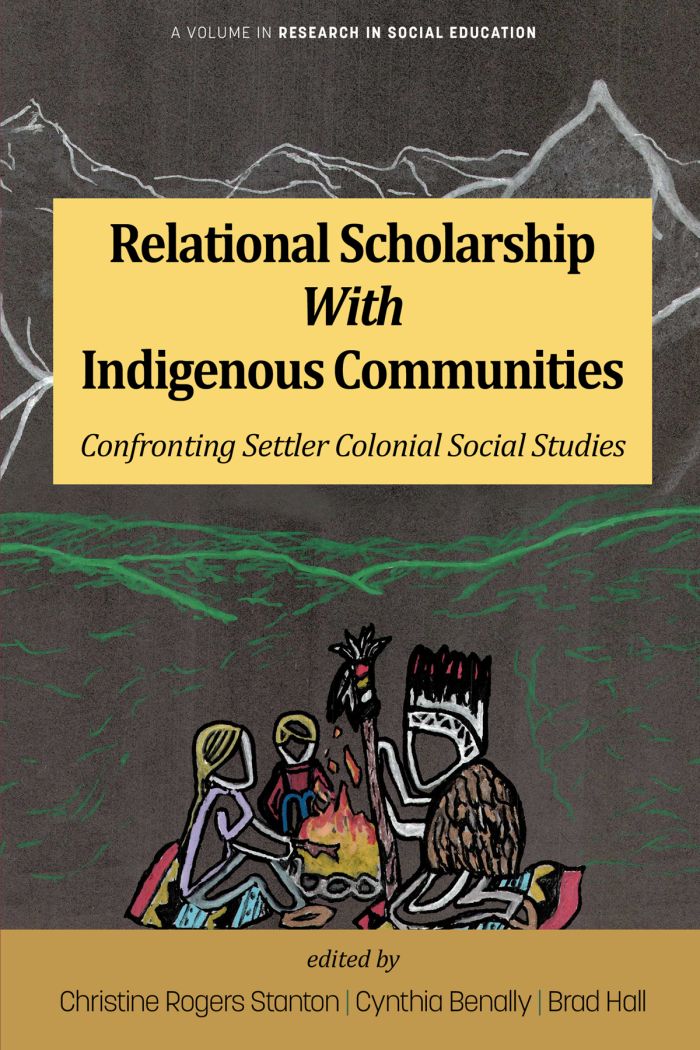
Relational Scholarship With Indigenous Communities
Confronting Settler Colonial Social Studies

This book can be opened with

Note on our eBooks and Audiobooks: you can read our eBooks (ePUB or PDF) and listen to audiobooks on the free Emerald Books app on iOS, Android, and desktop. Or read and listen on Emerald's online reader (ePUB eBooks and audiobooks only). To purchase a digital book you will need to create an account if you don’t already have one. After purchasing you will receive instructions on how to get started.
- Description
All education and educational scholarship occurs on Indigenous Lands. Despite this reality, U.S. social studies education and scholarship has reinforced settler colonialism through curricula, teacher education, professional development, policy research, and more. To confront settler colonial social studies and transform the field, educators and scholars must engage relational approaches, prioritize community and student expertise, and commit to action that recognizes Indigenous Ways of Knowing.
This book brings together Indigenous and non-Indigenous scholars, practitioners, and community partners from across the U.S. to share experiences of, stories about, and hopes for anti-colonial social studies. By sharing these examples, the book also provides methodological guidance for researchers, teacher educators, curriculum developers, and policymakers looking to learn about scholarly processes and partnerships with Indigenous communities. In addition to individual chapters, contributors engaged in conversations and collaboration between chapters and about the book as a whole.
Chapter co-authors and thought partners dialogued about the following questions:
- What is relational research, and how can it help confront settler colonial content, processes, and praxis within social studies education?
- How has social studies education and research (mis)represented and (mis)applied Indigenous Ways of Knowing?
- How can a re-envisioning of social studies educational research be more intentionally participatory and relational to improve social studies teaching and learning, especially for and with Indigenous communities and youth?