
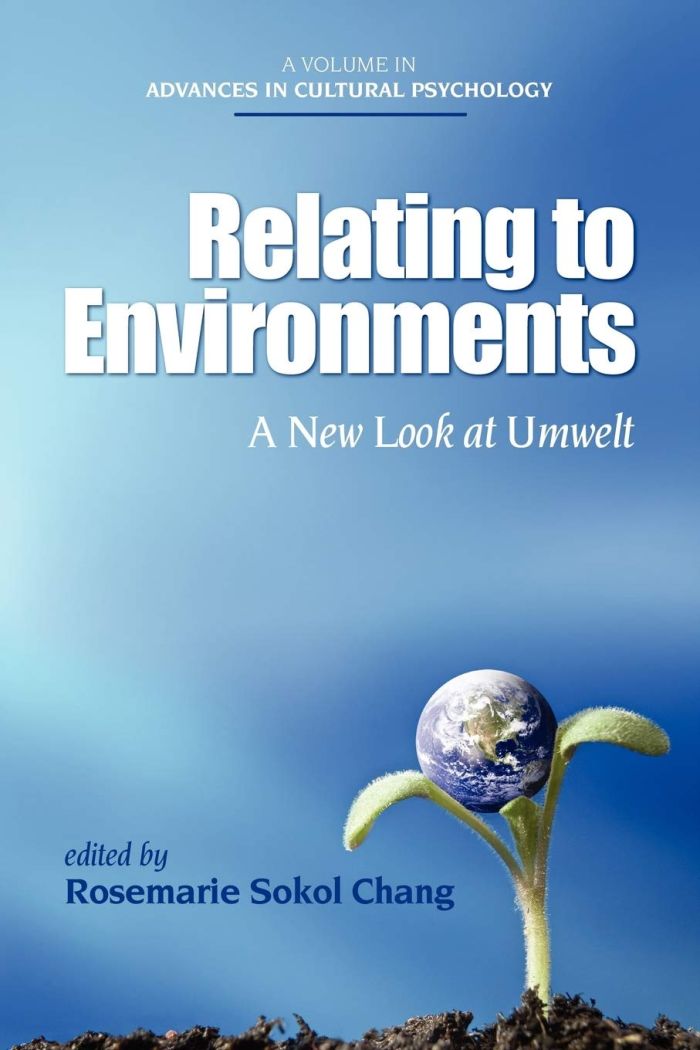
Relating to Environments
A New Look at Umwelt

This book can be opened with

Note on our eBooks and Audiobooks: you can read our eBooks (ePUB or PDF) and listen to audiobooks on the free Emerald Books app on iOS, Android, and desktop. Or read and listen on Emerald's online reader (ePUB eBooks and audiobooks only). To purchase a digital book you will need to create an account if you don’t already have one. After purchasing you will receive instructions on how to get started.
- Description
- Contents
Jakob von Uexkull founded Umwelt research with a clear idea – that humans are not qualitatively different than other species. Umwelt, literally “outer-world”, is the study of the organism in relation to the world around it, as well as the meaning that the world holds for that organism. Thus the world is a truly subjective place.
While von Uexkull’s theory has entered into the social sciences via semiotics, and biology via ethology, the authors of these chapters go between and beyond these disciplines to examine everything from cells to spiders to humans and culture. The authors adopt the framework of Umwelt theory to examine unique aspects of the natural world by relating the inner world of the subject and the objects to which that organism attends.
Introduction; Rosemarie Sokol Chang
- Series Editor's Preface: The Culture of Relating.
- Part I. Pre-Cultural Backgrounds: Environment As Linked To The Behaving Organism.
- Chapter 1. From Cellular to Human Worlds; Brady Wagoner and Phillip Rosenbaum
- Chapter 2. Complexities, Confusion, Choices: Reencountering Uexküll; Roger Bibace
- Chapter 3. The Wisdom of the Web: Learning from Spiders; Jaan Valsiner and Emily Lescak
- Part II. Turning To Humans: Culture Enters The Story.
- Chapter 4. The Umwelt and Emotional Experience; Glenn Weisfeld
- Chapter 5. From Mother's Mouth to Baby's World and Back Again: Shaping One's Attachments Through Vocalization; Rosemarie Sokol Chang
- Chapter 6. The Mating Game: The Extension of Umwelt in the 21st Century; Sarah L. Strout and Leila Samii
- Part III. The Meaning-making Minds On Social Borders.
- Chapter 7. The Living, the Un-Living, and the Hard-to-Kill: Acting and Feeling on the Boundary; Alessandra Zimmerman and Jaan Valsiner
- Chapter 8. Signifying Girlhood: Cultural Images of Girlhood and Semiotic Meaning-making by Girls in the 21st Century United States; Jessica L. Willis
- Chapter 9. Heimweh or Homesickness: A Nostalgic Look at the Umwelt That No Longer Is; Rainer Diriwächter
- Chapter 10. A Unified Topological Approach to Umwelts and Life Spaces; Lee Rudolph
- Conclusion; Rosemarie Sokol Chang
- Contributor Biographies and Contact Information.