
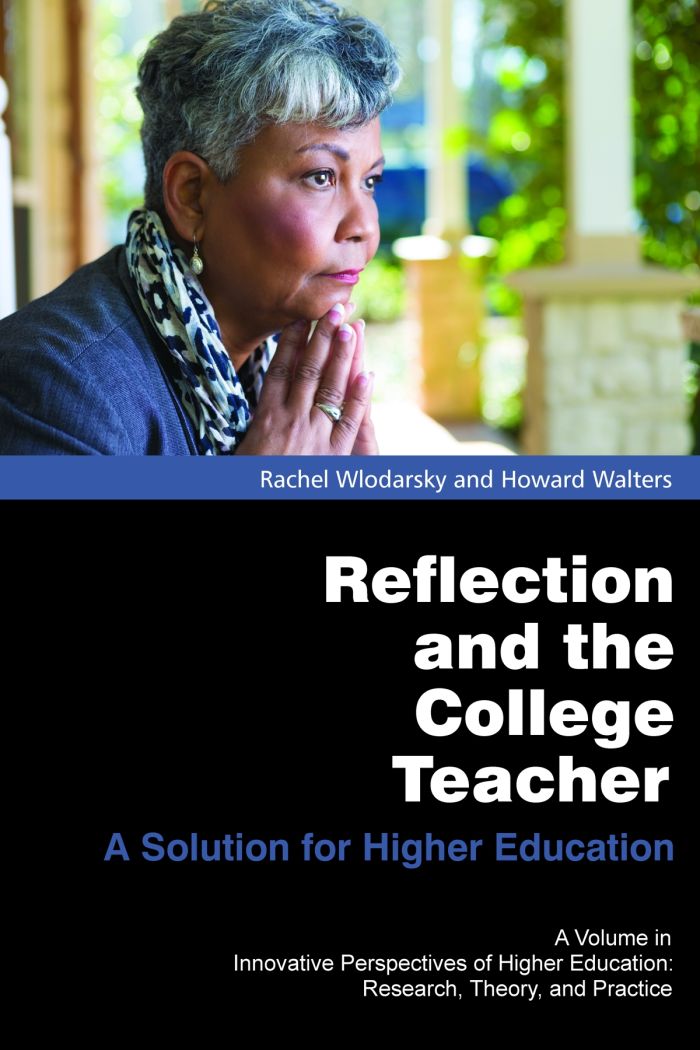
Reflection and the College Teacher
A Solution for Higher Education

This book can be opened with

Note on our eBooks and Audiobooks: you can read our eBooks (ePUB or PDF) and listen to audiobooks on the free Emerald Books app on iOS, Android, and desktop. Or read and listen on Emerald's online reader (ePUB eBooks and audiobooks only). To purchase a digital book you will need to create an account if you don’t already have one. After purchasing you will receive instructions on how to get started.
- Description
- Contents
Higher education is facing many challenges, not least of which is retaining excellent faculty and cultivating their continued professional growth. This book explicitly ties the literature to the practical concerns and recommendations related to applying the reflective process in a college setting. In this way, the theories and empirical findings of the most recent literatures are linked to practical recommendations. The reflective tools described in this book provide an important resource for facultys’ reflective practice. Unlike other books on the topic, the model developed and presented in this book allows for the reflective process to validate faculty's previous actions or accomplishments and maintain these practices. In other words, the endpoint of reflective process supports self-satisfaction. Instead of a deficit model, the focus is development.
In this comprehensive volume, readers discover the seminal and the recent research in reflective practice drawn from a wide range of sources, including the authors’ recent research findings on college teachers’ reflection.
Altogether, Wlodarsky and Walters systematically address these critical questions:
a. What is reflection?
b. Of what practical use or benefit does reflection serve?
c. How do college teachers model reflection in the workplace?
d. What are the steps in the reflective process?
e. How can the reflective process be harnessed for program improvement in the college setting and in individual faculty practices?
Wlodarsky and Walters understand and address the real needs of college teachers today. They created not only a thorough academic book, but also a compelling, relevant read. Specifically, they designed the chapters to include scenarios—developed from interview transcripts with college teachers. These stories powerfully contextualize the types of problems and tensions which surround the professional work environment of a college campus and the roles of the college teacher.
Foreword.
- Acknowledgments.
- Chapter 1. Colleges of Education in 21st Century America.
- Chapter 2. What Is Reflection, Its Capacity and Why It Is Important?
- Chapter 3. Characteristics of Reflection Among College Teachers.
- Chapter 4. What Does the Reflective Process Look Like?
- Chapter 5. The Event Component as a Phenomenological.
- Chapter 6. Cognitive Processing of Information.
- Chapter 7. Tools That Help Professionals Facilitate the Reflective Process.
- Chapter 8. Change.
- Chapter 9. The Reflective College of Education.
- References.
- About the Authors.