
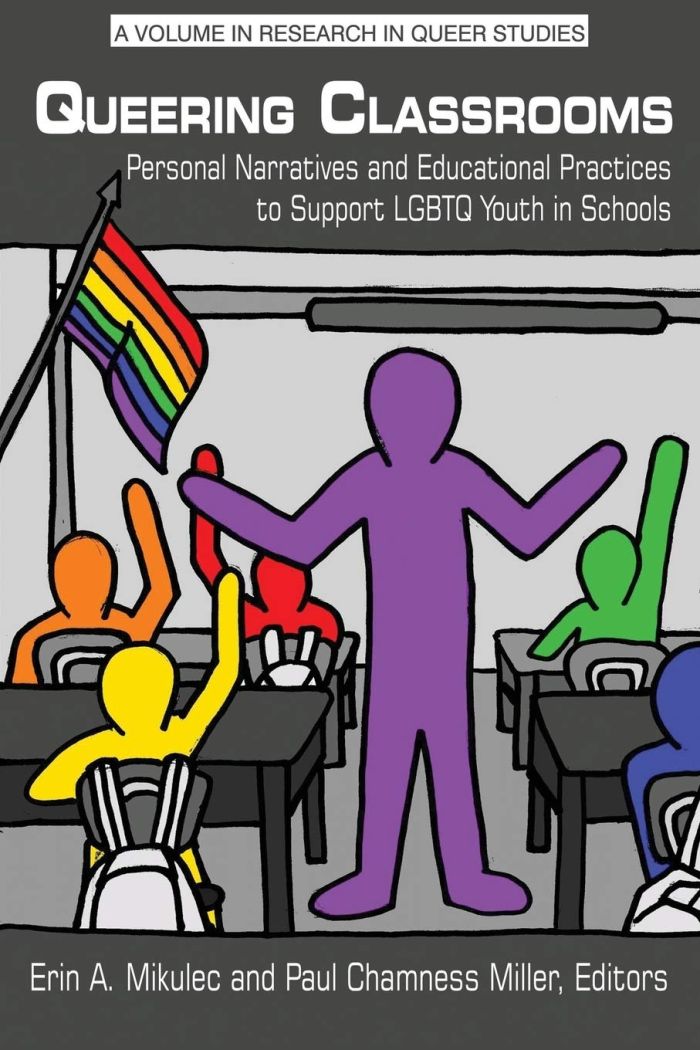
Queering Classrooms
Personal Narratives and Educational Practices to Support LGBTQ Youth in Schools

This book can be opened with

Note on our eBooks and Audiobooks: you can read our eBooks (ePUB or PDF) and listen to audiobooks on the free Emerald Books app on iOS, Android, and desktop. Or read and listen on Emerald's online reader (ePUB eBooks and audiobooks only). To purchase a digital book you will need to create an account if you don’t already have one. After purchasing you will receive instructions on how to get started.
- Description
- Contents
Teacher Education programs have largely ignored the needs of LGBTIQ learners in their preparation of pre-service teachers. At best in most of such programs, their needs are addressed in a single chapter in a book or as the topic of discussion in a single class discussion. However, is this minimal discussion enough? What kind of impact does this approach have on future teachers and their future learners?
This book engages the reader in a dialogue about why teacher education must address LGBTIQ issues more openly and why teacher education programs should revise their curriculum to more fully integrate the needs of LGBTIQ learners throughout their curriculum, rather than treat such issues as a single, isolated topic in an insignificant manner. Through personal narratives, research, and conceptual chapters, this volume also examines the different ways in which queer youth are present or invisible in schools, the struggles they face, and how teachers can be better prepared to reach them as they should any student, and to make them more visible. The authors of this volume provide insight into the needs of future teachers with the aim of bringing about change in how teacher education programs address LGBTIQ needs to better equip those entering the field of teaching.
Introduction: Challenging the Status Quo: Transforming and Queering Education; Erin Mikulec and Paul Chamness Miller.
- Section I. LGBTQ Youth and Education: How Far Have We Come? Chapter 1. A Place Where They Can Be Themselves: Issues of LGBTQ Students [Revisited]; Michelle L. Knaier.
- Chapter 2. Situating Ally Identities in Relational Epistemes: Learning with LGBTIQ People in Order to Make Supportive and Inclusive Decisions; Ryan Schey.
- Chapter 3. Constructions of Children and Childhood: Implications for LGBTIQ Inclusion and Teacher Preparation Programs; Corinne Wickens.
- Section II. Reflections on Preparation: Voices from Pre-Service and Practicing Teachers.
- Chapter 4. Hope for a Better Tomorrow: A Personal Narrative on the Need for Acceptance in Teacher Education Programs; Angela M. Jaime and Brody C. Tate.
- Chapter 5. Advocacy from Adversity: Sculpting an LGBT Identity in Art Education; Jordan DeWilde.
- Chapter 6. Preparing to Enter the Field: Reflections from Pre-Service Teachers on Learning to Work with LGBTQ Youth; Nora Dunne, Kevin Goffard and Jackie Svetich.
- Section III. Using Literature to Address Issues of LGBTQ Youth in Schools: From the Classroom to the Library.
- Chapter 7. Reading Them In: Using LGBT Child and Young Adult Literature in Pre-Service Teacher Education; Paul Venzo.
- Chapter 8. You don't have to think about it in that way: Deconstructing teacher assumptions about LGBTIQ students; Elizabeth Dinkins and Patrick Englert.
- Chapter 9. Teaching Tolerance through Literature: How Including LGBTIQ Titles in Your Library Can Increase Acceptance; Tiffany Renee Droege.
- Section IV. K-20: Creating a Safe and Positive Learning Climate in All Educational Settings.
- Chapter 10. What Being a GSA Sponsor Has Done for Me and Others; Alexandria Henry.
- Chapter 11. A Call to Action: The Importance of School Climate, Professional Development, and Teacher Education Programs in Fostering LGBT Supportive Educators; Melissa Doellman.
- Chapter 12. In Our Own Voice: Campus Climate as a Mediating Factor in the Persistence of LGBT Students, Faculty, and Staff in Higher Education; Warren J. Blumenfeld, Genevieve N. Weber, and Sue Rankin.
- Chapter 13. Conclusion: Tying it All Together: Making Meaning and a Call to Action; Paul Chamness Miller and Erin Mikulec.
- About the Editors.
- About the Contributors.