
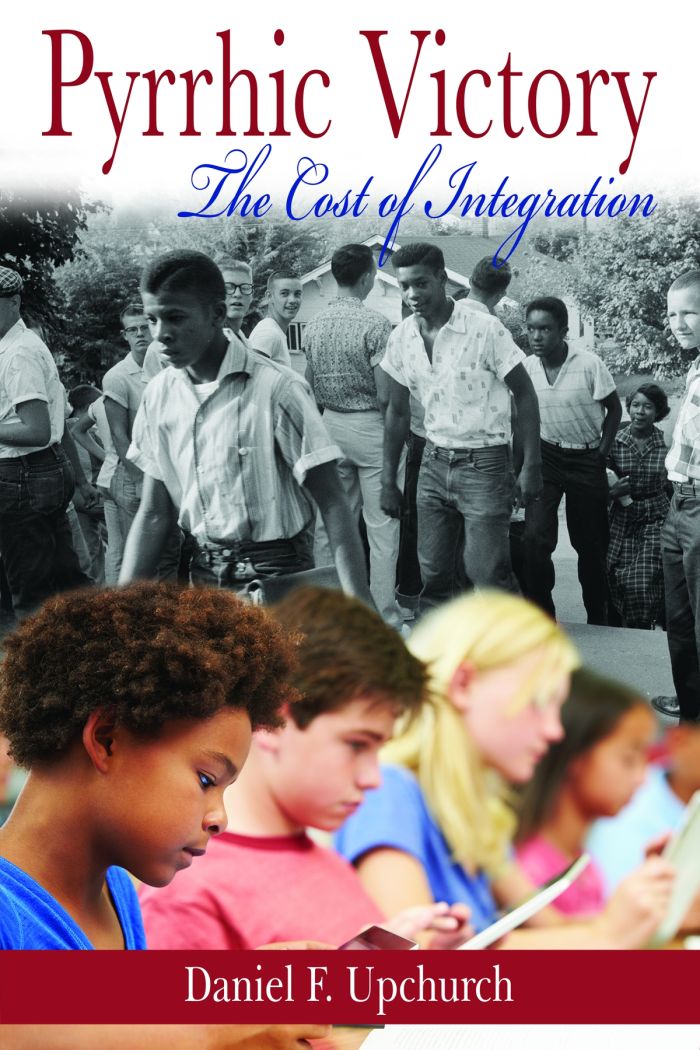

Pyrrhic Victory
The Cost of Integration

This book can be opened with

Note on our eBooks and Audiobooks: you can read our eBooks (ePUB or PDF) and listen to audiobooks on the free Emerald Books app on iOS, Android, and desktop. Or read and listen on Emerald's online reader (ePUB eBooks and audiobooks only). To purchase a digital book you will need to create an account if you don’t already have one. After purchasing you will receive instructions on how to get started.
- Description
- Contents
“Segregation now, Segregation tomorrow, Segregation forever”. Was there some truth behind this famous speech given by George Wallace? Did African Americans truly benefit from the results of Brown v. the Board of Education or did they get the short end of the stick? Over the years, the Black community has suffered major loses in the areas of education, business and gender identity due to integration.
The founders of the NAACP objectives were to unite and educate a suppressed race that would fight against social injustice and bring capital into the Black community. Initially, these ideologies were well represented by this noble organization; however during and after the decision of the Brown versus the Board of Education case things drastically changed.
The once unified organization began to have major conflicts with Black educators. Some rejoiced over this landmark victory, citing that justice had finally prevailed, while other embraced for the worst, believing that the outcome from the case was only a Pyrrhic victory. This book aims to understand the effects of integration on the African American community and offers inspiration to those who want to change and build a better and strong Black community.
A Mississippi Memory.
- Acknowledgments.
- Introduction.
- Chapter 1. Separate but Equal: Plessy v. Ferguson and the Push Toward Integration.
- Chapter 2. No Child Left Behind.
- Chapter 3. The Black Wall Street.
- Chapter 4. Identity Crisis.
- Chapter 5. Being Hard: Black Males and Emotional Invulnerability.
- Chapter 6. The War on Poverty: The Great Society.
- Chapter 7. Epigenetics and The Generational Curse.
- Chapter 8. Help-Hurt Relationship Theory.
- Chapter 9. Revitalizing the Black Community.
- Chapter 10. Interviews.
- About the Author.