
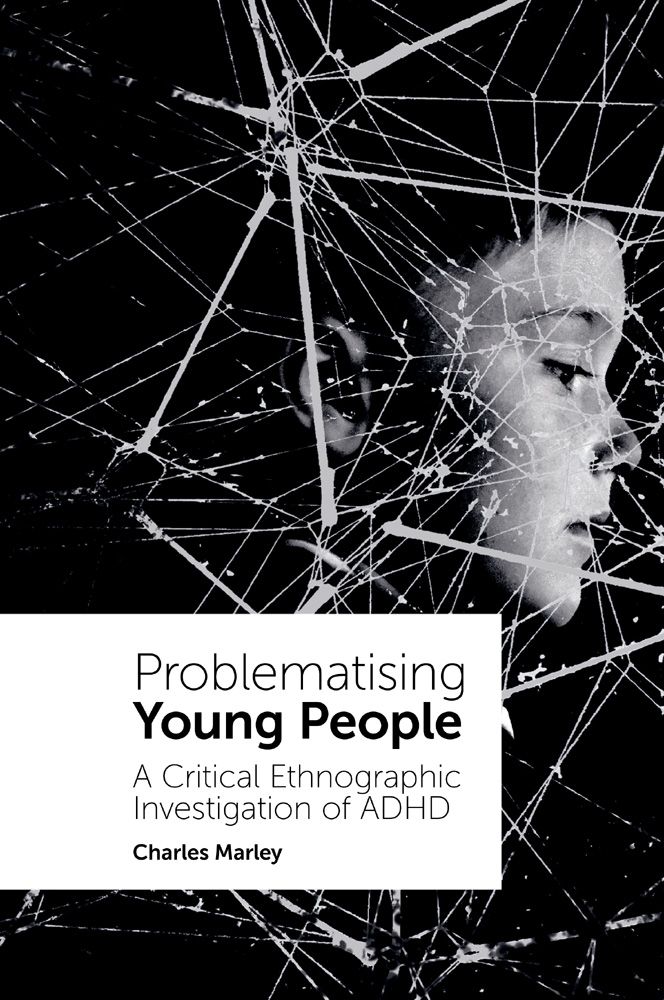

Problematising Young People
A Critical Ethnographic Investigation of ADHD

Emerald
This book can be opened with

Note on our eBooks and Audiobooks: you can read our eBooks (ePUB or PDF) and listen to audiobooks on the free Emerald Books app on iOS, Android, and desktop. Or read and listen on Emerald's online reader (ePUB eBooks and audiobooks only). To purchase a digital book you will need to create an account if you don’t already have one. After purchasing you will receive instructions on how to get started.
- Description
- About
Rather than being evidence-based, the 'everyday' practice of ADHD health care enacted daily by a multitude of professionals is the result of the interaction of historical, social, political, economic and institutional elements. By drawing on several critical theorists, this book provides an ethnographic investigation of the nexus of elements that conditioned the possibility for the everyday social practice of ADHD to be in place within an NHS region in Scotland.
The book develops a critical analytical approach, using the concepts of 'problematisation' and the 'apparatus' to capture a two-stage process - the questioning of how and why certain 'things' become a problem, but also how these 'things' are shaped as the objects that they become. The object of interest for this project was young people and the fieldwork was conducted in a small geographical region in Scotland, consisting of several periods in health and education services. Ethnographic tools utilised in the book include observation of clinical appointments, document analysis, interviews and archival research. The different layers of qualitative material examined in the study - from individual clinical appointment to national policy - have allowed for a reconnection of the discursive field in which the current practice of ADHD emerged.
With a detailed theorisation of the theoretical concepts, as well as a clear account of application in empirical research, this book will act as a guide for researchers aiming to apply these concepts in applied research.
Charles Marley is Programme Director for the MSc in Mental Health of Children and Young People: Psychological Approaches at the University of Edinburgh. His research is interested in the application of critical theory to children and young people's mental health and wellbeing.