
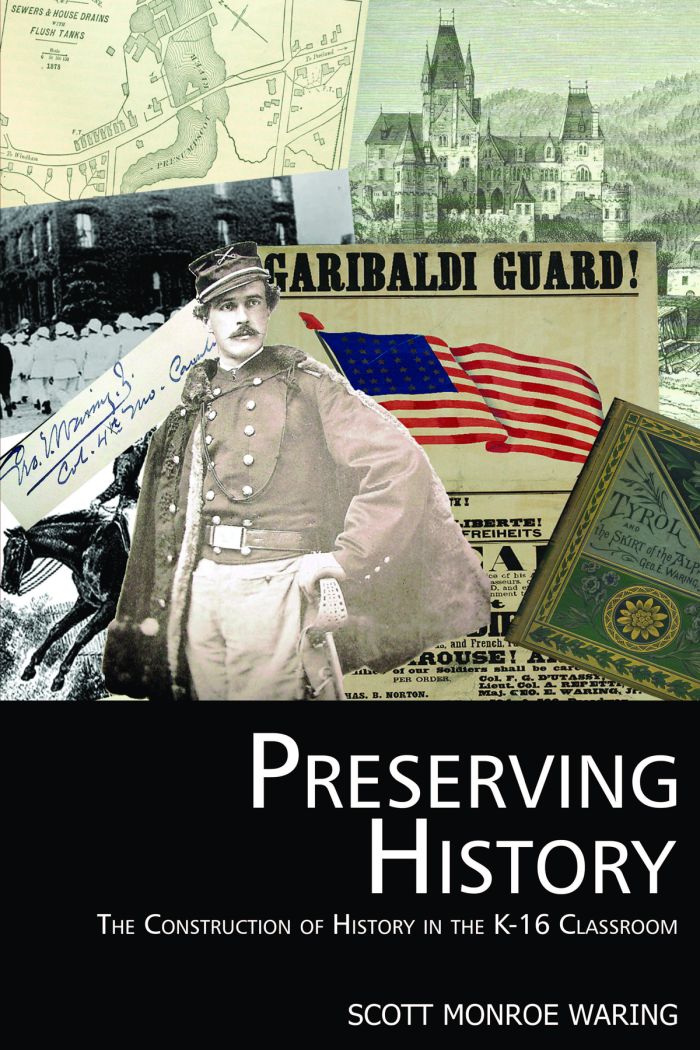
Preserving History
The Construction of History in the K-16 Classroom

This book can be opened with

Note on our eBooks and Audiobooks: you can read our eBooks (ePUB or PDF) and listen to audiobooks on the free Emerald Books app on iOS, Android, and desktop. Or read and listen on Emerald's online reader (ePUB eBooks and audiobooks only). To purchase a digital book you will need to create an account if you don’t already have one. After purchasing you will receive instructions on how to get started.
- Description
- Contents
What and how to teach in the K-16 classroom history has been a perennial and, at times, heated debate. Beginning as early as 1892, the question of what knowledge is of the most worth and what should be the central function of the history curriculum became a focus of many interested in education. It was felt that the teachers needed to move away from “traditional” methods of teaching history, such as rote memorization and the “dry and lifeless system of instruction by textbook,” and find new and engaging ways to “broaden and cultivate the mind.” Unfortunately, these recommendations faced many critics and did not take hold in K-16 classrooms at this time or, frankly, at any point since then.
Even though we tend to have a nostalgic memory of earlier time periods and, in turn, the educational capabilities of the children from various times in our nation’s past, the results from multiple studies examining the historical knowledge base of America’s youth has remained fairly discouraging. Much of the lack of knowledge present stems from the manner in which history is traditionally taught. Ineffective instructional methods greatly impact the interest levels, or more frequently the distaste, generated for learning about historical content and, thus, the public’s corresponding perception of the importance of history within K-16 curricula. This book makes an effort at overcoming the persistent boredom and lack of historical knowledge present in our students, by focusing on ways in which history instruction can be improved.
Introduction.
- Chapter 1. Teaching History Literature.
- Chapter 2. Developing Historical Thinking Skills.
- Chapter 3. Instruction on Accessing and Examining Various Primary and Secondary Sources.
- Chapter 4. Multiple Presentations of History: The Battle of Lexington Green.
- Chapter 5. Historical Causality.
- Chapter 6. Building Historical Agency.
- Chapter 7. Utilizing Methods of Interest to Digital Natives.
- Chapter 8. Engaging in Authentic Historical Inquiry by Investigating History Close to the Learner (Local History).
- Chapter 9. Conclusion.
- References.
- About the Author.