
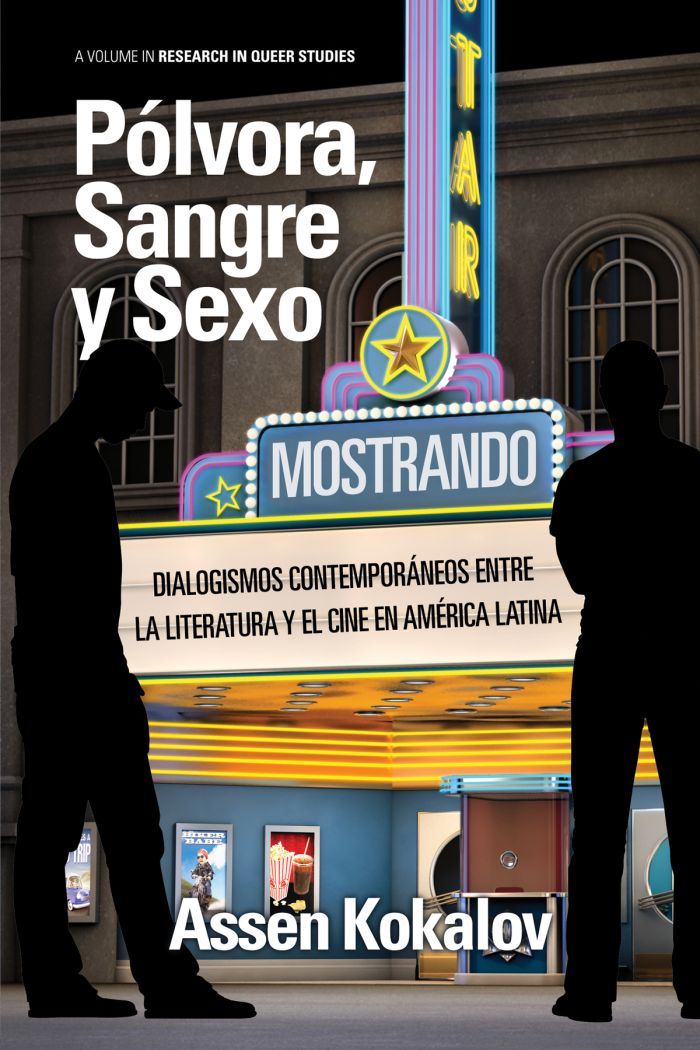
Gunpowder, Blood and Sex
Contemporary Dialogisms Between Literature and Film In Latin America

This book can be opened with

Note on our eBooks and Audiobooks: you can read our eBooks (ePUB or PDF) and listen to audiobooks on the free Emerald Books app on iOS, Android, and desktop. Or read and listen on Emerald's online reader (ePUB eBooks and audiobooks only). To purchase a digital book you will need to create an account if you don’t already have one. After purchasing you will receive instructions on how to get started.
- Description
- Contents
The book examines the links between literature and film in Latin America by using queer theory and a series of recent cultural productions whose arguments destabilize traditional gender roles and heteronormative masculinity. For many years, the connections between a literary text and its film adaptation have been considered only from the point of view of the latter’s fidelity to the written work, which many scholars imagined to be the original that filmmakers needed to respect. Within the last two decades, however, the idea of adaptation fidelity has been challenged by a number of critics who refute the existence of an original text and promote the notion of an ambiguous and complex relationship between a literary work and its film adaptation. Based on such developments and with the help of queer theory, this book questions and revises several crucial theoretical approximations that analyze the relations between the two art forms in an attempt to overcome the limitations of fidelity discourse. This is the first book-length study that seeks to examine, with the appropriate detail, the connections between film and literature in Latin America through the lenses of queer theory and by focusing on the representations of numerous practices that do not fit within the general framework of heteronormative sexuality.
Agradecimientos.
- Presentación.
- Chapter 1. Consideraciones adaptativas preliminares: Tres casos de dialogismo entre literatura y cine en Latinoamérica.
- Chapter 2. Fuera de la ley: Dialogismos homoeróticos en el ambiente del crimen y de la violencia urbana.
- Chapter 3. Sim, meu sargento: una exploración de la dictadura brasileña a través del dialogismo entre literatura y cine, Namisi's Story.
- Chapter 4. La desestabilización de la familia patriarcal latinoamericana y la adaptación cinematográfica.
- Chapter 5. Violencia, epidemia y homoerotismo: El dialogismo adaptativo tras el prisma del sida.
- Conclusión.
- Bibliografía.
- Filmografía.
- Nota sobre el autor.