
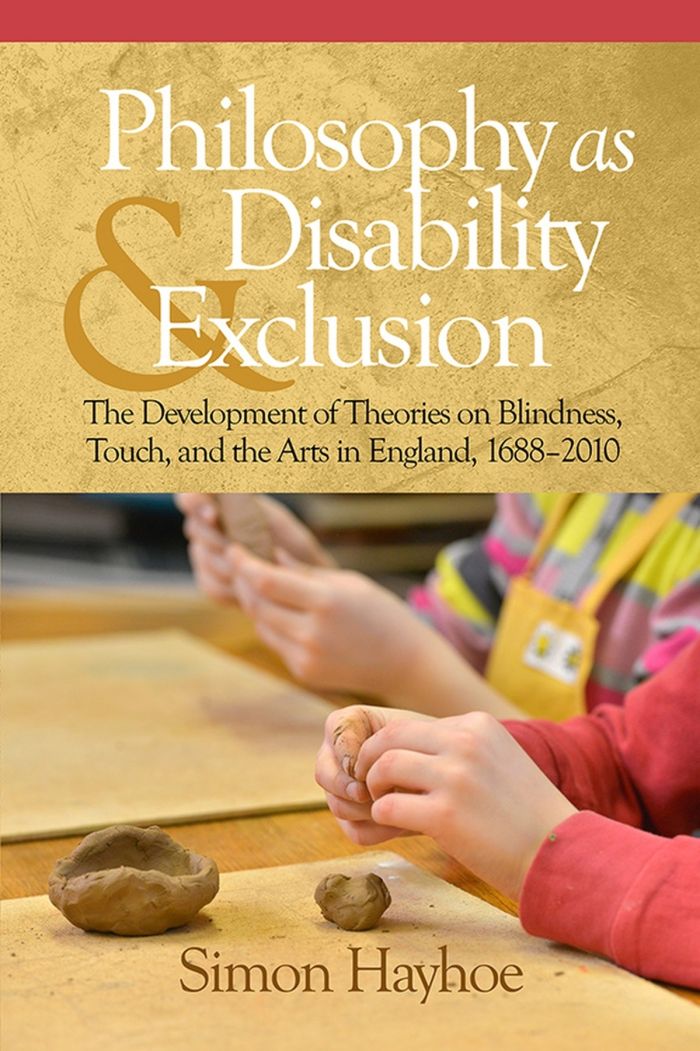
Philosophy as Disability & Exclusion
The Development of Theories on Blindness, Touch and the Arts in England, 1688-2010

This book can be opened with

Note on our eBooks and Audiobooks: you can read our eBooks (ePUB or PDF) and listen to audiobooks on the free Emerald Books app on iOS, Android, and desktop. Or read and listen on Emerald's online reader (ePUB eBooks and audiobooks only). To purchase a digital book you will need to create an account if you don’t already have one. After purchasing you will receive instructions on how to get started.
- Description
- Contents
Philosophy as Disability and Exclusion examines the history of ideas on arts in the education of people who are blind in England, from 1688 to 2010. This book also examines a number of the earlier influences on the enlightenment, and the international context of this topic. The two hypotheses on which this study is based are:
(1) Our understanding of blindness in English intellectual culture is less to do with homologous physical characteristics. Instead it is more to do with an ethical philosophy of human capacity.
(2) The arts education of people who are blind through touch tells us much about our psychology of mythologies and the intellectual construction of human thought. Furthermore, the myth that people who are blind are incapable of visual arts and have an enhanced capacity for the musical arts is one of the most engrained modern folklores. It is part of our cultural, intellectual and philosophical conscience.
In the process of investigating these hypotheses, this book argues that philosophies have linked immorality, intelligence and physical ability. These have become connected in ways that are unrelated to eyesight in order to fulfill broader cultural processes of developing social theory. In this book, the process of knowledge creation is termed passive exclusion and is analyzed through an epistemological model of examining disability and exclusion.
Dedication.
- Acknowledgements.
- Preface.
- Introduction.
- Section 1: Philosophical and Cognitive Studies of Blindness, Touch and Art
- Chapter 1. Epistemologies and Ontologies of Blindness, from da Vinci to Diderot.
- Chapter 2. A History of Empirical Research on Blindness, Touch and the Arts, from Charlton Deas to Kennedy and Spence.
- Chapter 3. The Epistemological Model of Understanding Disability and Passive Exclusion.
- Section 2: An Examination of the Development of English Institutions for the Blind
- Chapter 4. Creative and Imaginative Education in English Schools for the Blind.
- Chapter 5. Legal Inclusion in English Education.
- Chapter 6. The Development of Inclusion in English Museums, Galleries and Monuments.
- Section 3: Conclusion
- Conclusion.
- References.
- Index.
- Glossary.