
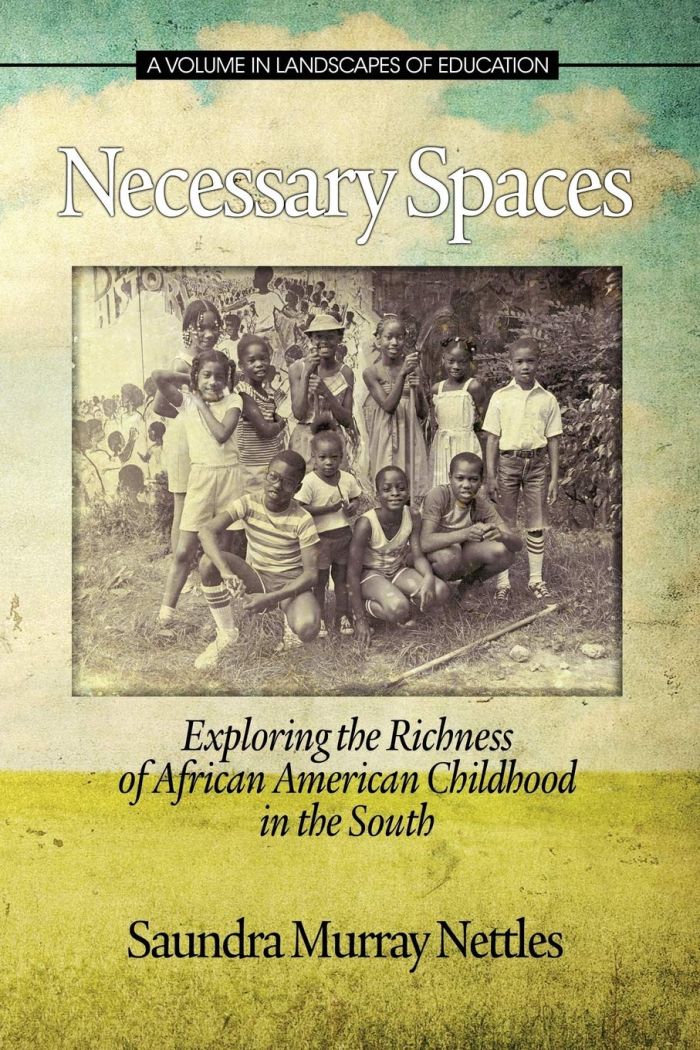
Necessary Spaces
Exploring the Richness of African American Childhood in the South

This book can be opened with

Note on our eBooks and Audiobooks: you can read our eBooks (ePUB or PDF) and listen to audiobooks on the free Emerald Books app on iOS, Android, and desktop. Or read and listen on Emerald's online reader (ePUB eBooks and audiobooks only). To purchase a digital book you will need to create an account if you don’t already have one. After purchasing you will receive instructions on how to get started.
- Description
- Contents
In Necessary Spaces: Exploring the Richness of African American Childhood in the South, Saundra Murray Nettles takes the reader on a journey into neighborhood networks of learning at different times and places. Using autobiographical accounts, Nettles discusses the informal instructional practices of community “coaches” from the perspective of African American adults who look back on their childhood learning experiences in homes, libraries, city blocks, schools, churches, places of business, and nature. These eyewitness accounts reveal "necessary spaces,” the metaphor Nettles uses to describe seven recurring experiences that converge with contemporary notions of optimal black child development: connection, exploration, design, empowerment, resistance, renewal, and practice.
Nettles weaves the personal stories with social scientific theory and research and practical accounts of community-based initiatives to illuminate how local communities contributed human, built, and natural resources to support children’s achievement in schools. The inquiry offers a timely and accessible perspective on how community involvement for children can be developed utilizing the grassroots efforts of parents, children, and other neighborhood residents; expertise from personnel in schools, informal institutions (such as libraries and museums); and other sectors interested in disparities in education, health, and the quality of physical settings.
Grounded in the environmental memories of African American childhood, Necessary Spaces offers a culturally relevant view of civic participation and sustainable community development at the local level. Educational researchers and policy makers, pre-service and in-service teachers, and people who plan for and work with children and youth in neighborhoods will find this book an engaging look at possibilities for the social organization of educational resources. Qualitative researchers will find a model for writing personal scholarly essays that use the personal to inform larger issues of policy and practice. In Necessary Spaces, local citizens in neighborhoods across the United States will find stories that resonate with their own experiences, stimulate their recollections, and inform and inspire their continuing efforts to create brighter futures for children and communities.
List of Illustrations.
- Acknowledgement.
- Series Foreword.
- Foreword.
- Chapter 1. Home Ground.
- Chapter 2. Curriculum of Place.
- Chapter 3. Landscapes of Resistance.
- Chapter 4. Necessary Spaces.
- References.