
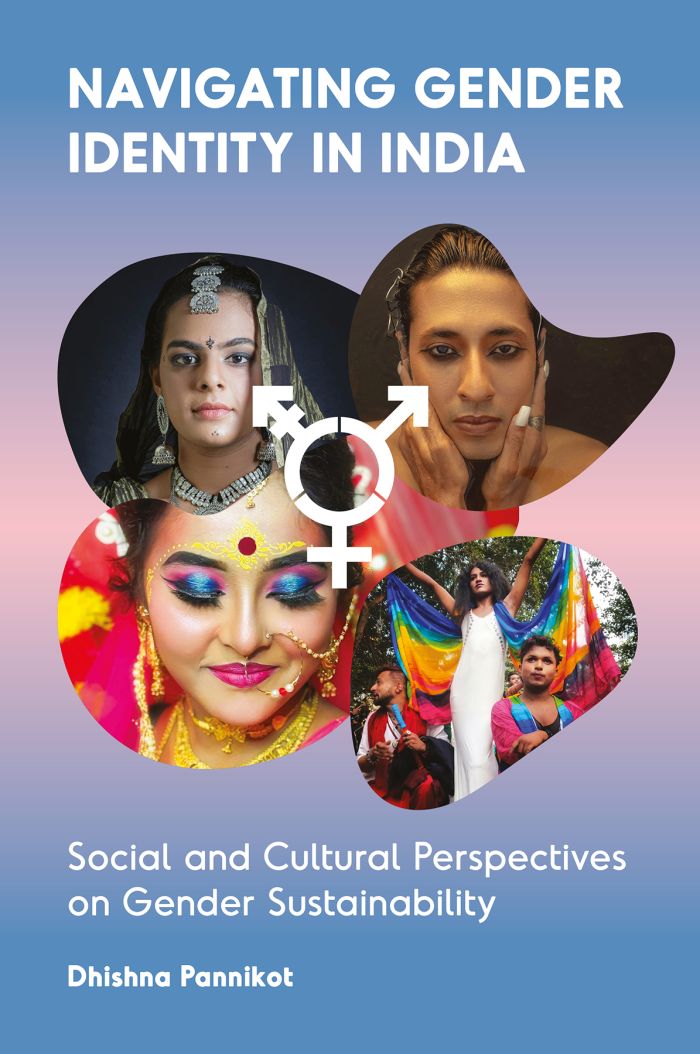

Navigating Gender Identity in India
Social and Cultural Perspectives on Gender Sustainability

This book can be opened with

Note on our eBooks and Audiobooks: you can read our eBooks (ePUB or PDF) and listen to audiobooks on the free Emerald Books app on iOS, Android, and desktop. Or read and listen on Emerald's online reader (ePUB eBooks and audiobooks only). To purchase a digital book you will need to create an account if you don’t already have one. After purchasing you will receive instructions on how to get started.
- Description
- Contents
- About
Gender sustainability is a critical area of research within the social sciences, focusing on the ongoing efforts to understand and address the diverse challenges faced by individuals of marginalised gender identities. It involves creating a society where all genders can thrive without facing discrimination or inequality. Navigating Gender Identity in India addresses the significant gap in research by examining the specific problems encountered by female, male, intersex, and other gender-fluid identities in their daily lives in India. By aligning its analysis with the United Nations Sustainable Development Goals, this work underscores the importance of fostering gender equality and reducing inequalities, contributing to the advancement of a more equitable and just society.
This edited collection delves into a wide range of gender-related issues, including workplace discrimination, caste and class-based challenges, and the resistance and negotiations of mothers with disabilities. Chapters cover gender-based microaggressions against women, gender-based violence in Northeast India, and the difficulties women face after career breaks. Other topics include gentrification in urban spaces, gender stereotyping and representation in social media, societal reforms and acceptance of queer communities, gender intersectionality, and the impact of religion on urban women. This diverse thematic presentation highlights the contemporary relevance of these issues in Indian society.
This collection is an invaluable resource for researchers and students in gender studies and related fields, offering real-life experiences from diverse non-Western settings. It is particularly beneficial for NGOs and policymakers aiming to understand the varied gender challenges across different societies, aiding them in developing new policies and guidelines for global societal betterment.
Chapter 1. Introduction to Gender Sustainability; Kiran Raveendran
- Chapter 2. Gender microaggressions, the contemporary form of gender bias: A systematic literature review; Priya P and Sreejith S S
- Chapter 3. Feminist Mobilization and Digital Feminism: Reading the role of Digital Spaces as Catalysts for Feminist Action and Social Change; Tanupriya
- Chapter 4. Gender Stereotyping on Social Media: A Review; Abhilasha K. Agrawal and Maithili Barahate-Paikane
- Chapter 5. Navigating Gender Sustainability, Menstrual Hygiene, and Women Empowerment in Contemporary Indian Society: A Study on Select Films; Srijani Chowdhury
- Chapter 6. ‘Rockets’ without Destination: Gender Sustainability and Identity Challenges in Indian Sports Explored through Rashmi Rocket; Tania Koley and Joydeep Banerjee
- Chapter 7. Gender Dynamics in Social Commerce: Shaping Platform Preferences and Shopping Behavior; Soma Amol Dhaigude and Bijuna C Mohan
- Chapter 8. Challenges of LGBTQ Workplace Discrimination: A Comprehensive Analysis; M Subramanian, Sivajothi Ramalingam, and S Pugalanthi
- Chapter 9. Does Board Gender Diversity Enhance the Sustainable Performance of Firms? Empirical Evidence from India; Poornima S, Gopalakrishna B V, and Mithun Samanta
- Chapter 10. Requalification and Career Setbacks: Unemployment Scarring in Academia among Middle-Aged Women; R. Kanakasudha
- Chapter 11. Scientific Mapping of Gender in Sustainable Tourism Research – A Bibliometric Approach; Abhishek Talawar and Sheena S
- Chapter 12. He Said, She Said: Understanding Gender Variances in factors influencing Cognitive Dissonance in Online Shopping of Electronic Products; Haritha S and Bijuna C Mohan
- Chapter 13. Consent and Coercion: Re-examining Marital Rape and Gender Inequality in India’s Legal Framework; Ajeesh A K
- Chapter 14. Gendered Gentrification: A Case Study of Thiruvananthapuram; Praveen P
- Chapter 15. Women Entrepreneurship and Sensitization: Analyzing the impact of Kudumbasree on Economic, Social, Ecological and Gender Sustainability in Kerala; Indu A S
- Chapter 16. Celebrating Bharani: Embracing Gender Sustainability through Tradition and Culture; Reenu George and Jibhi Bhaskaran
- Chapter 17. Exploring Gender Sustainability in Khasi Society: An Analysis of Matrilineality and Women Empowerment; Athira Baburaj
Dhishna Pannikot is Associate Professor of English in the School of Humanities, Social Sciences & Management at the National Institute of Technology, Karnataka, India.