
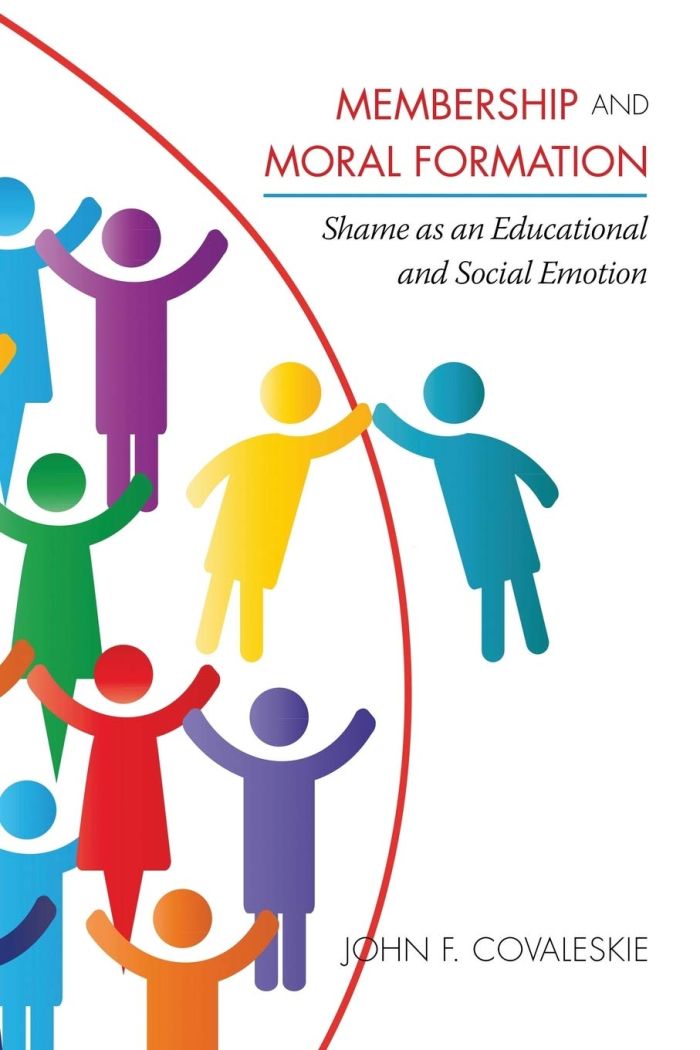
Membership and Moral Formation
Shame as an Educational and Social Emotion

This book can be opened with

Note on our eBooks and Audiobooks: you can read our eBooks (ePUB or PDF) and listen to audiobooks on the free Emerald Books app on iOS, Android, and desktop. Or read and listen on Emerald's online reader (ePUB eBooks and audiobooks only). To purchase a digital book you will need to create an account if you don’t already have one. After purchasing you will receive instructions on how to get started.
- Description
- Contents
This book is an attempt to relate moral formation to democratic life and to the emotional emotion of shame. The argument is that shame is essential to moral formation, that it tells us when we are violating our own moral norms. Contrary to common belief, I argue that shame is neither imposed on us by others (though it is certainly a product of our communal memberships) nor necessarily harmful. In fact I argue that shame not only can be beneficial for us, but that moral formation and growth are both inextricably linked to a proper sense of shame, a properly formed conscience.
The process of moral formation is an important one for any society, but perhaps most of all for a democratic society. The foundational premise of democratic life is that we have the capacity to be self-governing, the desire to do the right thing, and the wisdom to discern what the right thing is. This is unlikely to happen unless there is a conscious effort to form the conscience of the young so that they can become democratic citizens.
Which brings up, then, the question of moral education. Whatever it is that a particular society or community considers to be “moral,” the question of moral education is how do members of the community come to be moral? Given that moral formation of the young is necessary, this discussion ends with a look at the practice of two exemplary democratic moral practitioners, Vivian Paley and Deborah Meier, whose pedagogy shows how formation of young consciences can be done by thoughtful adults with integrity.
Acknowledgments.
- Introduction.
- Chapter 1. Why Shame?
- Chapter 2. Democracy and Virtue.
- Chapter 3. The Role of Membership in Moral Formation.
- Chapter 4. Vocabulary of Moral Judgment and Moral Membership.
- Chapter 5. Other Views of Shame.
- Chapter 6. Who Am I? The Question of Moral Identity.
- Chapter 7. Shame, Guilt, and Identity.
- Chapter 8. Schooling, Community, and the Educational Function of Shame.
- References.
- Biography.