
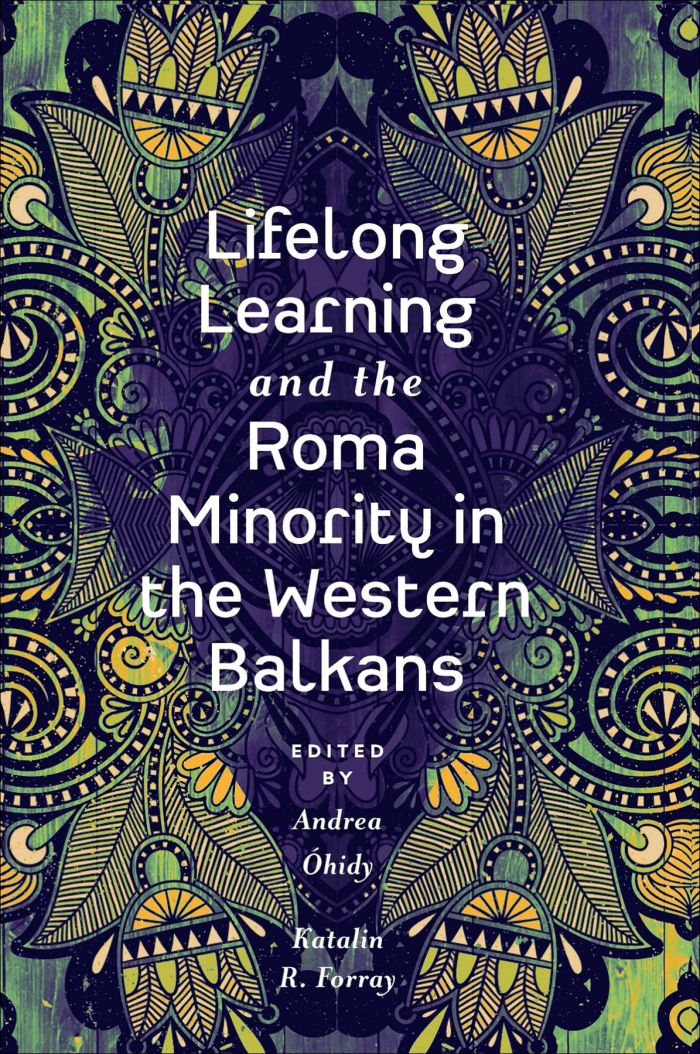

Lifelong Learning and the Roma Minority in the Western Balkans

This book can be opened with

Note on our eBooks and Audiobooks: you can read our eBooks (ePUB or PDF) and listen to audiobooks on the free Emerald Books app on iOS, Android, and desktop. Or read and listen on Emerald's online reader (ePUB eBooks and audiobooks only). To purchase a digital book you will need to create an account if you don’t already have one. After purchasing you will receive instructions on how to get started.
- Description
- Contents
- About
Access, attainment and success of Roma people in education and lifelong learning is one of the most urgent public policy issues in Europe. According to empirical data Roma people are the most underrepresented group in schools and other educational institutions.
Lifelong Learning and the Roma Minority in the Western Balkans examines the education situation of Roma in the Western Balkans, providing an overview of the education policies for Roma in 5 EU-candidate and potential candidate countries: Albania, Bosnia-Hercegovina, Kosovo, Montenegro and Serbia.
The book is an important contribution to the field of comparative education and informs educational leaders and practitioners in the Western Balkans and beyond.
Chapter 1. Lifelong Learning and the Roma Minority in the Western Balkans – Introduction; Andrea Óhidy and Katalin R. Forray
- Chapter 2. The European Union and the Western Balkans; Marc Reinbold
- Education Situation of Roma in Selected Western Balkans Countries
- Chapter 3. Education of Roma children in Albania; Merita H. Meçe
- Chapter 4.The Education Situation of Roma in Bosnia and Herzegovina; Anita Lukenda
- Chapter 5. The Education Situation of the Roma Community in Kosovo; Diterio Arifi and Ngadhnjim Brovina
- Chapter 6. The Education Situation of the Roma in Montenegro; Srđan Vukadinović
- Chapter 7. The Education Situation of the Roma Minority in Serbia; Tinde Kovacs Cerovic, Jadranka Ivkovic, Mónika Kapás, and Evgeny Ivanov
- Chapter 8. Participation and success of Roma in the Western Balkans in education and lifelong learning – Conclusions of the country studies about Albania, Bosnia and Herzegovina, Kosovo, Montenegro and Serbia; Andrea Óhidy
Andrea Óhidy is Professor at the Institute of Education Sciences and holder of the Jean Monnet Chair Freiburg for European Education at the University of Education Freiburg, Germany. Her research interests include educational policy in the European Union, Lifelong Learning, Teacher Training and Pedagogic Professionalism. She has published in these areas in German, Hungarian and English.
Katalin R. Forray is Emeritus Professor at the University of Pécs, Hungary. She is founder of the Doctoral School of Education and Society. In 2000 she established the Department of Romani Studies at the Faculty of Humanities and Social Sciences. Professor Forray is member of several Hungarian and international Romani organisations. Her research interests include: integration of minorities (e.g. Roma): multiculturalism: social, economic and regional dimensions of institutional learning; and women in education.