
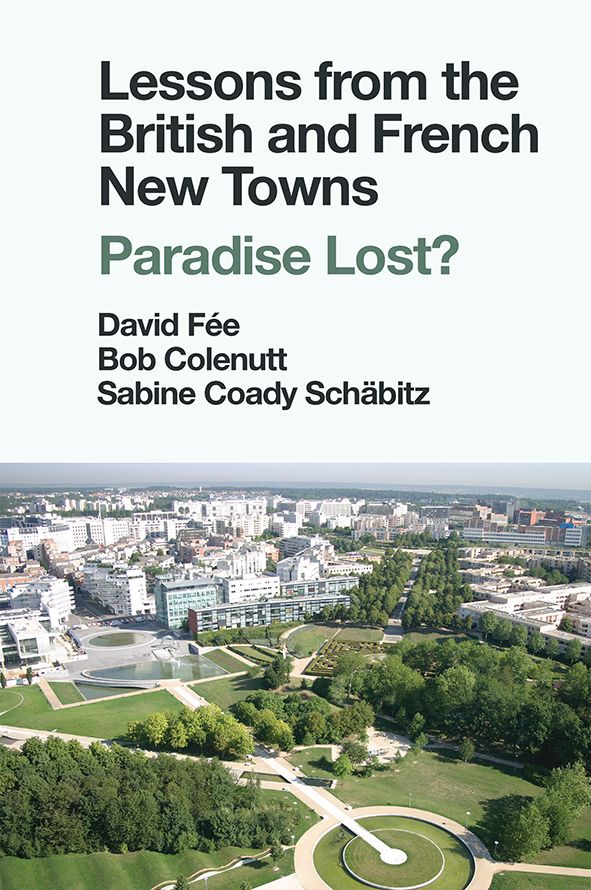


Lessons from the British and French New Towns
Paradise Lost?

This book can be opened with

Note on our eBooks and Audiobooks: you can read our eBooks (ePUB or PDF) and listen to audiobooks on the free Emerald Books app on iOS, Android, and desktop. Or read and listen on Emerald's online reader (ePUB eBooks and audiobooks only). To purchase a digital book you will need to create an account if you don’t already have one. After purchasing you will receive instructions on how to get started.
- Description
- Contents
- About
Lessons from the British and French New Towns: Paradise Lost? explores the evolution of the New Towns in both France and the UK from several perspectives including public policy, sociology, geography and heritage.
UK and French New Towns have many similarities in terms of the role of the national state in tackling urgent problems of housing and urban growth and in promoting innovative design and architecture. These innovative planned settlements have left a contested and complex legacy, but are once again on the political and urbanisation agenda in Europe, where a push for growth of housing and the desire for sustainability are the new drivers of urban planning and design. After years of the private development market being seen as the principal instrument of urban growth and planning, it is time to assess the urban legacy and the heritage of the UK and French New Towns. This book contrasts their evolution on both sides of the Channel and shows what can be learned about post war state planning and the future planning of new settlements.
Part 1- The New Towns and Policy Makers Chapter 1. Reinventing the Healthy Garden City: Ebbsfleet’s learning from the New Towns; Elanor Warwick Chapter 2. Loss and Longing: Whatever happened to the Egalitarian Ethos of the UK New Towns; Bob Colenutt Chapter 3. Unpacking the Official View: Four Myths on British New Towns; Helena Rivera Chapter 4. Beyond your Wildest Dreams? Building New Towns in France Today; David Fée Part 2- The New Towns and their Residents Chapter 5. Ways of knowing the Landscape of the New Towns: A Lefebvrian Analysis; Susan Fitzpatrick Chapter 6. The Suburbanity Urbanity of New Towns: Everyday Life in Milton Keynes and Cergy Pontoise; Ivan Nio Chapter 7. Saint-Quentin-en-Yvelines: Lessons learned from the Years 1965-2019; Danièle Gardrat and Frédéric Theulé Part 3- The New Towns in their Wider Regional and International Context Chapter 8. The London New Towns in their Changing Regional Context; Tony Champion Chapter 9. Planning the World’s New Towns- A Tale of Two Countries, 1975-2013; Clément Orillard and Stephen Ward Chapter 10. Learning from the Contrasting Histories and Trajectories of Harlow and Thamesmead; Julia Deltoro-Soto, Stephen Marshall Part 4- The New Towns and Heritage Chapter 11. Public Art in British New Towns: The Past, Present and Future; Alina Congreve Chapter 12. Public Art in French New Towns: From Experiments to Heritage; Loic Vadelorge Chapter 13. A Tangible Utopia: Genesis of and Experiments in the French New Towns; Catherine Blain Chapter 14. A controversial Heritage: New Towns and the problematic legacy of Modernism; Sabine Coady Schäbitz