
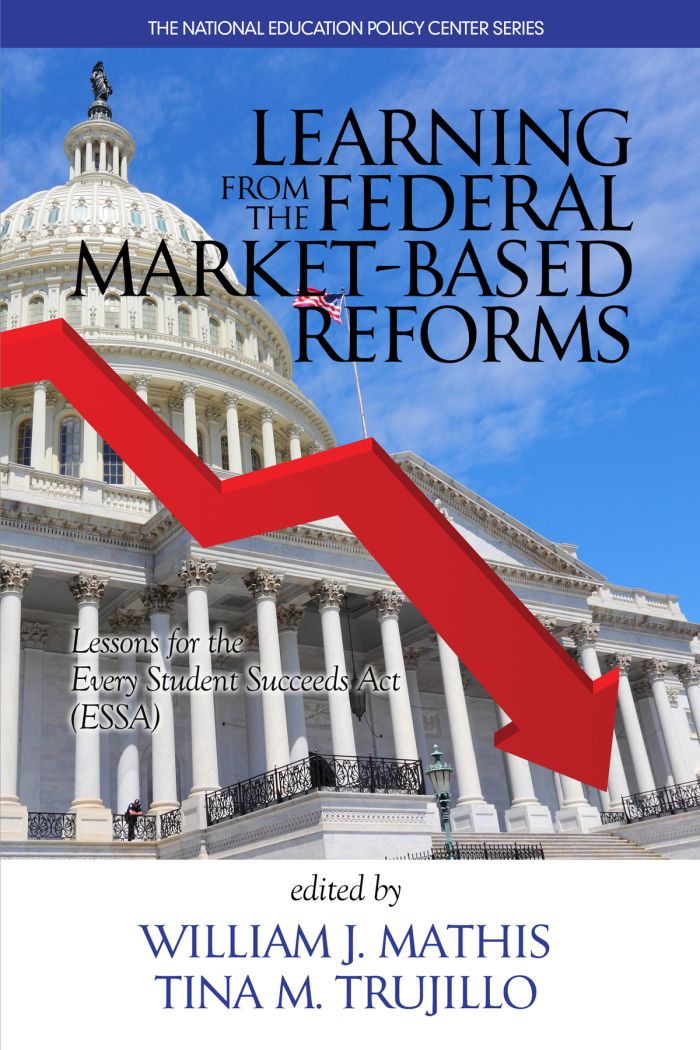
Learning from the Federal Market Based Reforms
Lessons for ESSA

This book can be opened with

Note on our eBooks and Audiobooks: you can read our eBooks (ePUB or PDF) and listen to audiobooks on the free Emerald Books app on iOS, Android, and desktop. Or read and listen on Emerald's online reader (ePUB eBooks and audiobooks only). To purchase a digital book you will need to create an account if you don’t already have one. After purchasing you will receive instructions on how to get started.
- Description
Over the past twenty years, educational policy has been characterized by top-down, market-focused policies combined with a push toward privatization and school choice. The new Every Student Succeeds Act continues along this path, though with decision-making authority now shifted toward the states. These market-based reforms have often been touted as the most promising response to the challenges of poverty and educational disenfranchisement. But has this approach been successful? Has learning improved? Have historically low-scoring schools “turned around” or have the reforms had little effect? Have these narrow conceptions of schooling harmed the civic and social purposes of education in a democracy?
This book presents the evidence. Drawing on the work of the nation’s most prominent researchers, the book explores the major elements of these reforms, as well as the social, political, and educational contexts in which they take place. It examines the evidence supporting the most common school improvement strategies: school choice; reconstitutions, or massive personnel changes; and school closures. From there, it presents the research findings cutting across these strategies by addressing the evidence on test score trends, teacher evaluation, “miracle” schools, the Common Core State Standards, school choice, the newly emerging school improvement industry, and re-segregation, among others.
The weight of the evidence indisputably shows little success and no promise for these reforms. Thus, the authors counsel strongly against continuing these failed policies. The book concludes with a review of more promising avenues for educational reform, including the necessity of broader societal investments for combatting poverty and adverse social conditions. While schools cannot single-handedly overcome societal inequalities, important work can take place within the public school system, with evidence-based interventions such as early childhood education, detracking, adequate funding and full-service community schools—all intended to renew our nation’s commitment to democracy and equal educational opportunity.