
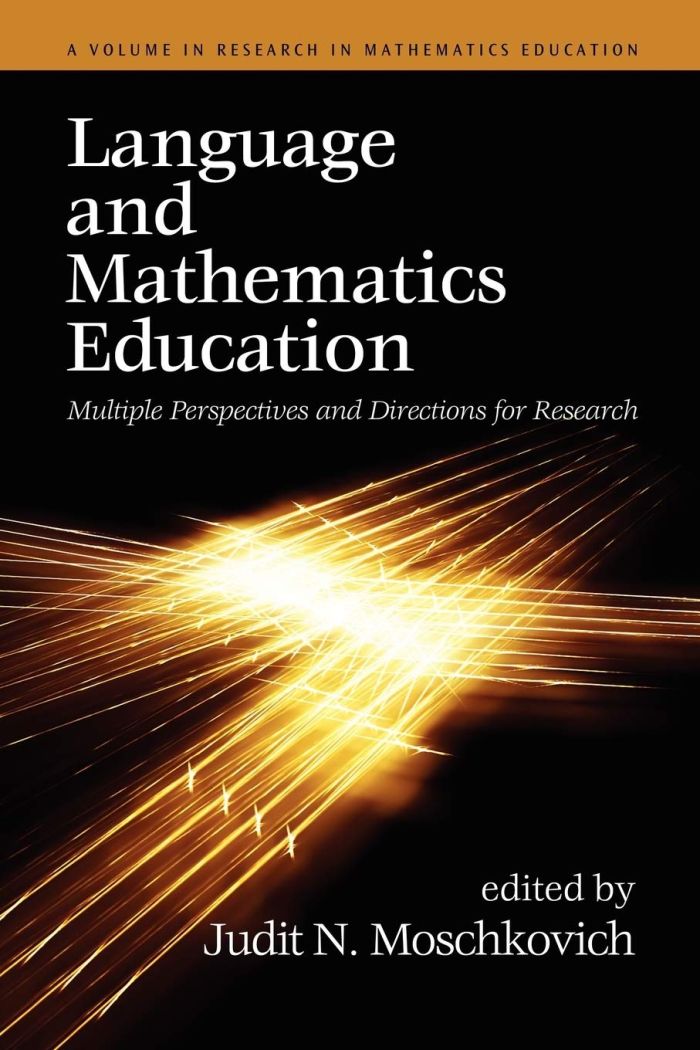
Language and Mathematics Education
Multiple Perspectives and Directions for Research

This book can be opened with

Note on our eBooks and Audiobooks: you can read our eBooks (ePUB or PDF) and listen to audiobooks on the free Emerald Books app on iOS, Android, and desktop. Or read and listen on Emerald's online reader (ePUB eBooks and audiobooks only). To purchase a digital book you will need to create an account if you don’t already have one. After purchasing you will receive instructions on how to get started.
- Description
- Contents
Issues of language in mathematics learning and teaching are important for both practical and theoretical reasons. Addressing issues of language is crucial for improving mathematics learning and teaching for students who are bilingual, multilingual, or learning English. These issues are also relevant to theory: studies that make language visible provide a complex perspective of the role of language in reasoning and learning mathematics. What is the relevant knowledge base to consider when designing research studies that address issues of language in the learning and teaching of mathematics? What scholarly literature is relevant and can contribute to research? In order to address issues of language in mathematics education, researchers need to use theoretical perspectives that integrate current views of mathematics learning and teaching with current views on language, discourse, bilingualism, and second language acquisition. This volume contributes to the development of such integrated approaches to research on language issues in mathematics education by describing theoretical perspectives for framing the study of language issues and methodological issues to consider when designing research studies. The volume provides interdisciplinary reviews of the research literature from four very different perspectives: mathematics education (Moschkovich), Cultural-Historical-Activity Theory (Gutiérrez, Sengupta-Irving, & Dieckmann), systemic functional linguistics (Schleppegrell), and assessment (Solano-Flores). This volume offers graduate students and researchers new to the study of language in mathematics education an introduction to resources for conceptualizing, framing, and designing research studies. For those already involved in examining language issues, the volume provides useful and critical reviews of the literature as well as recommendations for moving forward in designing research. Lastly, the volume provides a basis for dialogue across multiple research communities engaged in collaborative work to address these pressing issues.
Foreword; David Pimm.
- Preface; Judit N. Moschkovich.
- Chapter 1. Language(s) and Learning Mathematics: Resources, Challenges, and Issues for Research; Judit N. Moschkovich.
- Chapter 2. Developing a Mathematical Vision: Mathematics as a Discursive and Embodied Practice; Kris D. Gutiérrez, Tesha Sengupta-Irving, and Jack Dieckmann.
- Chapter 3. Language in Mathematics Teaching and Learning: A Research Review; Mary J. Schleppegrell.
- Chapter 4. Function and Form in Research on Language and Mathematics Education; Guillermo Solano-Flores.
- Chapter 5. Recommendations for Research on Language and Mathematics Education; Judit N. Moschkovich.
- Afterword; Beth Warren.
- Contributors.