
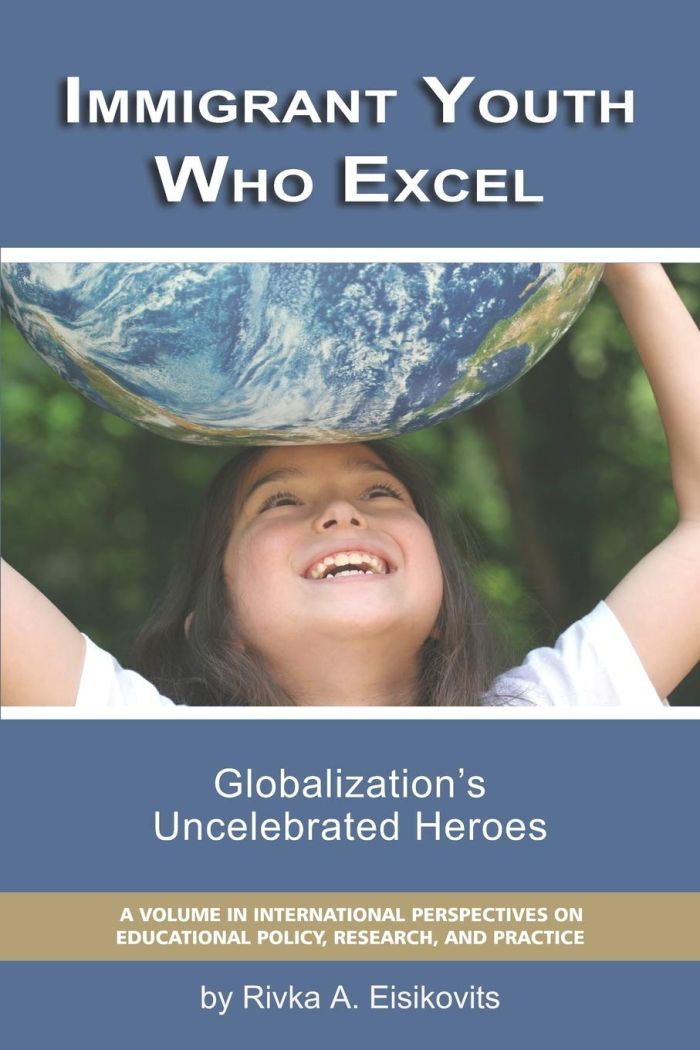
Immigrant Youth Who Excel
Globalization 's Uncelebrated Heroes

This book can be opened with

Note on our eBooks and Audiobooks: you can read our eBooks (ePUB or PDF) and listen to audiobooks on the free Emerald Books app on iOS, Android, and desktop. Or read and listen on Emerald's online reader (ePUB eBooks and audiobooks only). To purchase a digital book you will need to create an account if you don’t already have one. After purchasing you will receive instructions on how to get started.
- Description
- Contents
The book has two parts. Through a series of four interconnected studies, the first focuses on the youths’ perceptions. We, meaning the reader and I, accompany them on their way into the new school, in chapter 1, and listen to evaluations of their academic and social experiences. In chapter 2, we learn about their informal social adaptation in various life settings, emphasizing gender differences in coping mechanisms. From here, we proceed to public opinion formation in the course of preparation for first-time voting in a new political culture (chapter 3). Perceptions of the military, in chapter 4, as the last stage of compulsory postsecondary civic engagement for Israeli youngsters, close this section. The second part places in the limelight the reactions of the educational system to catering to the needs of these immigrants who excel. Chapter 5 dwells on teachers’ perspectives on the challenge they present, exploring differences in these perspectives according to their years of experience and subject matter area. Chapter 6 examines the organizational modus operandi of several schools, eliciting field-based models for handling immigrant students. Evolving from the latter, chapter 7 offers an anthropological approach for training teachers to work optimally with immigrant and culturally diverse students. The programmatic epilogue offers an operational model for materializing the potential to enhance global participation for immigrants as well as locals, ensuing from the inter-cultural encounter. Research procedures that are common to a number of studies are explained upon first mention. To aid in the visualization of adaptive patterns emerging from this large body of data—on both immigrant youth and educators in the receiving society—tables summarizing findings are provided for all but chapter 7. In addition to the comparative component, each chapter also includes an assessment of globalization proneness in light of its specific topic.
Introduction.
- Part I. Youths Speak.
- Chapter 1. "My expectations from school?... Here's a list!" The High School Compared and Assessed.
- Chapter 2. "It is obvious that girls have an easier time:" Gender and Adaption Style.
- Chapter 3. "Democracy is more fun:" Voting in a New Political Culture.
- Chapter 4. "There (in the service) you will have to become a part of things:" Acculturation in and Through the Military.
- Part II. (Do) We Listen.
- Chapter 5. "They do excel, the trouble is they come in as Russian and leave as Russians four years later:" Teaching High-Achieving Transnationalists.
- Chapter 6. "The question is where to place the Ulpan class:" Diverging Approaches to the Education of Immigrants.
- Chapter 7. An Anthropological Answer: The Teacher-as-Ethnographer Model.
- A Programmatic Epilogue.
- References.
- About the Author.