
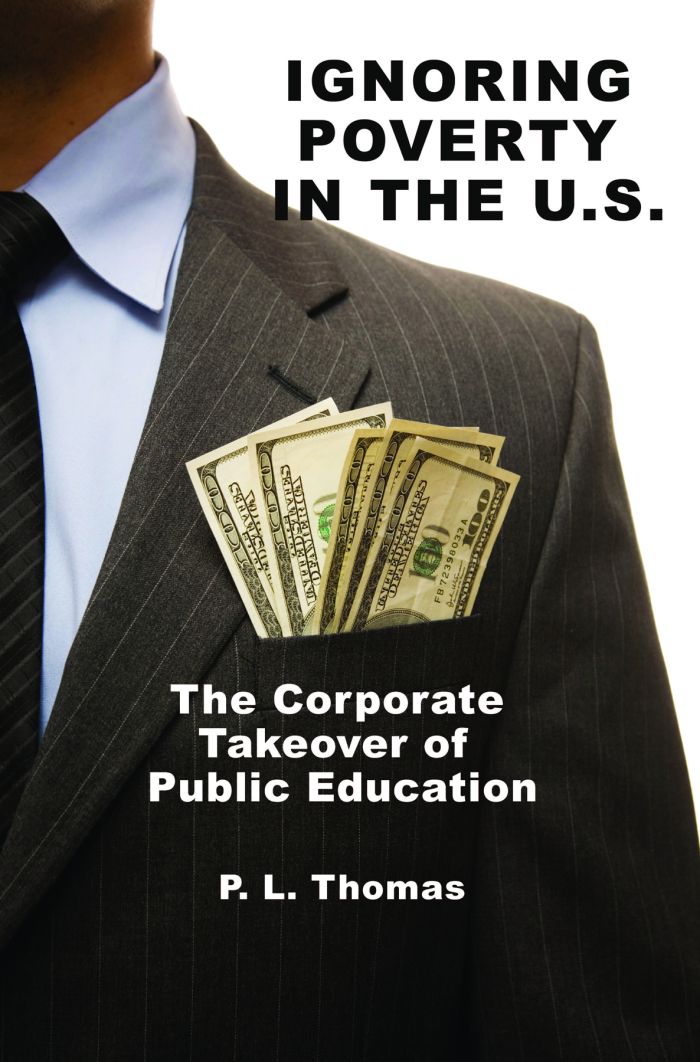
Ignoring Poverty in the U.S. the Corporate Takeover of Public Education

This book can be opened with

Note on our eBooks and Audiobooks: you can read our eBooks (ePUB or PDF) and listen to audiobooks on the free Emerald Books app on iOS, Android, and desktop. Or read and listen on Emerald's online reader (ePUB eBooks and audiobooks only). To purchase a digital book you will need to create an account if you don’t already have one. After purchasing you will receive instructions on how to get started.
- Description
- Contents
Ignoring Poverty in the U.S.: The Corporate Takeover of Public Education examines the divide between a commitment to public education and our cultural myths and more powerful commitment to consumerism and corporate America. The book addresses poverty in the context of the following: the historical and conflicting purposes in public education—how schools became positivistic/behavioral in our quest to produce workers for industry; the accountability era—how A Nation at Risk through NCLB have served corporate interest in dismantling public education and dissolving teachers unions; the media and misinformation about education; charter schools as political/corporate compromise masking poverty; demonizing schools and scapegoating teachers—from misusing the SAT to VAM evaluations of teachers; rethinking the purpose of schools—shifting from schools as social saviors to addressing poverty so that public education can fulfill its purpose of empowering everyone in a democracy; and reframing how we view people living in poverty—rejecting deficit views of people living in poverty and students struggling in school under the weight of lives in poverty.
This work is intended to confront the growing misinformation about the interplay among poverty, public schools, and what schools can accomplish while political and corporate leadership push agendas aimed at replacing public education with alternatives such as charter schools. The audience for the publication includes educators, educational reformers, politicians, and any member of the wider public interested in public education.
Acknowledgements.
- Introduction.
- Chapter 1. Universal Public Education: Two Possible—and Contradictory—Missions.
- Chapter 2. Politicians Who Cry "Crisis": Education Accountability as Masking.
- Chapter 3. Legend of the Fall: Snapshots of What's Wrong in the Education Debate.
- Chapter 4. The Great Charter Compromise: Masking Corporate Commitments in Educational Reform.
- Chapter 5. The Teaching Profession as a Service Industry.
- Chapter 6. If Education Cannot Do Everything...: Education as Communal Praxis.
- Chapter 7. Confronting Poverty Again for the First Time: Rising above Deficit Perspectives.
- Conclusion.
- Note.
- References.
- About the author.