
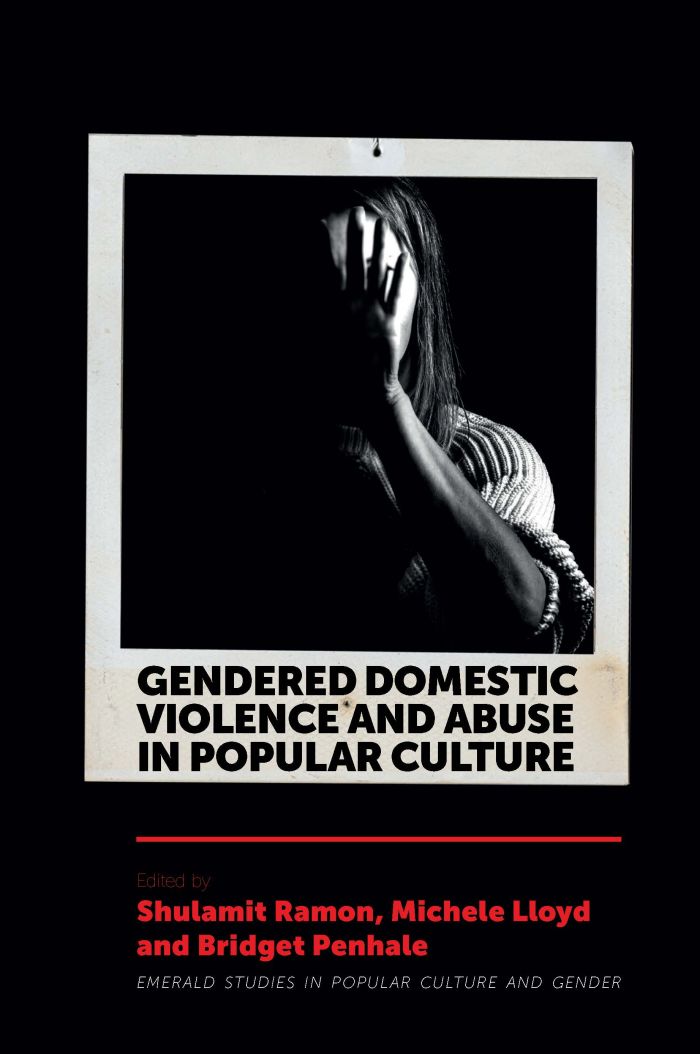
Gendered Domestic Violence and Abuse in Popular Culture

Shulamit Ramon|Michele Lloyd|Bridget Penhale
Emerald
Emerald

This book can be opened with

Glassboxx eBooks and audiobooks can be opened on phones, tablets, iOS and Android devices

Hardback
9781838677824
30 November 2020
£72.99
eBook (PDF)
9781838677817
30 November 2020
£72.99
eBook (ePub)
9781838677831
30 November 2020
£72.99

Note on our eBooks and Audiobooks: you can read our eBooks (ePUB or PDF) and listen to audiobooks on the free Emerald Books app on iOS, Android, and desktop. Or read and listen on Emerald's online reader (ePUB eBooks and audiobooks only). To purchase a digital book you will need to create an account if you don’t already have one. After purchasing you will receive instructions on how to get started.

  • Description
  • Contents
  • Reviews
  • About
As binge-watching and streaming lead to increasing amounts of content and screen time, understanding how domestic violence and abuse is portrayed in popular culture and its impact on DVA in our society is more important than ever. Amid current international attention on sexual harassment, abuse and exploitation initiated by the #MeToo movement, this collection demonstrates how networked communication is influencing activism, both online and in the real-world. 

The term gendered DVA recognises the wider gender inequality underpinning DVA, and intersecting inequalities such as race, social class, sexuality, age and disability. International contributors from Europe, the USA and Australia examine how DVA is represented in different media forms comprising film, television, newspapers, digital and social media, and TED lectures. The collection examines intimate partner abuse, child abuse, grooming and sexual exploitation, elder abuse and neglect, and abuse in LGBT relationships. Authors also analyse policy changes in relation to DVA, both progressive and regressive, together with topics such as moral panic in the media and trial by media. 

An in-depth and wide-ranging resource, this collection will be a valuable text for health and social care professionals, researchers, academics, undergraduate and postgraduate students, and people with lived experience of DVA.

Prologue. Gendered Domestic Violence and Abuse, Popular Culture, and the Digital Revolution; Michele LloydChapter 1. Death Foretold: A Multi-perspective Study of Domestic Violence in an Italian Town; Elena Allegri Chapter 2. Examining Domestic Violence and Abuse in Mainstream and Social Media: Representations and Responses; Michele Lloyd  Chapter 3. Hollywood and Beyond: Re-Screening Domestic Violence; Diane L. Shoos  Chapter 4. Leslie Morgan Steiner: An analysis of TED Lectures on Domestic Violence by Men towards Women; Shulamit Ramon  Chapter 5. The Australian media and child abuse; Victoria Marshall and Chris Goddard  Chapter 6. Elder Abuse and Media Representation of Abuse in Family settings; Bridget Penhale  Chapter 7. News Media Representation of Domestic Violence Victims and Perpetrators: Focus on Gender and Sexual Orientation in Reviewing International Literature; Luca Rollè, Tommaso Trombetta, Fabrizio Santoniccolo and Domenico D’Amico  Chapter 8. Moral panic in the media: Scapegoating South Asian men in cases of sexual exploitation and grooming; Aisha K. Gill and Aviah Sarah Day  Chapter 9. ‘Stories not bouquets!’: The #metoo campaign in Slovenia and its social consequences; Darja Zaviršek  Epilogue. Gendered Domestic Violence and Abuse in Popular Culture: where we are and where we would like to be; Shulamit Ramon

    The book’s interesting collection of chapters illustrates the many ways that the media compounds gendered domestic violence and abuse, as well as the ways it can be helpful in empowering victims/survivors, holding authorities to account, and changing perceptions and practice. There are some important messages for social work research and practice.

    - Ann Taket

    This book highlights the magnitude of DVA globally but also offers hope that change can be brought about through influencing, shaping and reframing popular culture.

    - Nushra Mansuri
    Shulamit Ramon is Professor of Social Inclusion and Well-Being at the University of Hertfordshire, UK. Her research interests include empowering people experiencing domestic violence, media representation, mental health recovery, refugees and migrants, and shared decision making. 

    Michele Lloyd is an Independent Researcher. Her research interests include gender-based violence, inequality, neoliberal ideology, poverty, and multimedia communication. 

    Bridget Penhale is a Reader in Mental Health of Older People at the University of East Anglia (UEA), UK. Her research interests include elder abuse, adult safeguarding and domestic violence.