
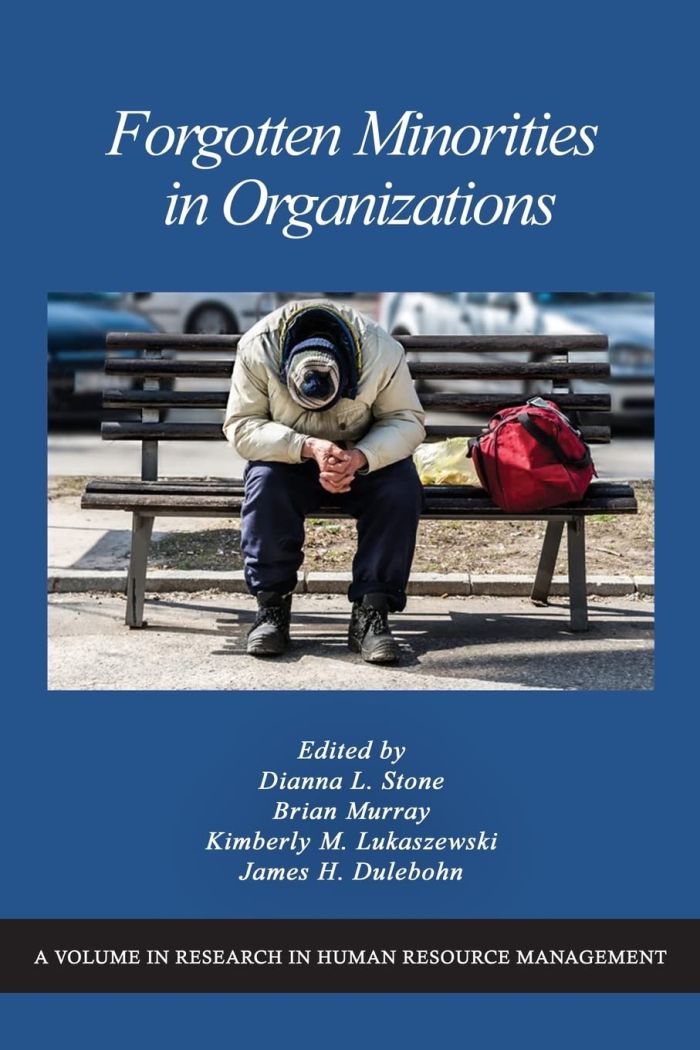
Forgotten Minorities in Organizations

This book can be opened with

Note on our eBooks and Audiobooks: you can read our eBooks (ePUB or PDF) and listen to audiobooks on the free Emerald Books app on iOS, Android, and desktop. Or read and listen on Emerald's online reader (ePUB eBooks and audiobooks only). To purchase a digital book you will need to create an account if you don’t already have one. After purchasing you will receive instructions on how to get started.
- Description
- Contents
People have long made invidious distinctions between individuals (e.g., the clean and the unclean, good and evil, black and white, sacred and profane, etc.) (Smith, 1996), and these distinctions affect the degree to which individuals experience prejudice, unfair discrimination, and oppression in organizations and society as a whole. As a result, there has been an increased interest in research on these distinctions and unfair discrimination in organizations. Despite this research, most of the studies have focused on only a subset of minorities including African Americans, women, older workers, and people with physical disabilities (Dipboye & Colella, 2005). A number of other minorities have been forgotten or neglected by organizational researchers including people with neurological or psychological disabilities, veterans, Native Americans, people with a criminal history, and those who come from low socioeconomic or poor backgrounds. Thus, the primary purposes of this issue of Research in HRM is to foster research on “Forgotten Minorities” or those who are members of groups that have been excluded from organizations and neglected by organizational research. In view of these arguments, this issue (a) presents a brief review of the organizational research on the exclusion and repudiation of people who are forgotten minorities, (b) offers directions for future research on these outgroup members, and (c) considers key implications for practice that can facilitate the inclusion of forgotten minorities in organizations.
Chapter 1. Motives for Dominating and Excluding Forgotten Minorities in Organizations; Dianna L. Stone, Kimberly M. Lukaszewski, Brian Murray, and James H. Dulebohn.
- Chapter 1. Autism Spectrum Disorder and Generation A: A Forgotten Minority in the Workplace; Cristina M. Giannantonio, Amy E. Hurley-Hanson, and Amy Jane Griffiths.
- Chapter 2. Forgotten Minorities at Work: Marginalization of Jobseekers With Mild Autism; Daniela Petrovski.
- Chapter 3. I'm Anxious but I Don't Have Anxiety! How Stigma Exacerbates the Effect of Anxiety Disorders in the Workplace; Eli Mendoza, Sara Mendiola, Lindsay Mathys, Shannon K. Cheng, and Eden B. King.
- Chapter 4. The Association of Disability and Health Self-Perception to Entering and Leaving Self-Employment; Christoph A. Metzler and Petra M. Moog.
- Chapter 5. Adverse Impact and Disability Status: Working Toward Inclusive Selection Procedures for Individuals With Disabilities; Nicole Strah and Deborah E. Rupp.
- Chapter 6. Does Conscious, Social, and Unconscious Bias Influence Employment Decisions About Military Veterans? Cristina Rosario DiPietropolo, Robert C. Ford, and Henrique Correa.
- Chapter 7. Degrees of Incarceration: Navigating Barriers to Employment; Catrina Palmer Johnson and Nicole C. Jones Young.
- Chapter 8. The Impact of Mentor Relationship and Supervisor Supportive Feedback on the Working Poor: The Moderating Role of Self-Efficacy; Erika N. Williams and Michele L. Heath.
- Chapter 9. Calling for More Organizational Research on Socioeconomic Status; Elisabeth R. Silver, Cassandra N. Phetmisy, Naomi Fa-Kaji, Abby Corrington, Linnea C. Ng, and Mikki Hebl.
- Chapter 10. Effects of Stereotypes, Intergroup Bias, and Cultural Racism on Unfair Discrimination Against Native Americans; Dianna L. Stone, Kimberly M. Lukaszewski, Julio Canedo, and Dianna Contreras Krueger.
- About the Authors.