
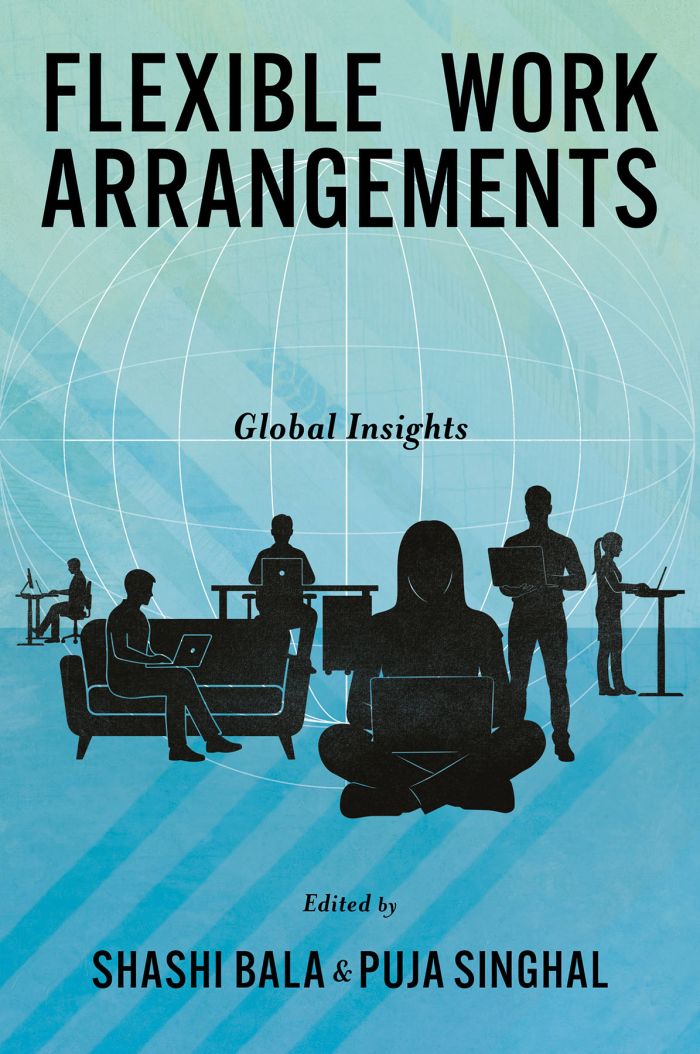
Flexible Work Arrangements
Global Insights

This book can be opened with

Note on our eBooks and Audiobooks: you can read our eBooks (ePUB or PDF) and listen to audiobooks on the free Emerald Books app on iOS, Android, and desktop. Or read and listen on Emerald's online reader (ePUB eBooks and audiobooks only). To purchase a digital book you will need to create an account if you don’t already have one. After purchasing you will receive instructions on how to get started.
- Description
- Contents
- About
The need for flexible work arrangements has become essential in today’s evolving work environment. As hybrid workplaces gain traction, flexible working hours allow employees to better balance their professional and personal lives, leading to improved work-life balance, productivity, and overall well-being. This shift is vital for fostering positive work environments globally.
Flexible Work Arrangements: Global Insights delves into the transformative power of flexible work hours, focusing on their impact across diverse cultures and economies. The editors of this collected edition, showcase how different countries and industries navigate the challenges of creating flexible work policies, particularly in hybrid environments. Drawing from global case studies, this work addresses the complexities of work-time laws, the influence of technology, and the critical role of flexible work in promoting gender equity, improving mental health, and fostering productivity. Highlighting the interplay between flexible schedules and sustainable development, this concise study also presents key insights into the role of flexible work arrangements in reducing carbon footprints, supporting gender equality, and promoting economic growth. Ultimately, it offers a comprehensive approach to creating a healthier, more inclusive work culture that enhances employees’ Quality of Life Index.
This work is useful for policy makers, business leaders, and HR professionals seeking to understand and implement flexible working policies. It offers practical insights and evidence-backed strategies for creating work environments that not only enhance employee satisfaction and productivity but also align with global sustainability goals.
Foreword; Arup Mitra
- Chapter 1. A Renaissance of Work: Redefining Patterns; Tusharika Singh
- Chapter 2. Flexible Working - A Bane or a Boon? A Research-Oriented Journalistic Analysis; Ganesh Shermon
- Chapter 3. Exploring the Link between Flexible Work Schedules and Violence against Women; Bushra Sabri and Ruchita V. Pillai
- Chapter 4. Work-Life Balance and Flexible Working Arrangements: A Psychological Perspective; Shashi Bala, Anwesha Sanyal, and Priyakshi Baruah
- Chapter 5. Integrating Flexible Working Arrangements with Sustainable Infrastructure Development in Tanzania: Opportunities, Challenges, and Policy Implications; Gabriel Mayengo, Athanas M. Garaba, and Crispin Ryakitimbo
- Chapter 6. Flexible Working Arrangements: Reflections from Zambia; Annie Changwe Nkandu
- Chapter 7. Issues in the World of Women’s Work in the IT Sector and the Garment Sector in Bangalore, India; Cynthia Stephen
- Chapter 8. Men’s Participation in Unpaid Care Work: The Case of Working Couples in Delhi NCR; Shipra and Harshil Sharma
- Chapter 9. Legal Perspective on Flexible Working Hours in Russia; Bryl Iuliia
- Chapter 10. Flexible Working Conditions in the Republic of Belarus: Legal Regulation and Special Cases; Albina Sibirskaya
- Chapter 11. Strengthening Care Economy and Promoting Decent Employment through Mainstreaming Flexible Work Arrangements and Artificial Intelligence: An Indian Perspective; Shashi Bala and Puja Singhal
Shashi Bala is a Senior Fellow at V. V. Giri National Labour Institute, India.
Puja Singhal is an Economist from India.