
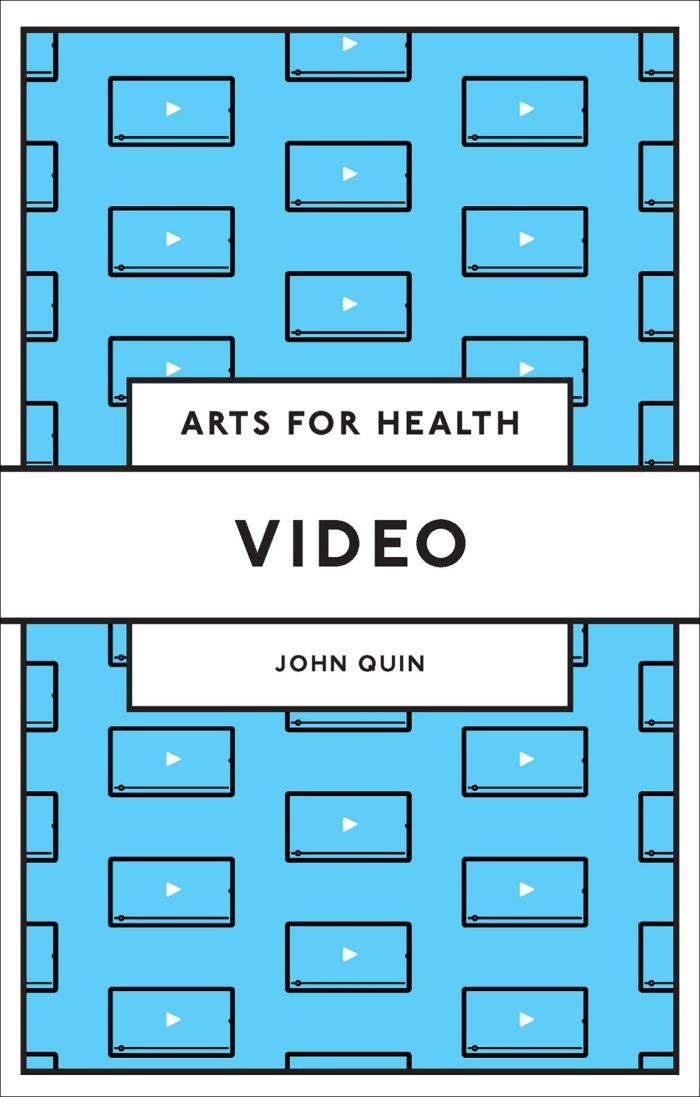

Video

This book can be opened with

Note on our eBooks and Audiobooks: you can read our eBooks (ePUB or PDF) and listen to audiobooks on the free Emerald Books app on iOS, Android, and desktop. Or read and listen on Emerald's online reader (ePUB eBooks and audiobooks only). To purchase a digital book you will need to create an account if you don’t already have one. After purchasing you will receive instructions on how to get started.
- Description
- Contents
- About
Video is everywhere. But what is video art and how does it differ from cinema? What connections has it made with healthcare and medicine? And what implications might these connections have for how we approach our physical and mental health?
Breaking new ground, Video acts as an accessible introduction to the potential value of this medium within medical practice, patient care and everyday creative expression. Pairing examples with specific health conditions and themes, author John Quin presents a series of video artworks and their potential benefit for patients, clinicians and carers. Heeding the rise of ‘amateur’ forms of video-making, shared through platforms such as YouTube, TikTok and Instagram, Quin also considers how the wide reach and convenience of social media is impacting health and wellbeing as popular interest in the medium continues to evolve.
Featuring suggestions for both further reading and further viewing, Video navigates uncharted territory on behalf of artists, medical professionals and anyone interested in how video deals with health.
Introduction and a brief history – Why video? Why Video Art?
- Chapter 1. Birth and Death: Viola, Boltanski, McQueen, Atkins/Brakhage, Potter
- Chapter 2. Communication skills: Sala, Wearing, Borland
- Chapter 3. Trauma and the body’s vulnerability: Graham, Ader, Burden, Acconci, Horn, Wallinheimo-Heimonen, Breitz, Kozyra, Bałka
- Chapter 4. Neurology and Psychiatry: Nauman, Borland, Donachie, Gordon, Van Lieshout, Huyghe, Fowler
- Chapter 5. Abjection/Gastroenterology: McCarthy, Delvoye, Hatoum, Creed, The Viennese Actionists
- Chapter 6. Identity: Barney, Dijkstra, Trecartin, Piper, Jafa, Wai Kin, Wearing
- Chapter 7. Women: Rist, Ono, Mendieta, Emin
- Chapter 8. New technologies/new visions: Atkins, Marclay, Wolfson, Yang, Bennani, Goldin
- Chapter 9. Conclusions
John Quin is a retired Consultant Physician specialising in general medicine, diabetes and endocrinology. His first book, Dr. Quin, Medicine Man, received a four-star review in The Times. He has been writing on art, literature and music for more than twenty years for publications including ArtReview, frieze, The Quietus, Tagesspiegel, The Wire, The National, The Irish Times, The Guardian, the BMJ and The Lancet.