
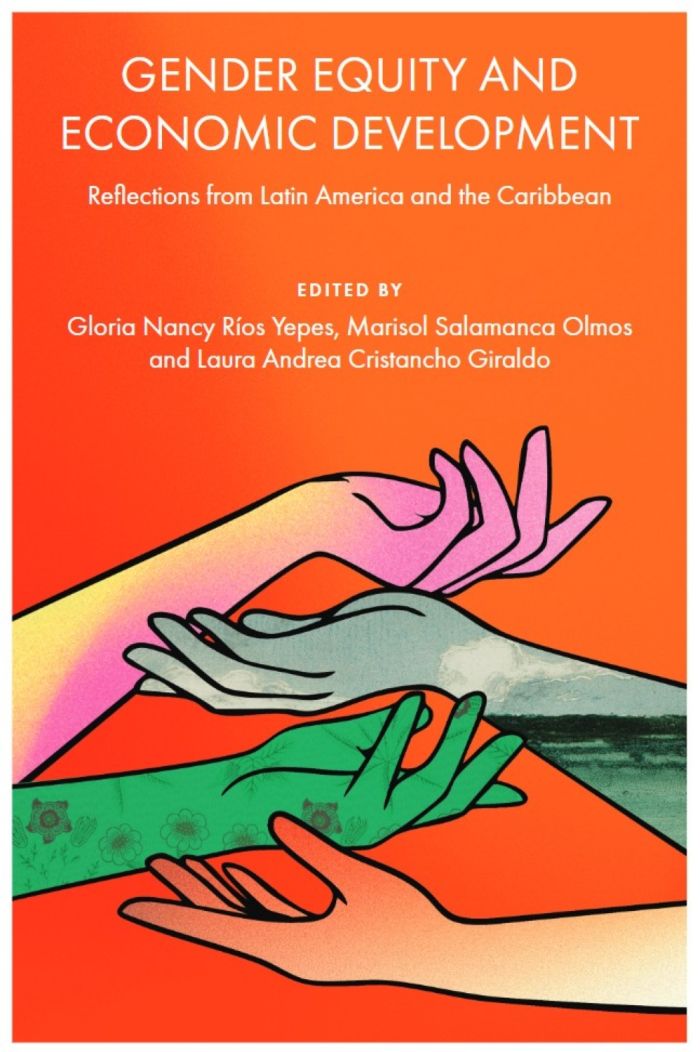

Gender Equity and Economic Development
Reflections from Latin America and the Caribbean

This book can be opened with

Note on our eBooks and Audiobooks: you can read our eBooks (ePUB or PDF) and listen to audiobooks on the free Emerald Books app on iOS, Android, and desktop. Or read and listen on Emerald's online reader (ePUB eBooks and audiobooks only). To purchase a digital book you will need to create an account if you don’t already have one. After purchasing you will receive instructions on how to get started.
- Description
- Contents
- About
Achieving gender equity in Latin America and the Caribbean brings significant societal and economic benefits, including reduced social disparities, better access to education, higher incomes, and greater participation in the workforce. Collaboration between academia, business, and government is essential in driving these outcomes, creating more inclusive and productive economies. Gender Equity and Economic Development highlights how aligning policy, practice, and strategy can foster equitable growth across the region.
This comprehensive volume is structured around three key lines of inquiry. The first section investigates the progress of public policies in promoting gender equity, offering perspectives on gender equity practices, female entrepreneurship in Colombia, and the broader implications of intersectionality. The second section delves into gender equity across different socioeconomic sectors, focusing on issues like the gender gap in social and financial security, the balance between reproductive and remunerated work, and a decade of labor market analysis for women in Colombia. The final section examines gender equity as a strategic component within productive organizations, exploring how businesses integrate gender equity into their strategies and the specific experiences of industries like tourism in the region. Highlighting the impact of gender-focused public policies, strategies, and organizational practices, this work invites readers to reflect on the transformative potential of gender equity for a more inclusive and prosperous society.
Bringing together insights from experienced researchers and multidisciplinary perspectives, this collected edition is essential for academics, policymakers, business leaders, and anyone committed to understanding the vital role of gender equity in economic development.
Part 1. Advances in gender equality as a contribution to growth and development from public policies in Latin America.
- Chapter 1. Certification mark as a public policy for female entrepreneurship in Colombia; Edel Rocío Lasso Silva, Martha Inés Moreno Medel, and Lenyd Angélica Riaño Martínez
- Chapter 2. Perspectives on the Practical Implications of Gender Equality in Latin America; Johanna Rosalí Reyes-Reinoso and Angel Aurelio Morocho-Macas
- Chapter 3. Intersectionality is a perspective that invites us to link geographical spaces, disciplines and agendas; Maria Isabel Villada Gil and Yessica Alexandra Gómez Zuluaga
- Part 2. Perspectives of gender equity in different socioeconomic sectors in Latin America and the Caribbean
- Chapter 4. Women in the daily grind between reproductive labor and paid work in an urban poverty area in León, Guanajuato, Mexico. Culture, redistribution, and recognition; Célica Esther Cánovas-Marmo
- Chapter 5. 10 Years of the labor market in Colombia for women; José Mauricio Salazar Sáenz and Juliana Morad Acero
- Chapter 6. Gender gap in social and financial security: Effects of government support in Mexico for women in their family environment; Alfredo Omar Palafox Roca and Ángel Wilhelm Vázquez García
- Part 3. Gender equality as a strategy from productive organizations
- Chapter 7. Gender equity and business performance; Luz Esperanza Bohórquez Arévalo
- Chapter 8. Gender equity in educational institutions: Strategies and experiences in Mexico and Costa Rica; Jonathan Salas Segura and Leticia Téllez Hernández
- Chapter 9. Labour income gap in the tourism sector in Colombia. A gender equity approach; Gloria Nancy Ríos Yepes, Tatiana Polania-Cerinza, Marisol Salamanca-Olmos, Laura Cristancho-Giraldo, and Sebastián Chacón-Marín
Gloria Nancy Ríos Yepes, Marisol Salamanca Olmos and Laura Cristancho Giraldo are Economists and Professors of Economics at the Faculty of Business, Management and Sustainability, Politécnico Grancolombiano, Colombia.