
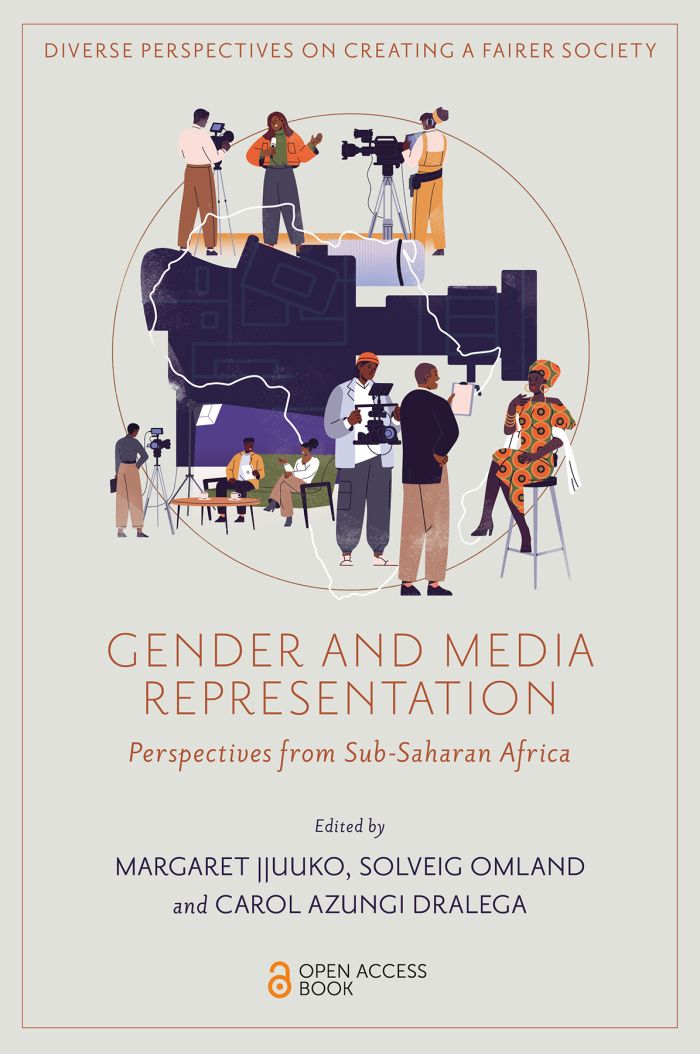

Gender and Media Representation
Perspectives from Sub-Saharan Africa

This book can be opened with

Note on our eBooks and Audiobooks: you can read our eBooks (ePUB or PDF) and listen to audiobooks on the free Emerald Books app on iOS, Android, and desktop. Or read and listen on Emerald's online reader (ePUB eBooks and audiobooks only). To purchase a digital book you will need to create an account if you don’t already have one. After purchasing you will receive instructions on how to get started.
- Description
- Contents
- About
- Open Access
The ebook edition of this title is Open Access, thanks to Knowledge Unlatched funding, and freely available to read online.
Gender and Media Representation: Perspectives from Sub-Saharan Africa critically examines the intersection of media and gender across diverse African contexts. Through a rich collection of case studies and theoretical analyses, this volume explores how media constructs, portrays, and negotiates gender identities, from news coverage of female political leaders to the representation of women’s voices in radio and digital spaces. The contributors, who include educators, academics, practitioners, and researchers highlight the ways in which language, discourse, and media structures shape gender narratives, reinforcing or challenging societal norms.
The first section delves into traditional and mainstream media, uncovering the complexities of gender portrayal in journalism, political coverage, and newsroom culture. It investigates issues such as the media’s role in shaping perceptions of female politicians, the challenges faced by female journalists, and the impact of gendered discourse in news reporting. By interrogating the representation, participation, and engagement of women in media, this section sheds light on persistent inequalities and emerging opportunities for change. The second section turns to digital media and its potential for gender empowerment. From digital storytelling and AI to YouTube activism and community radio, the chapters explore how new media spaces both amplify and contest gendered power structures.
Addressing topics such as online safety for female journalists, gender-based violence narratives, and media education, this book provides a timely and critical contribution to the discourse on media and gender in Sub-Saharan Africa.
Introduction: Contextualising Media’s Representations of Gender Issues in Sub-Saharan Africa; Margaret Jjuuko, Solveig Omland, and Carol Azungi Dralega
- Section I. Gender Representation, Construction and Portrayal
- Chapter 1. Conceptualising Participation as Representation, Interaction and Engagement; Emilly Comfort Maractho and Solveig Omland
- Chapter 2. How the Tanzanian press portrayed the country’s first female president Samia Suluhu Hassan in a non-stereotypical manner; Theodorah S. Munisi and Terje Skjerdal
- Chapter 3. Media Representations of women candidates in Kenya’s 2022 General Elections; Denis Ikachoi and Joseph Njuguna
- Chapter 4. Critiquing language and discourse in “Rwanda 20 years on: The tragic testimony of the children of rape” newspaper article; Margaret Jjuuko
- Chapter 5. Unveiling voices and visibility: Women's engagement and representation in three morning prime-time radio shows in Accra, Ghana; Theodora Dame Adjin-Tettey, Manfred Kofi Antwi Asuman, and Mary Selikem Ayim-Segbefia
- Chapter 6. Exploring the affordance of equality and equal opportunities to female journalists in Rwanda’s media; Margaret Jjuuko and Solveig Omland
- Chapter 7. Communicating abortion in the mass media: A literature review of the challenges and possibilities; Jeanne d’Arc Mukamana, Emma Durden, and Sarah Gibson
- Chapter 8. Mainstreaming Gender in Postgraduate Journalism and Communication Programmes in Ghana; Aurelia Ayisi
- Section II. Digital Media Spaces and Gender Empowerment
- Chapter 9. Digital storytelling in social media: A cultural activity and a media style in fighting gender-based violence in Tanzania; Eva Solomon
- Chapter 10. Gender Mainstreaming in AI-Enhanced Journalism Practice, Education, and Research in African Contexts; Carol Azungi Dralega
- Chapter 11. Digital safety: Perspectives from women journalists in Uganda; Fred Kakooza and Samuel Kazibwe
- Chapter 12. YouTube Videos as agents of social inclusion and therapy among Gender-Based Violence Survivors; Anne Anjao Eboi
- Chapter 13. Community radio in Building Resilience Against Gender-Based Violence in Tanzania: A case of Radio Sengerema?; Dianus Josephat Ishengoma
- Chapter 14. Community Radio as an Enabler of Women’s Empowerment in Kenya: A Systematic review of scholarly evidence; Joseph Njuguna
- Chapter 15. Gendered power relations and culture of silence: An Exploration of female interns’ sexual harassment experiences in Nigerian newsrooms; Bimbo Lolade Fafowora
Margaret Jjuuko, is a Professor of Journalism, Media and Communication in the School of Journalism and Communication (SJC), University of Rwanda.
Solveig Omland, is an Associate Professor, Department of Intercultural Studies, NLA University College, Norway.
Carol Azungi Dralega, is a Professor, Department of Journalism, Media and Communication, NLA University College, Norway.